
Delivering the "Now" of the GOOD DESIGN AWARD
The thoughts that go into the application for the GOOD DESIGN AWARD, The thoughts that go into the judging of the GOOD DESIGN AWARD, Various thoughts intersect and connect The process of exploring "GOOD DESIGN" will be delivered to you.

“GOOD DESIGN MEETUPS: a forum for applicants and judges to talk about design together,” expanding the future of design by speaking in our own words
2025.12.05
The “GOOD DESIGN MEETUPS: a forum for applicants and judges to talk about design together” were held during the 2025 GOOD DESIGN AWARD to serve as a venue for interaction between applicants, judges, and other participants, alongside reflection on this year’s screening. Through open dialogue with the judges, the participants learned about the key points in terms of applying and further deepened their understanding of the screening process. Participants gained many insights by talking directly with the judges, and lively interactions spread throughout the venue.
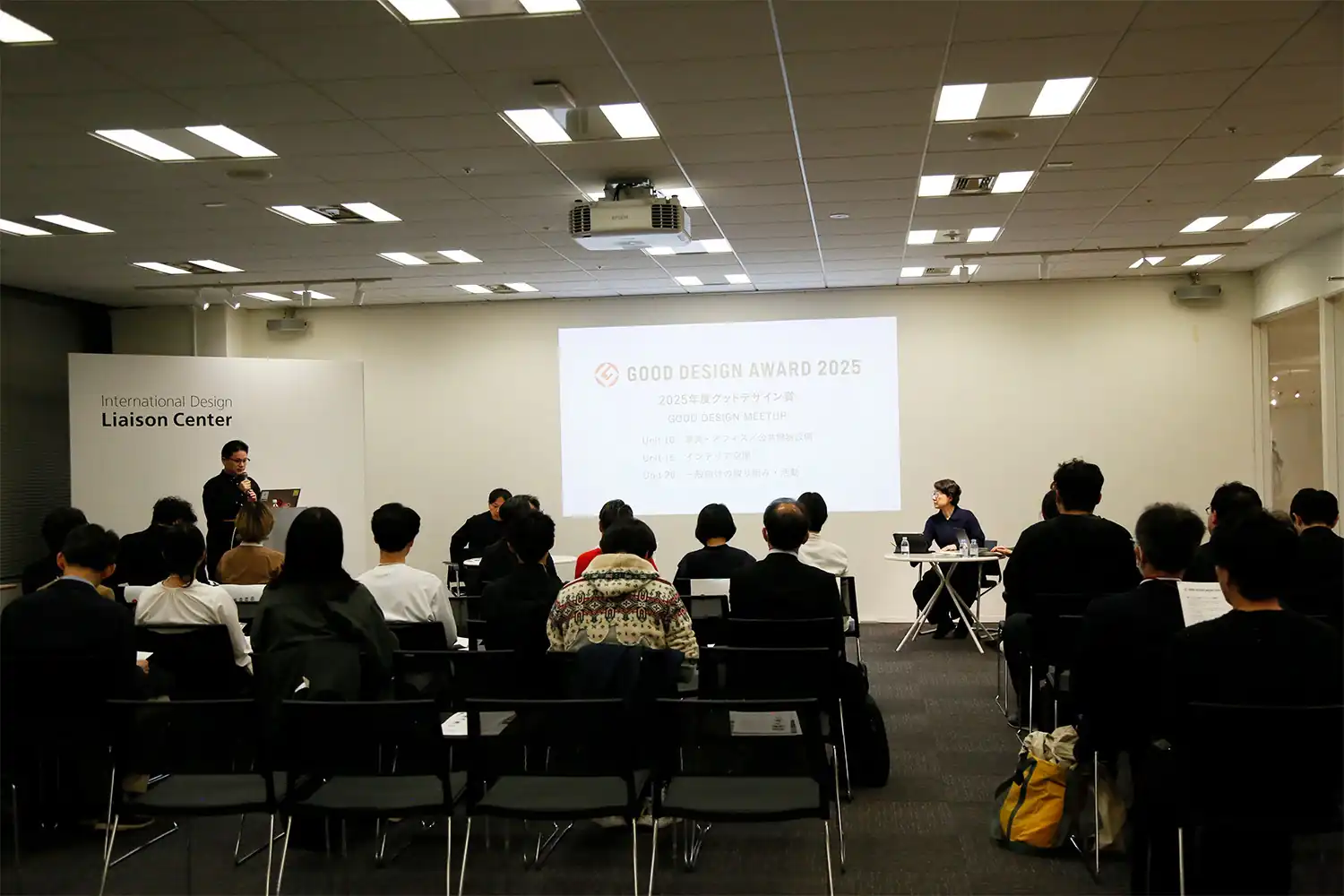
What kind of event were the “GOOD DESIGN MEETUPS”?
In response to requests for more opportunities to interact from both GOOD DESIGN AWARD applicants and judges, we refreshed the award announcement ceremony to emphasize interaction even further than in the past. Until now, explanations by the judges formed the core of the event, but creating a new time for the participants and judges to exchange opinions directly provided an opportunity for deeper communication.
The GOOD DESIGN AWARD is screened by screening units organized according to genre. Judges each make use of their own specific expertise to evaluate the subject entries from multiple perspectives.
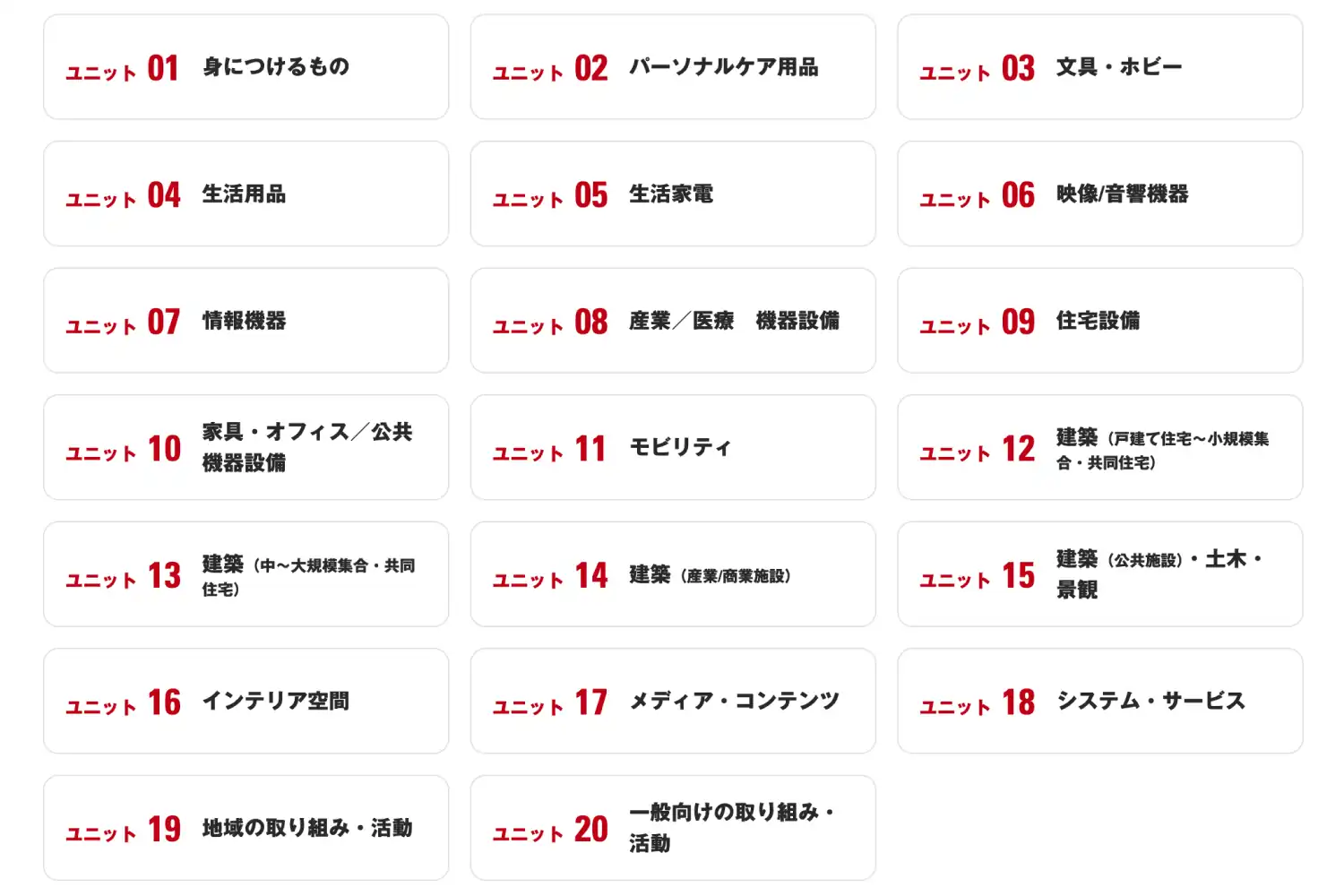
These events were made up of two parts, with each screening unit having its own schedule.
Eight sessions in total were held jointly by different units; this article introduces the event for “Unit 10: Furniture/Equipment and Facilities for Office and Public Space, Unit 16: Interior Space, and Unit 20: Initiative and Activity for the General Public,” held on November 18.
In the first part, there was a reporting session in which the judge in charge of each unit introduced the background to the screening, such as the perspective from which the screening was carried out and the points for which the award winning objects were recognized.
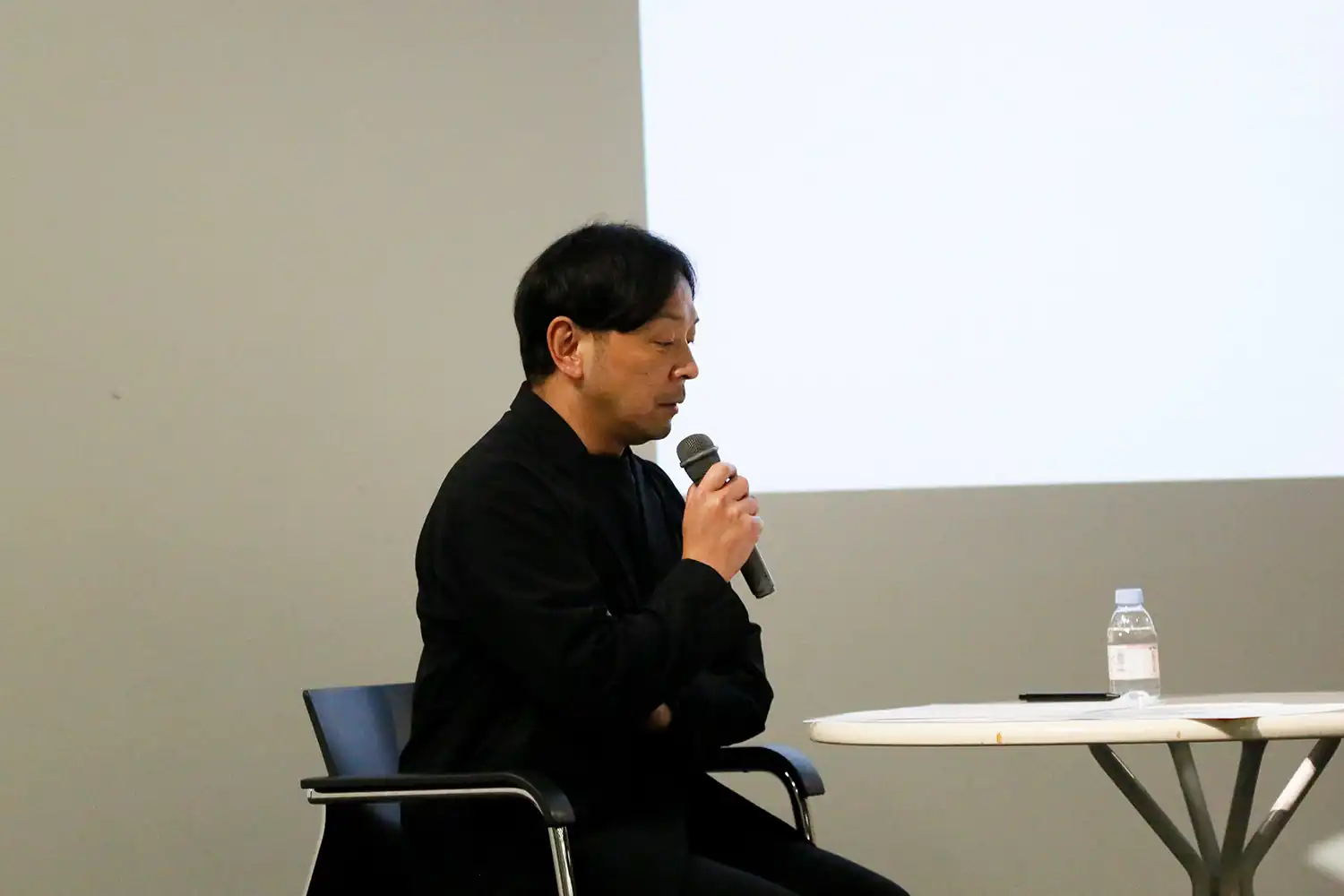
Tomoya Tabuchi, leader of Unit 10 (Furniture/Equipment and Facilities for Office and Public Space),
provided concrete figures which were easy for participants to visualize, saying “This year, applications spanned a broad range of genres, from wooden chairs for use in the home to refrigerators and cashless payment terminals for use in stores. Slightly over 300 entries were submitted, of which about 80% passed the first screening and about 30% were eventually given an award.”
At the same time, he reflected on the trends in this year’s applications: “Furniture made up the highest proportion of applications, and products which paid particular attention to materials stood out. There were also items that made use of domestic conifers, or of rattan as a sustainable material. Last year, I had the impression that there were many products straddling home and office use, but this year, there were many products with clear purposes and places of use. Products related to disaster prevention and crime prevention, such as fire alarms, fire extinguishers, and security cameras, were especially prominent.”
He also introduced the points which were prioritized during the screening, saying “In selecting the GRAND AWARD, we placed our emphasis on how valuable the product could be in meeting the challenges facing Japanese manufacturing and society today. The need to use recyclable materials and the perspective of technology transfer were also important points in the screening.”
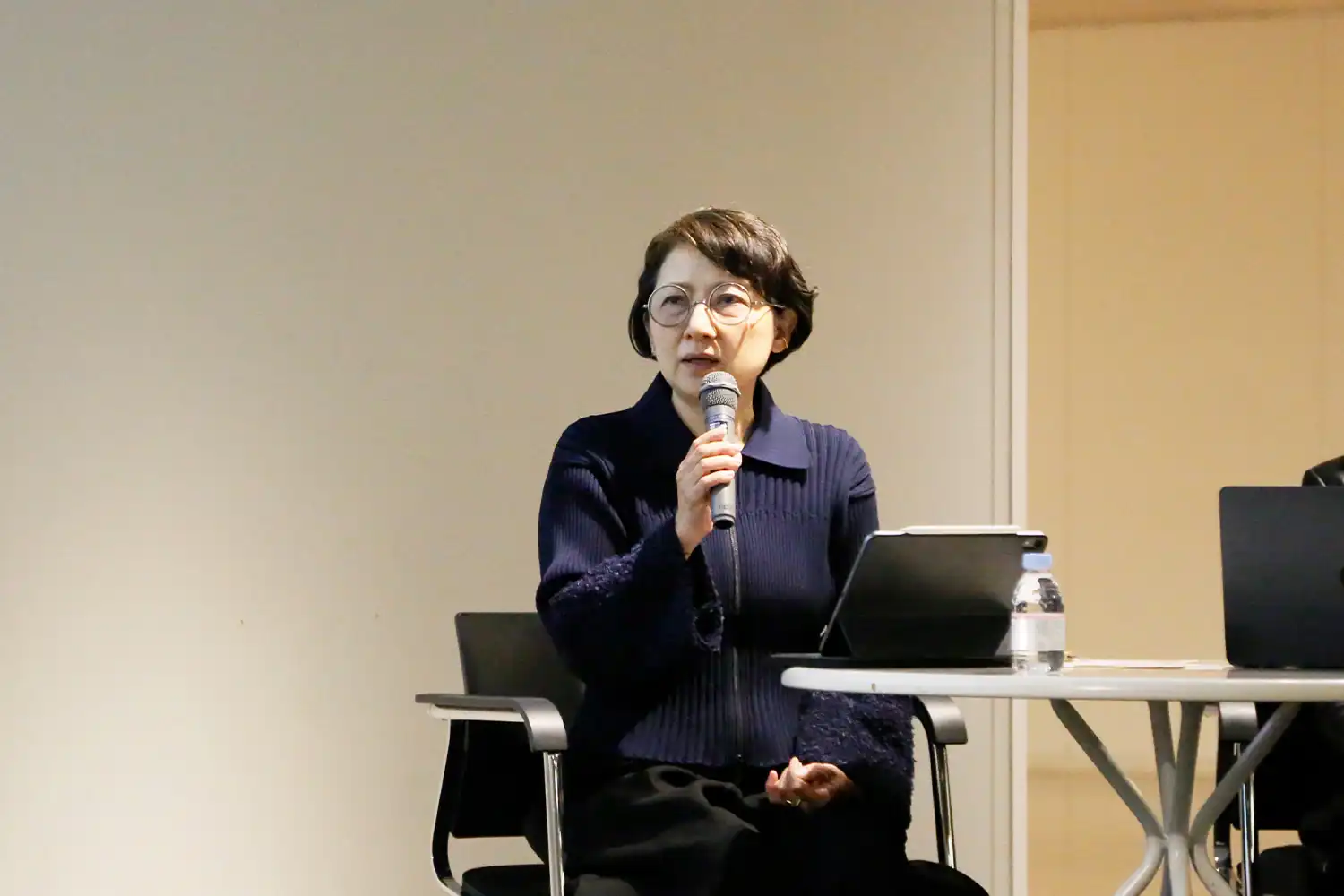
Hisae Igarashi, leader of Unit 16 (Interior Space),
said, “In the unit looking at interior spaces that were newly built this year, we evaluated their differences from the conventional architectural units and their newness. We prioritized not just the looks and the concepts, but how they approached problem solving and how the problems were solved through design.”
She talked about the points for which the award winning objects were recognized, saying “How interfaces and exchanges with society, and a vision for the future, have been amply provided was also a point evaluated by the screening. From what perspective have they approached design with respect to the social issues surrounding individuals and companies, children and adults? The award winning objects were successful in resolving social problems; design was used to ameliorate and improve difficult situations.”
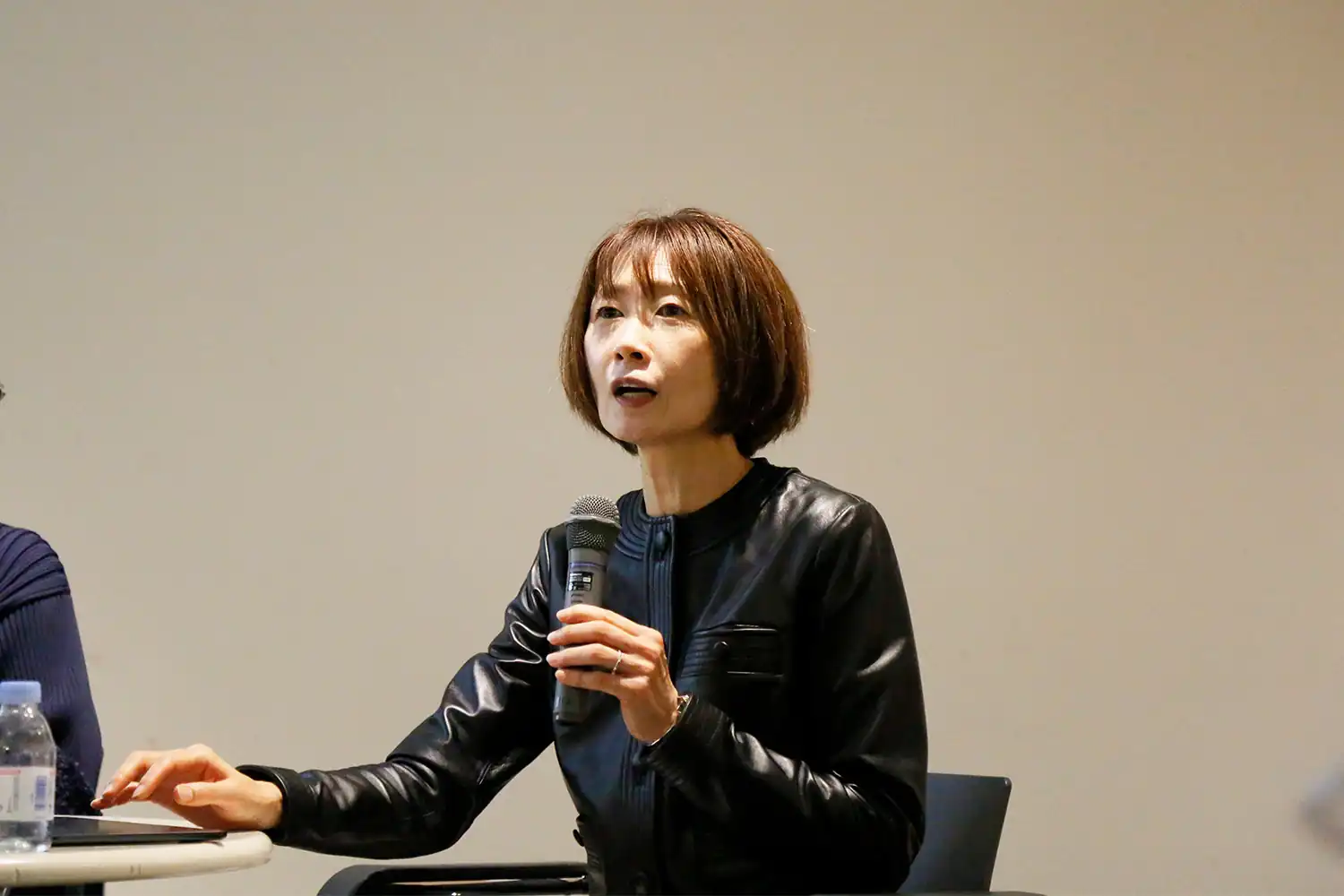
Naoko Hirota, leader of Unit 20 (Initiative and Activity for the General Public),
said, “In this unit, we mainly screen intangible designs, such as projects, rather than tangible designs, such as furniture or daily necessities. Efforts to solve social problems or enrich people’s lives and minds are given recognition as designs, and the number of high-quality subject entries is increasing. We received nearly 200 entries from intangible designs, and a high proportion were selected for the top awards.”
“The design of systems replenishes the difficult areas of people’s lives, or design sheds light on places which it had not previously been able to reach, enriching society or people’s minds. There are many designs that have deeply moved many judges, and this is one reason why so many end up among the top awards. The screening is carried out not in order to fail entries, but rather to give them as much recognition as possible, and we, the judges, are moved by each design as we screen,” she said, talking about the reasons for recognizing designs and the way in which the judges approach the screening.
“In the past, there were a lot of experimental initiatives, but this year, a lot of the entries had already become viable businesses, raising the level overall,” she went on. “Designs by local governments were of such a high standard that they were chosen for top awards. Rather than partial reforms, comprehensive plans were pursued over the long term to resolve issues completely. Governments showed their intention to find true solutions by doing everything possible, and properly conveyed this to the public. Projects dealing with schools and students, as well as new services for people with disabilities or economically disadvantaged people, have greatly improved in quality, and we have seen the birth of designs which will make the future brighter,” she said, looking back over this year’s trends.
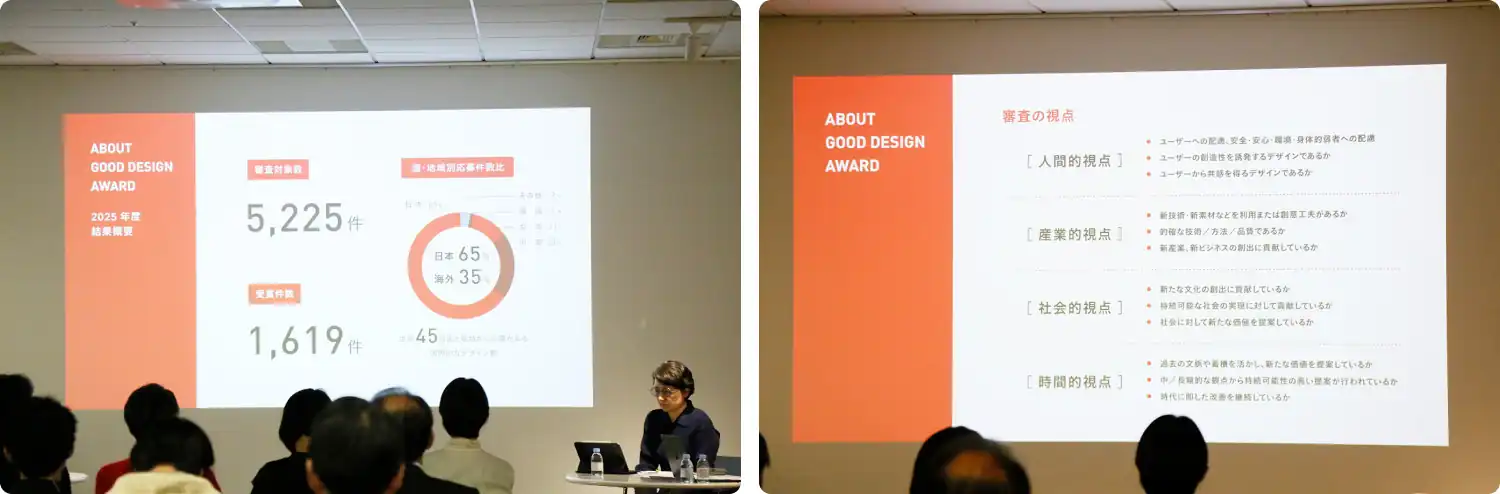
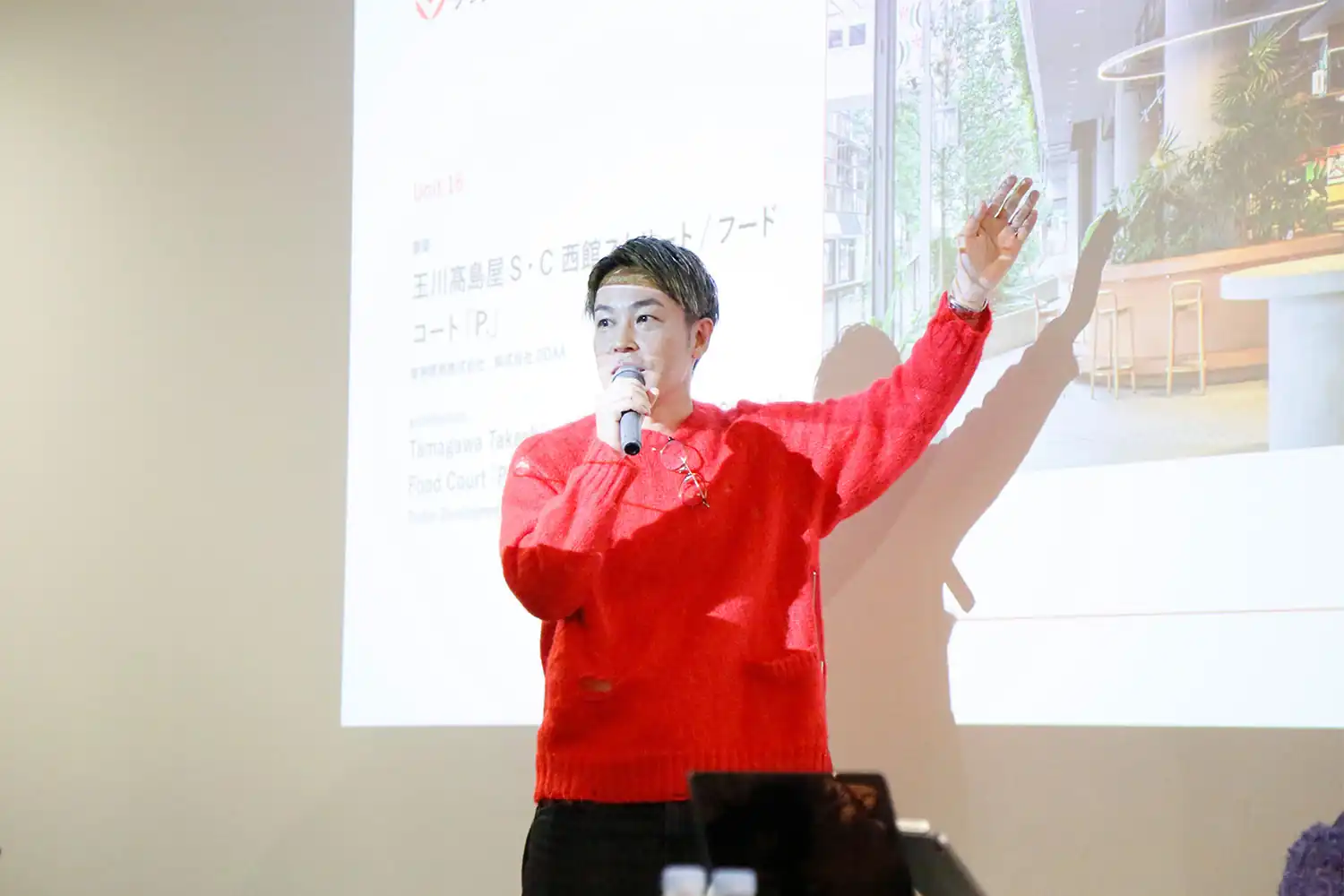
Slides were used to give an overview of the GOOD DESIGN AWARD and interpret this year’s award winning objects visually, making them easy to understand.
It was impressive to see the participants read the materials, distributed in advance, containing details of the 2025 award winning objects and the points which were evaluated, taking notes with serious expressions, as they listened to the presentations.
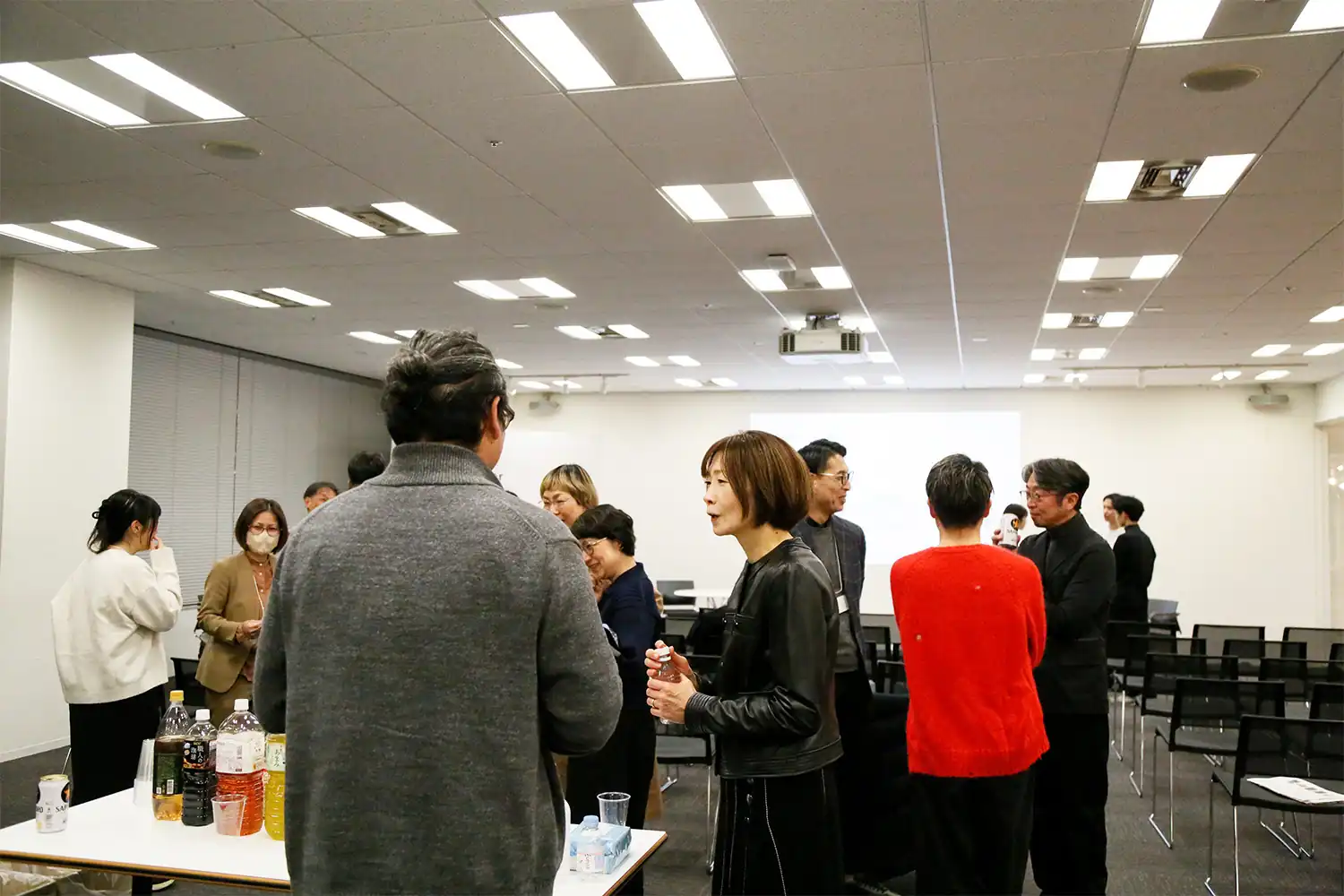
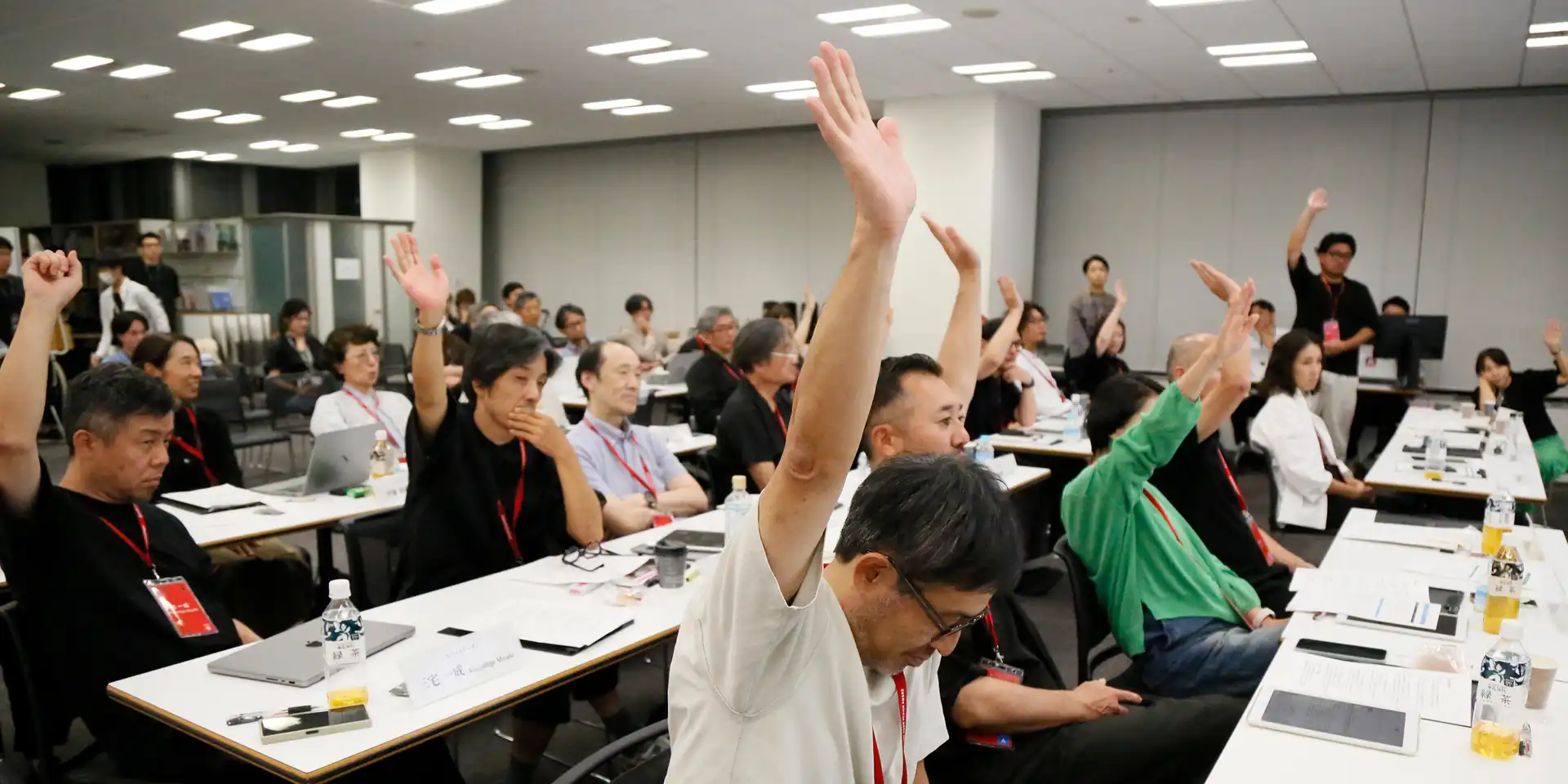
In the second part which followed, there was time set aside for the participants, to talk freely and interact with the judges and with each other. A variety of exchanges of opinion and lively dialogues took place in a friendly atmosphere with snacks and drinks in hand.
This event, in which anyone could easily participate, attracted people of all ages – not only those who create design, but also those who use it.
One participant gained new insights: “Even if a design is good now, there might be a better design or approach if we take a longer view. I came to see the current social issues and those going forward. It was also a useful reference when I bought products that had won a GOOD DESIGN AWARD.”
Another participant said, “Up until now, we hadn’t actually met and talked to the judges in person, only analyzed and thought about the design ourselves. By participating in this event, I got a clear picture of what screening meetings are like and what points are being used to evaluate designs. We were able to think about whether we could make another attempt in a different one of the categories newly put in place from 2025.” In this way, things which had previously been ambiguous became clear, and they took away with them some hints which would be useful when applying.
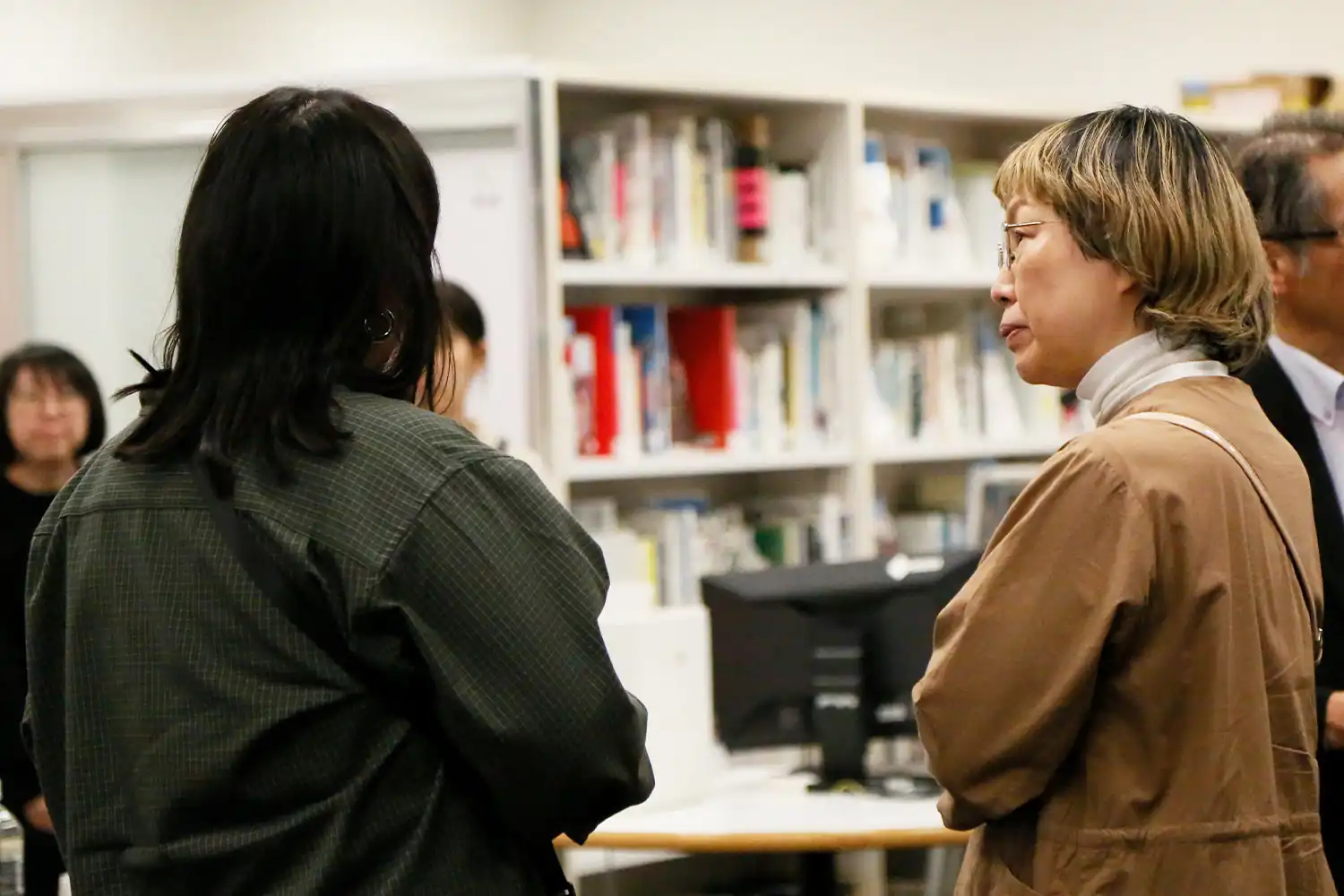
The judges talked with the participants, reflecting once more on the screening meetings and the points used in screening.
Mana Kobayashi, a judge from Unit 10,
said, “As I read through a huge volume of application forms, I have always strongly felt the enthusiasm of the participants, how much they are enjoying the projects. There is power in designs that do what the designer enjoys most, rather than being for someone else’s sake. GOOD DESIGN AWARD winners are not decided just because something looks beautiful or pretty at a glance. It’s very touching to see the impassioned written entries for projects that are driven by personal feelings.”
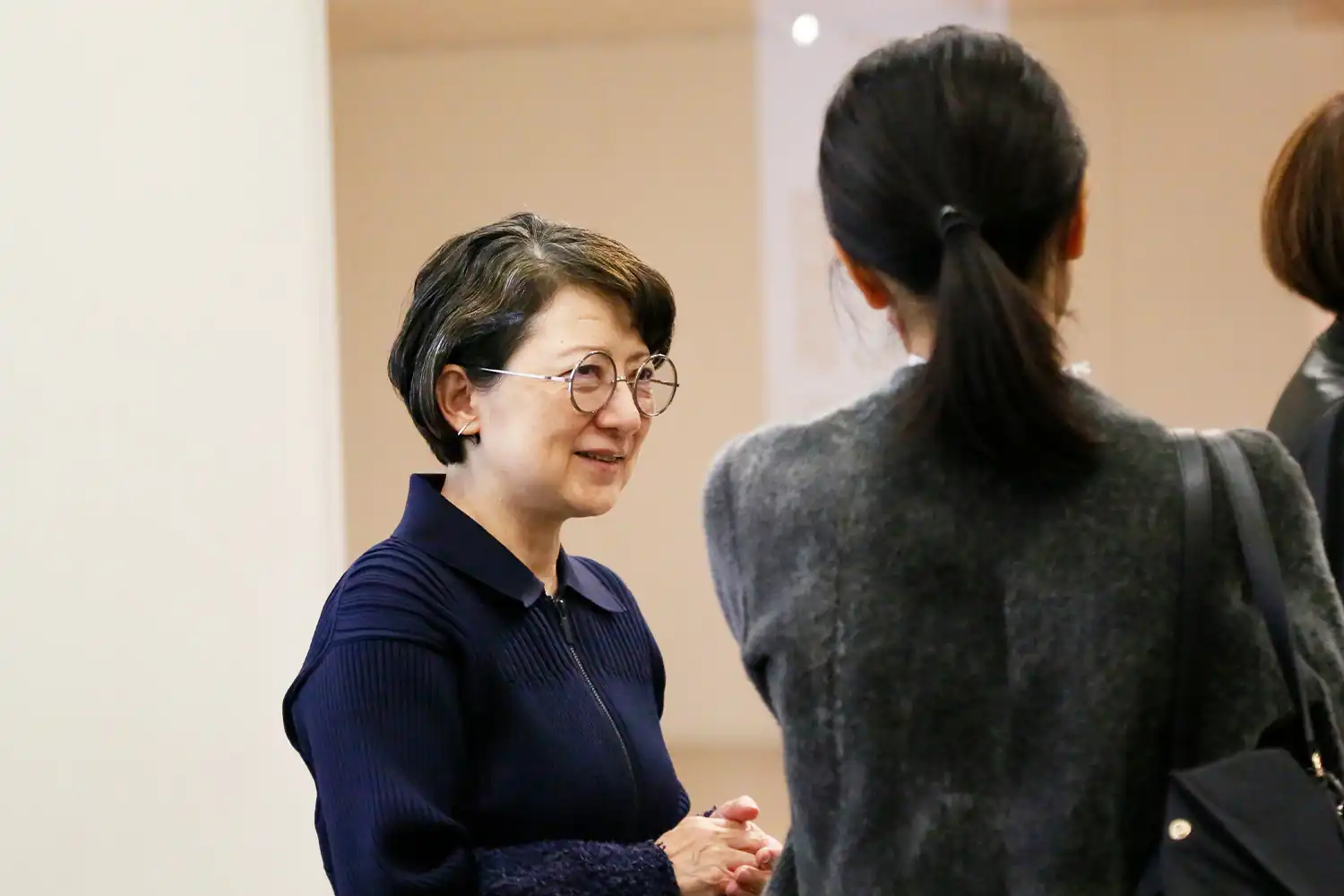
Hisae Igarashi, leader of Unit 16,
went on to say, “Some of the participants who were aiming to win an award came to me for advice because they didn’t know what was important or which unit to apply for. I also advised them that the way they write their entries is important, and that one of the tips for winning an award is to write down exactly what the design with which you applied does, so that we can understand this.” “Listening to what the participants said this year, I found that there were many detailed questions about the content of the GOOD DESIGN AWARD,” she commented, engaging sincerely with the queries arising from the participants.
Chieko Asakura
Writing
While working at a bookstore, she creates books and videos. She participated in Tokyo Art Book Fair (TABF) 2024. She is also active as an actor, participating in the theater company chelfitsch’s Five Days in March Re-creation and Metamorphosis of a Living Room.


Related Articles
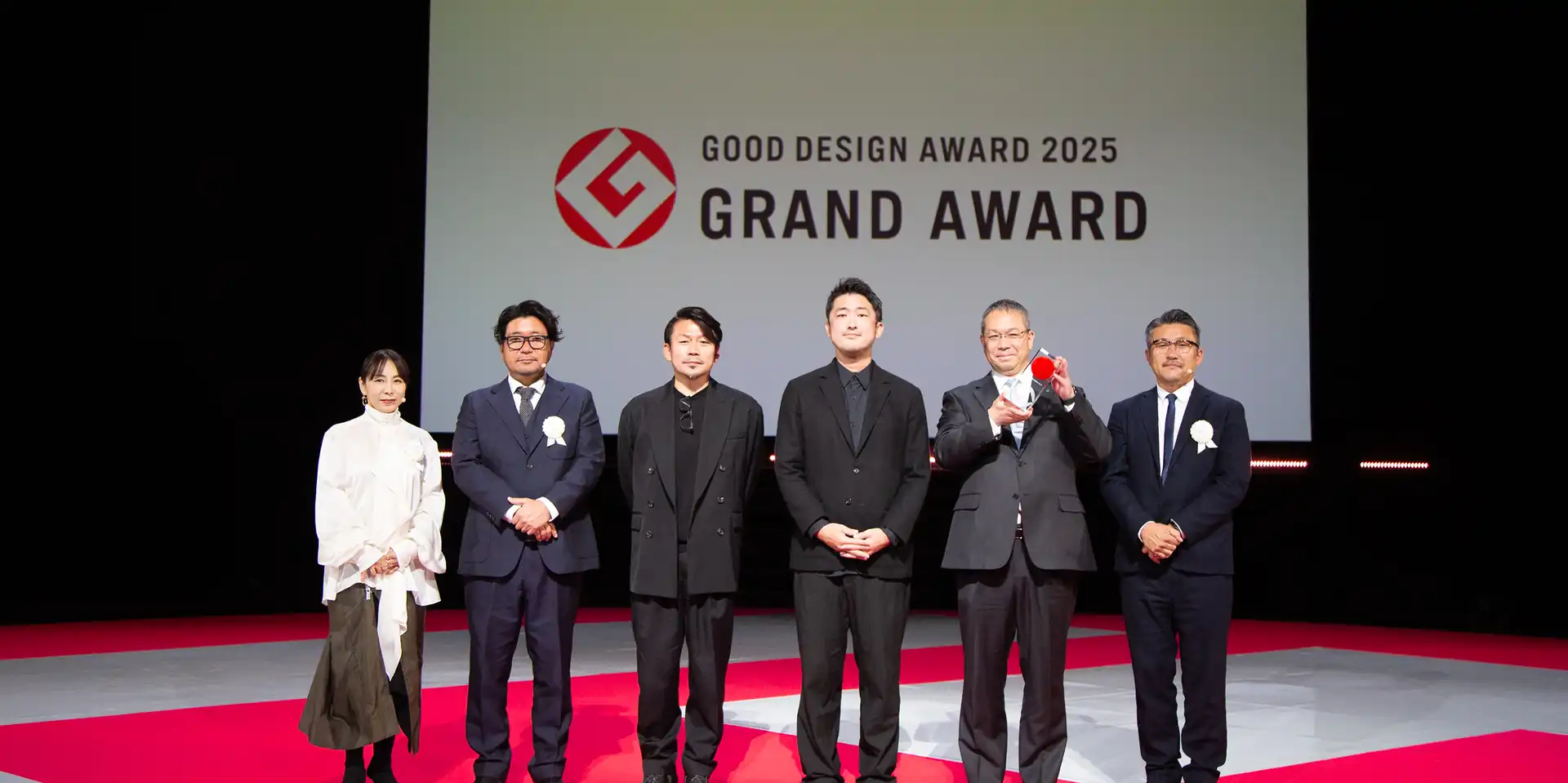
A “Design Festa” at which around 3,000 people gathered! 2025 GOOD DESIGN AWARD Celebration
On November 4, the GOOD DESIGN AWARD Celebration was held at Tokyo Garden Theater. In addition to a discussion between the chair and vice-chairs of the judging committee, this year’s various award winning objects were showcased: the GOOD DESIGN BEST 100 were introduced, the GRAND AWARD, GOLD AWARD, and other special awards were presented, and the results of “Our Favorite G Mark” were announced. Around 3,000 people involved in design gathered together in one place, and interactions between the winners and with the judges deepened, making it a true “design festa.”
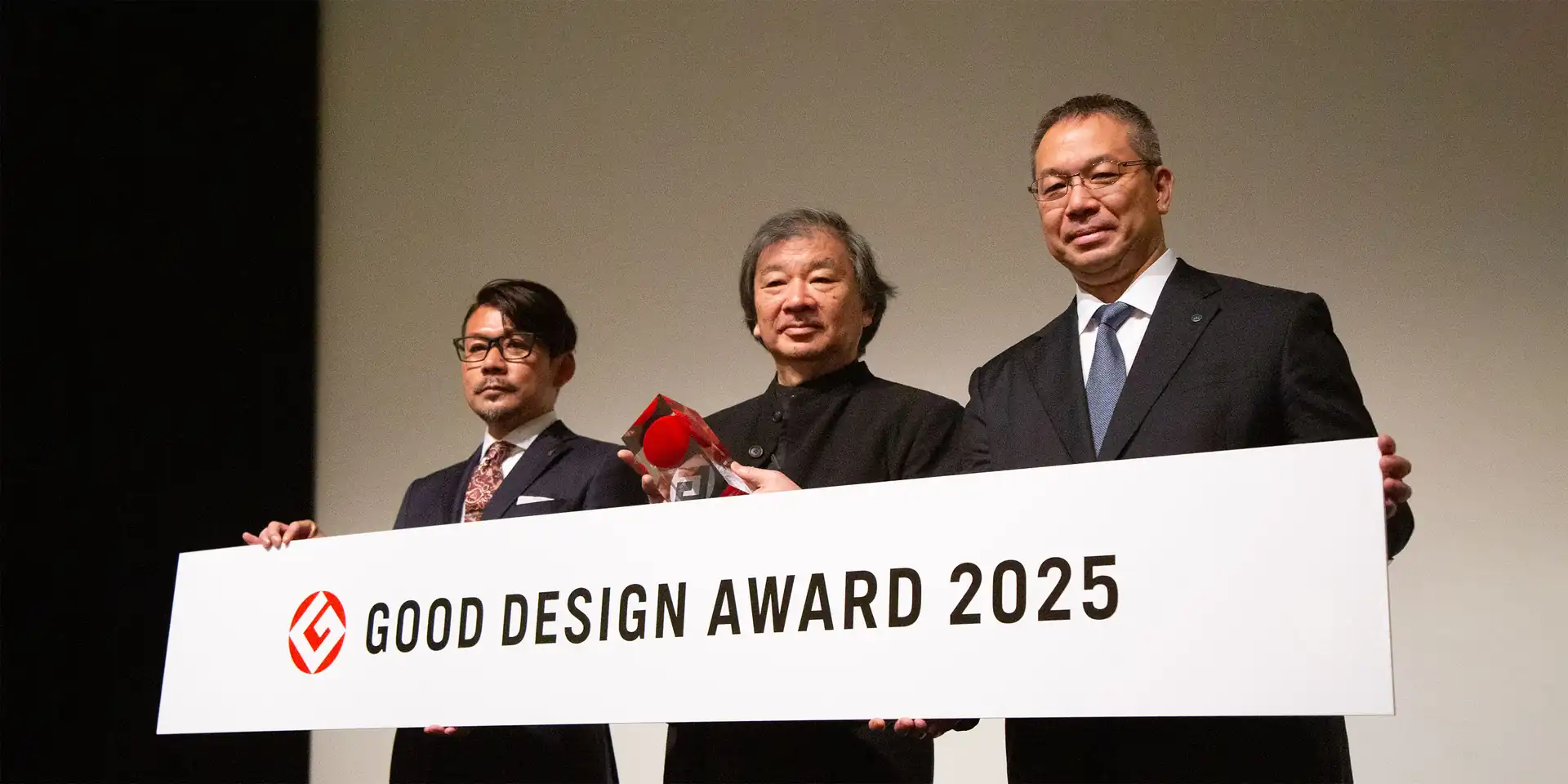
2025 GOOD DESIGN AWARD winners announced! The Grand Award went to architect Mr. Shigeru Ban and others for their DLT Timber Temporary Housing
The 2025 GOOD DESIGN AWARD winners were announced on October 15. This year, the GOOD DESIGN GRAND AWARD was announced on the same day as the GOOD DESIGN BEST 100 and GOLD AWARD. The winner of the Grand Award for the best design among the award-winning objects was DLT (Dowel Laminated Timber) Timber Temporary Housing by Shigeru Ban Architects, IEMOTO INC, and M.HASEGAWA & CO.,LTD (Haseman). At the awards press conference, architect Mr. Shigeru Ban took the stage to express his joy and thoughts on winning the award.
Winners of the 2025 GOOD DESIGN SPECIAL AWARDS, including the GOOD DESIGN AWARD and GRAND AWARD, have been decided! The winners will be announced on October 15
On September 19, the Special Awards Panel met to select the GOOD DESIGN SPECIAL AWARD winners from among several thousands of entries. At the panel, the winners of the GOOD DESIGN BEST 100 gave presentations, and after a lively discussion and careful screening by the judges, the winners of the SPECIAL AWARDS, including the GRAND AWARD and GOLD AWARDS, were decided! In this article, we introduce the proceedings of this important screening panel discussion as the announcement of the winners approaches.