What challenges should designers face now, as found at the GOOD DESIGN AWARDs.
FOCUSED ISSUES is a GOOD DESIGN AWARD initiative that depicts the future of design in society through the screening process.
FOCUSED ISSUES 2025
Free Design, Unleash Design
What is the happy relationship between design and management? – Shingo Torii and Aki Hayashi
2026.03.05
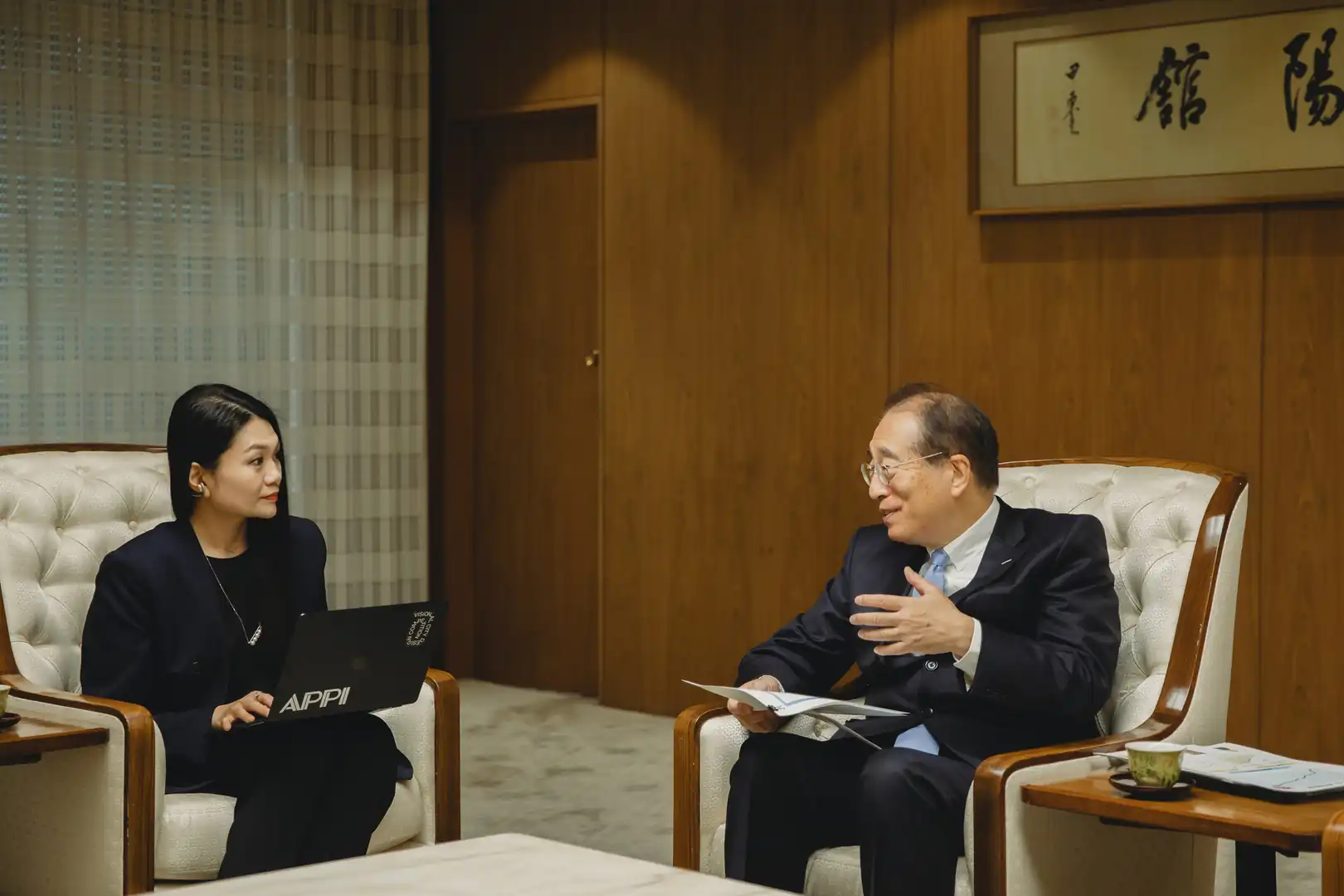
Aki Hayashi, Focused Issues Researcher, made the proposal “design centripetal force in the age of centrifugal force” in 2025. She asked Shingo Torii, Chairperson of the Osaka Chamber of Commerce and Industry and Representative Director, Vice Chairman of the Board of Suntory Holdings Limited, for dialogue to deepen the proposal. The full text of the dialogue is presented, including episodes that could not be included in the report due to space constraints.
Aki Hayashi, editor and business executive, talks to Shingo Torii, Chairperson of the Osaka Chamber of Commerce and Industry and Representative Director, Vice Chairman of the Board of Suntory Holdings Limited, to deepen the proposal.
As a leading figure in the Japanese business community, Torii continues to combine abstract concepts with concrete manufacturing and materialize his vision. Through dialogue with Torii, she explores hints for Japanese companies to create innovation again.
The founder’s “design-oriented” DNA
Hayashi How has design been involved in your challenges as a leader of the Japanese business community? I would also like to hear about the positioning of the design organization within Suntory and how design literacy is communicated to the employees.
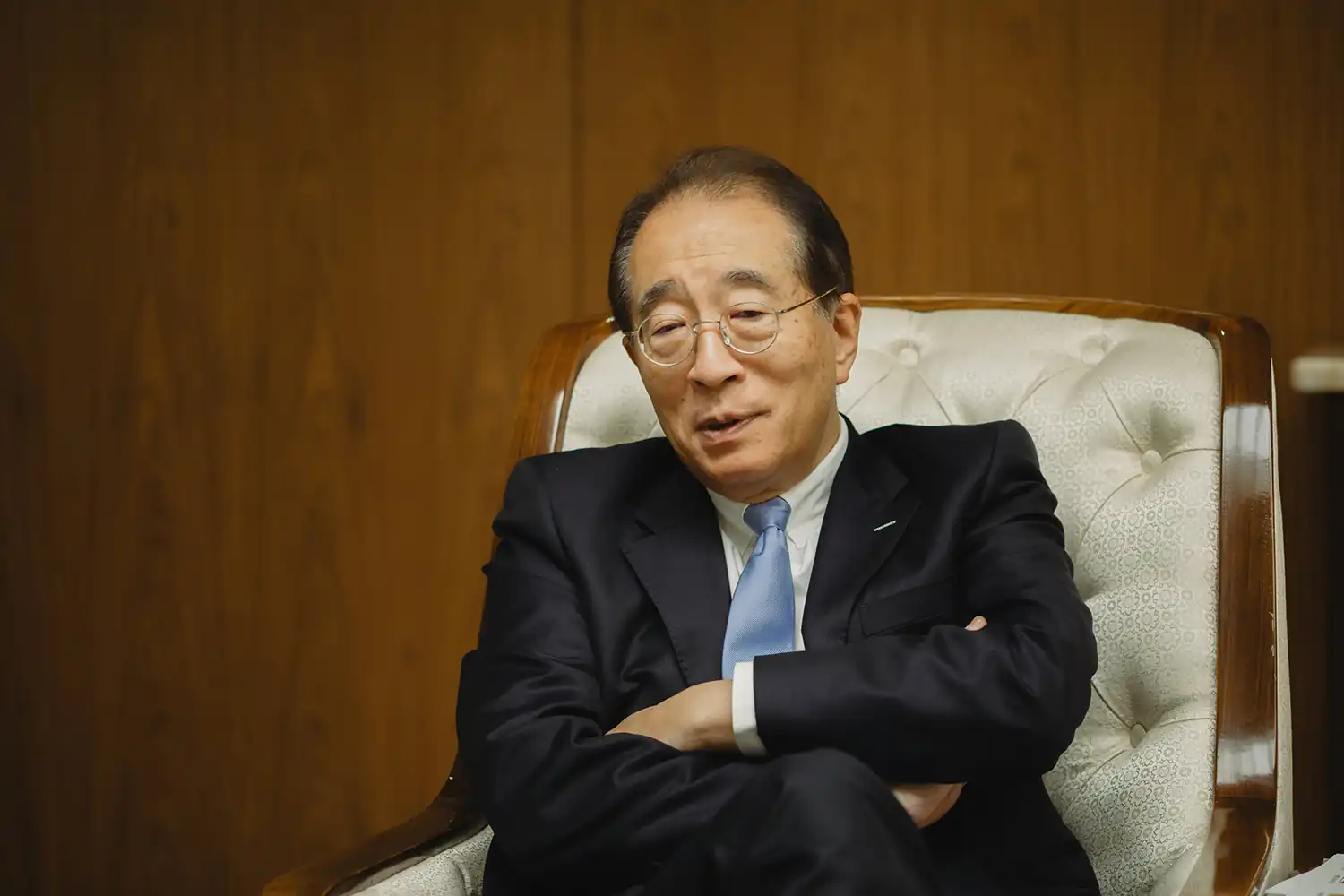
Torii In Suntory, its founder Shinjiro Torii was a very design-oriented person. He had a strong interest in design from the time he founded the company in 1899 at the age of 20. I feel that it still influences us as the formation of the company and the starting point of the organization.
This is backed by an episode. In 1897, before the company was founded, the trademark “Mukaijishi” was registered under the name of Kizo, Shinjiro’s older brother, who was a western liquor dealer. This was a typical British liquor mark. It was registered only about 10 years after the trademark registration system was instituted in Japan. The fact that the design was registered as a trademark in Senba, Osaka, at such an early time is proof of Shinjiro’s foresight and enterprising spirit.
Hayashi He considered design such as not only product quality but also appearance and mark as a core element of brand identity even before the trademark system was widely adopted.
Torii That’s exactly right. He didn’t know the word “brand,” but he was trying to create a brand. He placed as much importance on design as the taste and aroma of alcohol and beverages and was trying to do business. Like today’s startups, he was in charge of product development, sales promotion, and accounting all by himself. And he was already in charge of design from the start of business. He knew that design was a face and trust.
Hayashi The founder himself was responsible for integrating design with business as a whole. The DNA is the origin of Suntory’s philosophy of “viewing design as management capital.”
Torii Yes. I think it continues to have a strong influence on the company culture that continues to this day.
Culture where non-designers can choose design
Hayashi Design has been the starting point of business since the days of founder Shinjiro Torii. As a result, design has permeated the entire organization.
Torii A symbolic example of Suntory’s culture is the story of Ms. Etsuko Nakajima, an engineer who created a carbonated drink called C.C. Lemon. She was devoted to the development of beverage recipes. When she developed C.C. Lemon, she decided to double the amount of vitamin C. So, she proposed to name it “C.C.” As for the color of the packaging, she saw the color of the notebook the designer at the time had, and said, “yellow is boring. This reddish chrome yellow is good.” She even thought about the color.
At the time, Suntory had the freedom to think about the overall structure of products beyond the usual division of roles: advertising department for naming, designers for designing, and engineers for developing recipes. Non-experts figure out what’s going on in the world and decide the direction of design. This may be the Suntory culture of the “freedom to grasp what is in the background” that dates back to the time of Shinjiro Torii.
Hayashi Contextual design. Design is deeply involved from the upstream process.

Torii Yes. It is important to have a culture in which free and vigorous discussions like brainstorming can take place. I think if someone says, “I’m the superior, so let me do the design,” or “Design as I tell you,” the company and the world won’t last long.
This culture has been around for a long time. About 10 years ago, for example, the design manager at the time changed the entire office layout of the design department. The manager created a lounge that facilitates co-creation among employees including designers, engineers, marketing staff, sales staff, and anyone else. I think it is more convenient for the design section to be a mediator between the concept of manufacturing and actual products, neither on the management side nor on the manufacturing side, and have a function to connect everything in the middle.
Design is not a cost center
Torii Before I joined the company, the design office was under the direct control of Keizo Saji, the president at the time. The president’s office and the corporate planning office are usually under the direct control of the president, but the design office was under the direct control.
Hayashi In the 70s and early 80s, it was very progressive for large companies to put a design organization under the direct control of executives.
Torii In addition, Keizo Saji was personally close to the heads of the design office and met with them frequently. He stayed out of design, because he was not a design expert. I think he wanted to get in touch with their creativity and to be able to see things from a new and different perspective. Current chairman Nobutada Saji also focused on design.
Hayashi He focused on design as management capital and made it in-house.
Torii I’m sure he did. I think he understood design intuitively, not as a management theory. This is in contrast to the situation in modern Japan, where design is regarded as a cost center and tends to be subject to cost cutting.
Suntory’s historical challenges – for example, the roots and driving force behind investing in the beer business for more than 60 years – can be traced to the belief in and investment in design by executives. I feel that design contributes to the fact that Japanese whisky has a presence in the world.
For example, the letters on the “Yamazaki” label were written by Keizo Saji. The idea of drawing large Japanese kanji on labels was a bold idea that was unprecedented in the world at the time. After all, design is credibility.
A sense of close distance between management and designers created by an “actual product comes first” principle.
Torii Suntory has a lot of designers, but they are based on the “actual product comes first” principle. It can be made virtually using CG or AI. But basically they make actual products as much as possible and discuss. Tactile sensation and weight when you hold it are also important. People are not very interested in PowerPoint presentations, but their eyes light up when they see the actual product. Because we sell actual products, it is important to talk about the actual products in the company just like customers buy the actual products in front of them. This is the same with taste, smell, and touch.
One example is a plastic bottle of Iemon green tea that mimics bamboo tube that once won a GOOD DESIGN AWARD. At the time, only plastic bottles of the same shape were produced in Japan. This is an example of how the power of design is used to create something new.
Hayashi The distance between management and design is very close. In addition, the distance between management and products is short. This is the driving force that keeps producing innovative designs.
Torii The distance between abstract concepts and concrete manufacturing is much closer. Corporate managers understand the two poles of ideal and real, “the reality on the ground is this. But my ideal is this,” then close the distance, and integrate them. This action is not a so-called painting, but a design. Like Henry Ford and Steve Jobs, we combine the abstract with the concrete, as designers should.
Hayashi I really want to ask you about the Osaka Expo from an on-site perspective. I heard you were so enthusiastic that you went to the EXPO more than 50 times. I think the Expo is large-scale “on-site” of “concrete.” What impact do you think the Expo has had on people in terms of design?
Torii I went there 50 times because I was the Deputy Chairperson of the Japan Association for the 2025 World Exposition. Many things were said about the Grand Ring at first, but the Grand Ring is more modern art than architecture. There were many modern artistic expressions at the Expo site. For example, public art such as Wolf Bench near Osaka Healthcare Pavilion is one of them.
Some 158 countries from around the world participate in the Expo, presenting themes such as culture and art, the environment and advanced technology, and wellness through their unique exhibitions and architecture. When entering the pavilions of each country, you can see colors and designs different from those in Japan.
The Expo, which brings together a diverse range of designers, inevitably catches the public eye. A total of 29 million people have been exposed to this kind of design. I feel it has had a huge, invisible impact.
Hayashi The value of design has been promoted by the EXPO in society. What has emerged through this dialogue is that design is not just decoration, but a concept of “actual product comes first principle” that connects “management,” “on-site,” and “society.” I feel that this philosophy is a universal clue for Japanese companies to survive uncertain times and continue to innovate. Thank you very much for talking with me today.
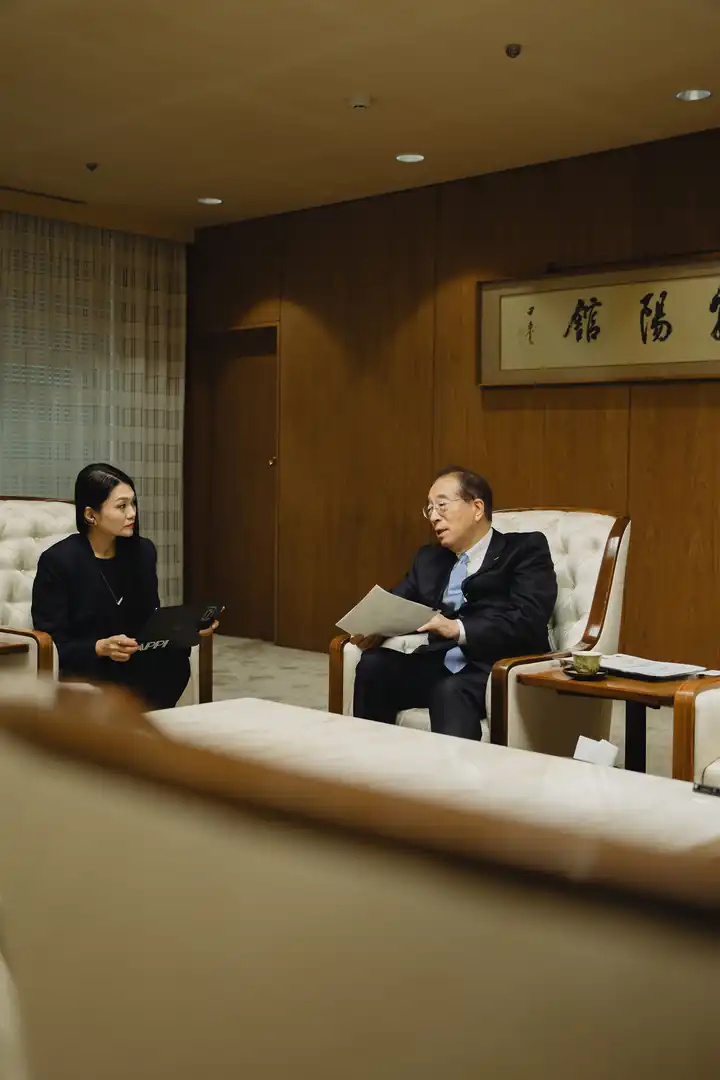
Shingo Torii
Joined Suntory in 1983. Contributed to the improvement of whisky quality as the third-generation Master Blender in 2002, and became Vice Chairman of Suntory Holdings Limited in 2014. Took office as Chairperson of the Osaka Chamber of Commerce and Industry in 2022, after serving as President of Kansai Keizai Doyukai (Kansai Association of Corporate Executives). With the spirit of “Yatte Minahare,” he is leading the economic, cultural, and regional development of Kansai.
Aki Hayashi
Editor, director | President of Brand Journalism, Inc.
Joined the Asahi Shimbun Company as a reporter in 2009. Appointed Chief Creative Director of HuffPost Japan in 2017. Became Web Editor-in-Chief of Forbes JAPAN in 2018. Joined AlphaDrive Co., Ltd. in 2020, serving as Executive Officer and Editor-in-Chief, as well as Director of NewsPicks for Business. Founded Brand Journalism, Inc. in 2022 and became its President and CEO. Also served as the Editor-in-Chief of the business media Ambitions.
Ryo Hasegawa
Writer
He assists with writing structure and articulation, supporting individuals, companies, and media in their communications, with a focus on technology, management, and business-related content. Notable editorial collaborations include The Future of Work in 10 Years (Takafumi Horie & Yoichi Ochiai), The Evolution of Japan (Yoichi Ochiai), THE TEAM (Koji Asano), and The Formula for Career Success (moto), among others. His background includes studying at the University of Tokyo (Interfaculty Initiative in Information Studies), working at Recruit Holdings, becoming independent, spending three years playing poker in Africa, and continuing his career today.
Misa Shinshi
Photographer
Born in Kyoto in 1998. After graduating from Kyoto City University of Arts, she writes as an artist and performs client work as a freelance photographer.
Masaki Koike
Editor
Editor. He does planning and editing in multiple media, mainly in collaboration with researchers and creators.


Related Articles
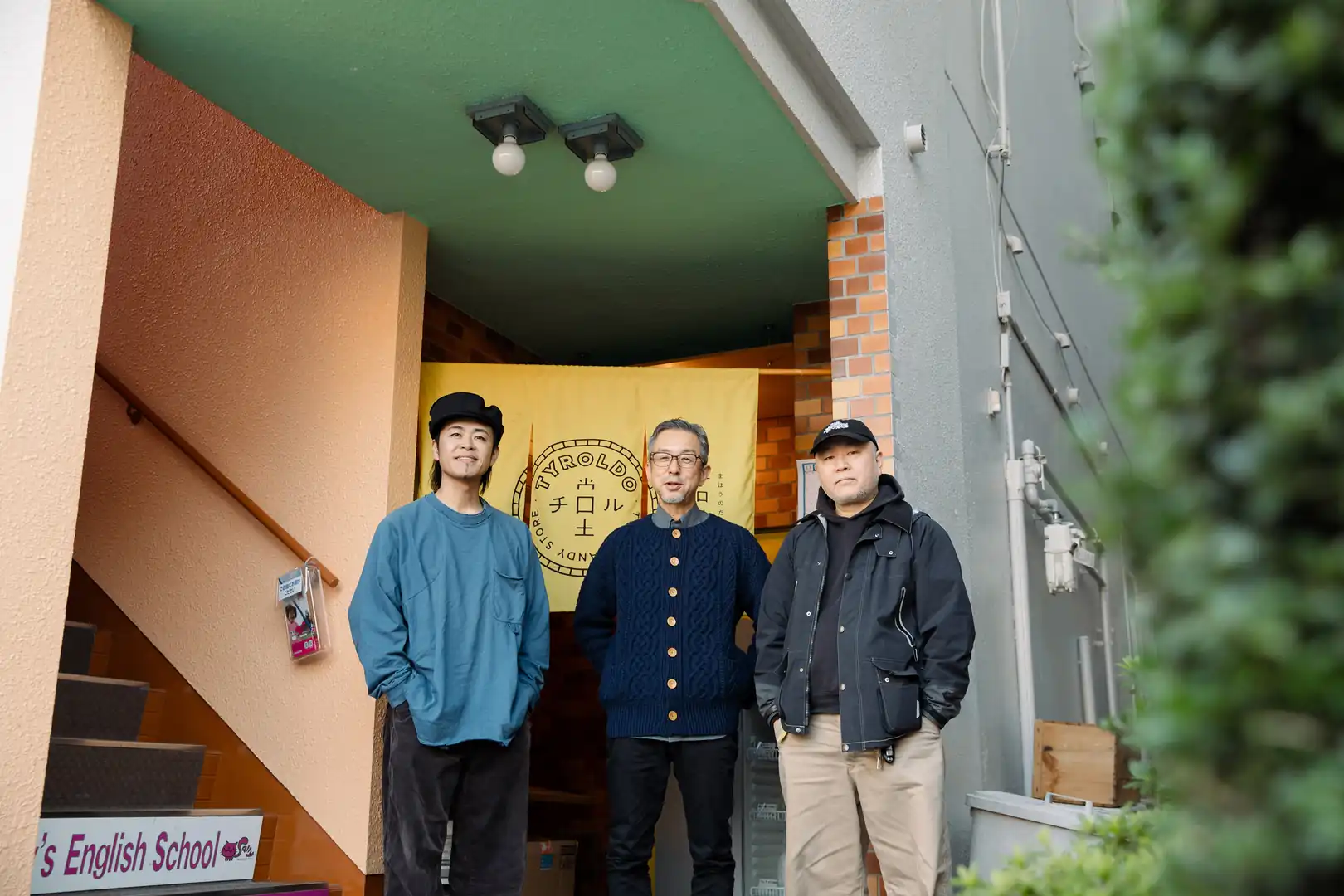
Tyrol-Do, Design to Alter Our Consciousness” - Three Years after Winning GOOD DESIGN GRAND AWARD: Takashi Yoshidada × Daisuke Sakamoto × Naoki Ota
Naoki Ota, a 2025 Focused Issues researcher, follows the journey of Magical Dagashiya Tyrol-Do, winner of the GOOD DESIGN GRAND AWARD three years ago. Through conversations with co-representatives Takashi Yoshidada and Daisuke Sakamoto, the research explores how new systems take root in communities and gradually transform everyday behavior, ultimately reshaping social values.
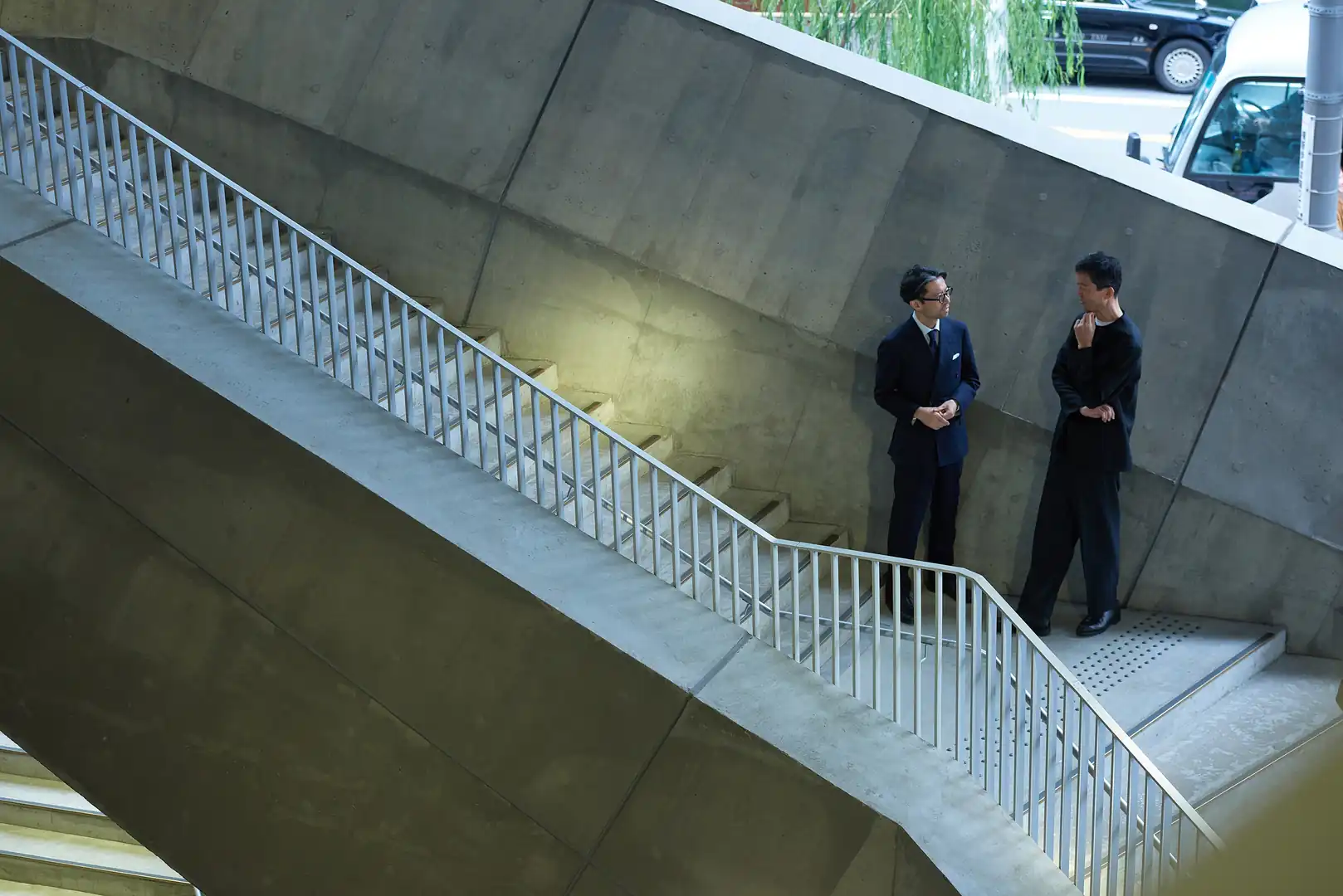
Design of “blank space” given shape in Ginza - Daisuke Nagano of Ginza Sony Park Project talks with anthropologist Yutaka Nakamura
Focused Issues is an activity that considers and recommends new possibilities for design through the Good Design Award screening process. In advance of the announcement of the 2025 GOOD DESIGN AWARD Focused Issues, this article gives a sneak peek at the conversations which took place as part of this process.
Free Design, Unleash Design: 2025 Focused Issues Report Released
A “wave” of design, “Free Design, Unleash Design,” seen through the GOOD DESIGN AWARD 2025, and six proposals for society to address