What challenges should designers face now, as found at the GOOD DESIGN AWARDs.
FOCUSED ISSUES is a GOOD DESIGN AWARD initiative that depicts the future of design in society through the screening process.
FOCUSED ISSUES 2025
Free Design, Unleash Design
Design which “overwrites the operating system of society,” spreading out from “city center parks” – Yuki Yamada with Naoki Ota
2026.04.22
Focused Issues Researcher Naoki Ota made “overwriting the operating system of society” a keyword in his 2025 proposal. He focused on the “Chiyoda City Park Development Plan 2025,” which reimagines the 58 parks in Chiyoda City as a whole, as a real-life example embodying this phrase.
In 2025, Chiyoda City formulated the “Chiyoda City Park Development Plan 2025,” which covered all 58 parks in the city, and moved ahead simultaneously with each individual upgrade based on this plan. The project was taken forward under a policy of improving the quality of the parks themselves to create public spaces which would last for decades or even centuries, rather than the Park-PFI (Public-Private Finance Initiative) model of attracting visitors with cafes and other profit-making facilities.
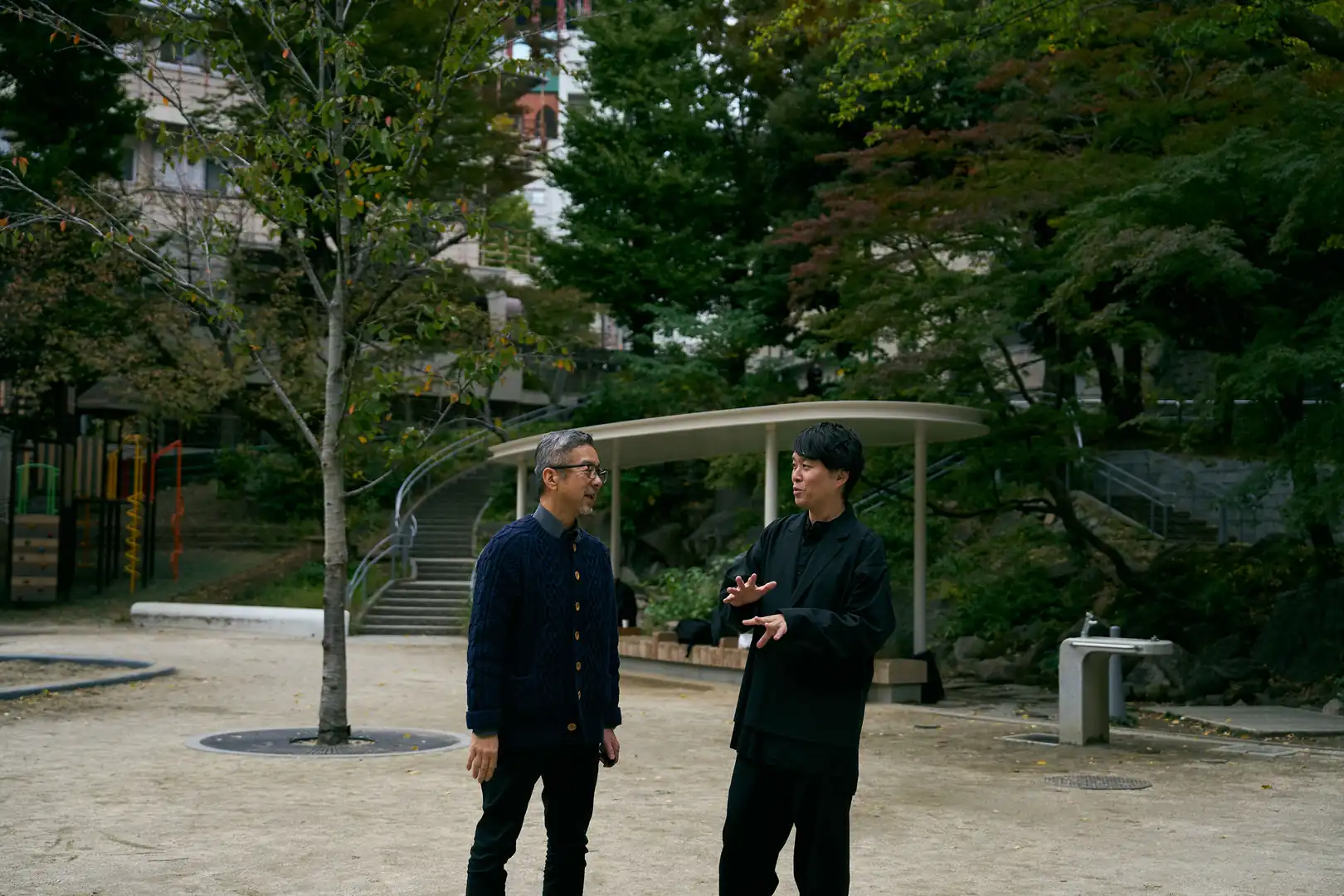
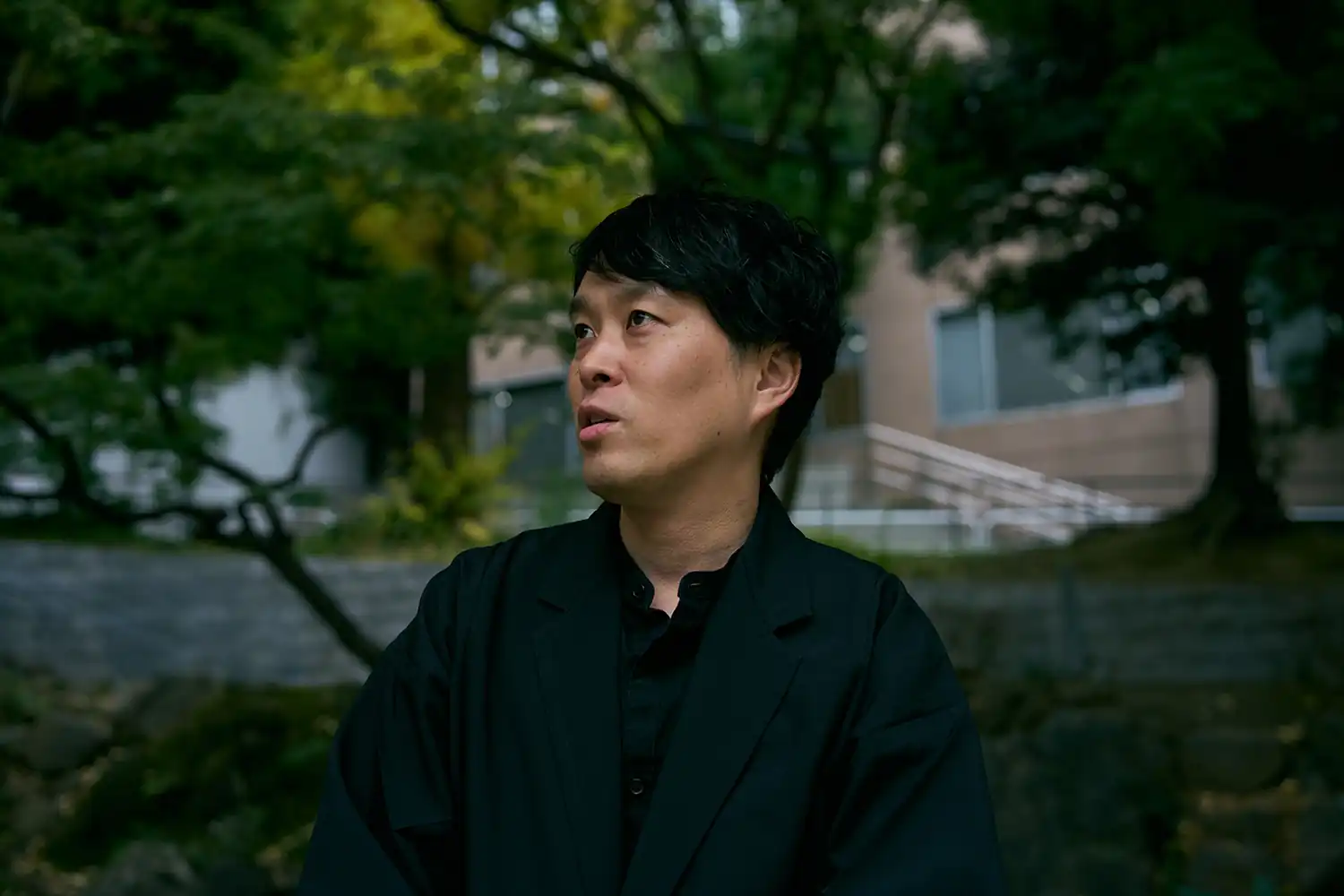
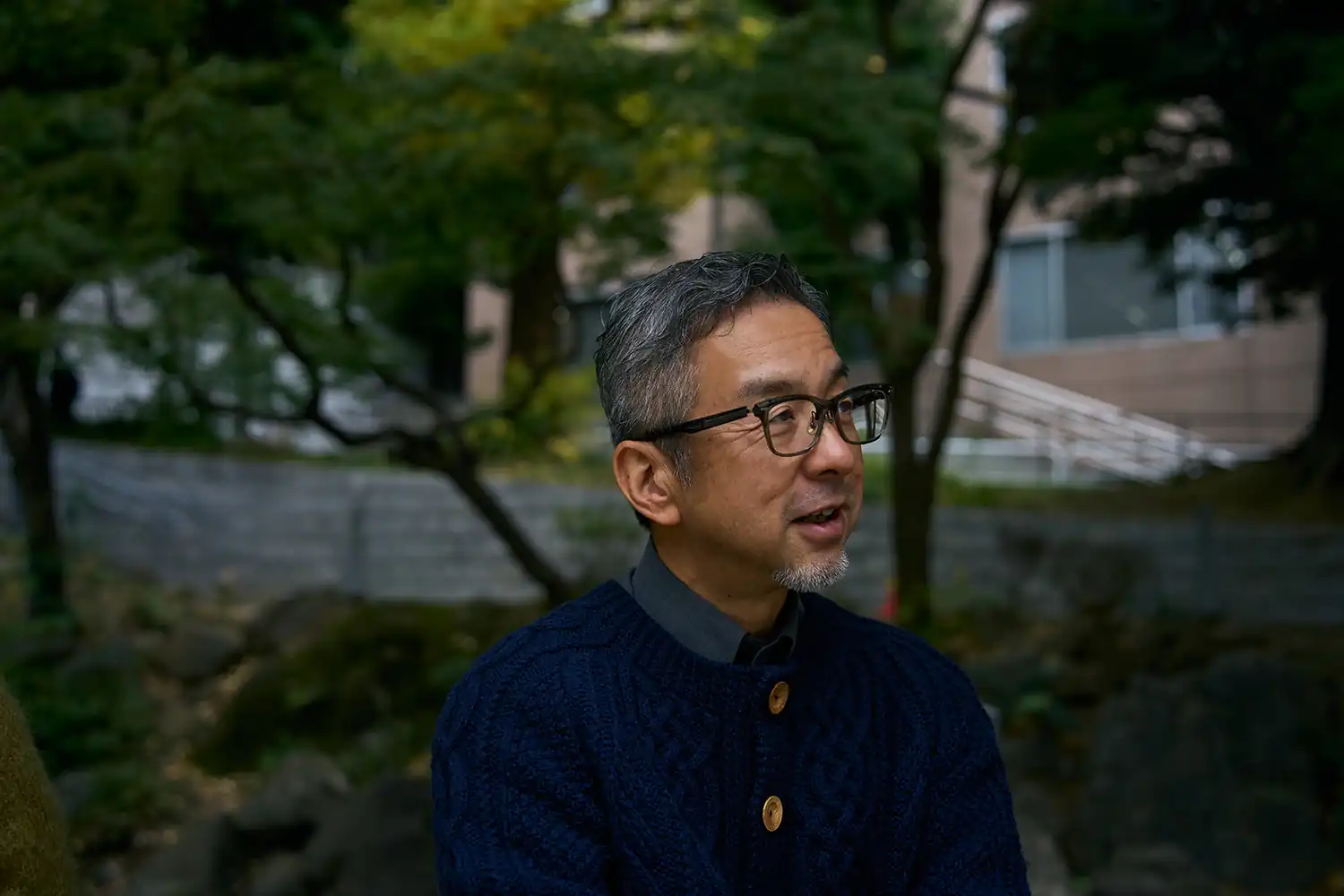
Yuki Yamada (CEO of Tetor inc.), a landscape and civil engineering designer, took charge of the overall design. Can small changes that emerge from city center parks change the very fabric of society? While walking around Chiyoda City's Kinka Park, which has just been refurbished, Ota spoke with Yamada to explore the possibility that this thought and method of park development which looks to the next 100 years could “spread” nationwide.
Focused Issues Researcher Naoki Ota made “overwriting the operating system of society” a keyword in his 2025 proposal. He focused on the “Chiyoda City Park Development Plan 2025,” which reimagines the 58 parks in Chiyoda City as a whole, as a real-life example embodying this phrase.
In 2025, Chiyoda City formulated the “Chiyoda City Park Development Plan 2025,” which covered all 58 parks in the city, and moved ahead simultaneously with each individual upgrade based on this plan. The project was taken forward under a policy of improving the quality of the parks themselves to create public spaces which would last for decades or even centuries, rather than the Park-PFI (Public-Private Finance Initiative) model of attracting visitors with cafes and other profit-making facilities.
Yuki Yamada (CEO of Tetor inc.), a landscape and civil engineering designer, took charge of the overall design. Can small changes that emerge from city center parks change the very fabric of society? While walking around Chiyoda City's Kinka Park, which has just been refurbished, Ota spoke with Yamada to explore the possibility that this thought and method of park development which looks to the next 100 years could “spread” nationwide.
Finding the “new” and the “unchanged”
Ota You have shown me the “Chiyoda City Park Development Plan 2025” drawn up by Chiyoda City, and a park which has been refurbished based on this plan. What impressed me was the flexibility with which the tangible aspect of equipping the parks and the intangible aspect of running them are carried out in parallel. While drawing up the overall policy covering all 58 parks through investigations spanning a year, you went ahead with designing individual parks the following year at the same time as carrying out the analysis. I felt that the strength of this project lies in the fact that there is no separation between planning and implementation.
Yamada I think that we were able to move ahead without separating planning and implementation because several conditions were already in place. The fact that the city mayor came out with this direction was one thing, and the presence of a key person on the administrative side was also a major factor. Mr. Watanabe, the person responsible at the city office, took charge of this project; he was in charge of the design of a park with which I was involved in at the beginning of my career. He knows the design sites and can carry out the local government’s planning procedures; the other staff responsible with whom I worked also put together a very solid structure.
Ota I heard that a study group has been set up, too.
Yamada Yes. Expert professors have joined it. Professor Nakai of the University of Tokyo; Kaori Ito, a GOOD DESIGN AWARD judge and urban researcher; a wide variety of experts and people actually working on children's playground projects in parks; and the head of Chiyoda City’s environment and community development department participated in the event and gave advice from multiple perspectives.
What was interesting was when someone pointed out that “we should not lose sight of a park's origin as ‘a place where people meet,’” while also incorporating new activities such as skateboarding. New ways of using the park and its timeless value. We built this policy on both these pillars.
Ota In the past few years, Park-PFI often becomes a talking point when it comes to the effective utilization of parks. Did you consider it for this project?
Yamada It hardly came up in our discussions. Park-PFI is basically a system in which private businesses set up cafes and other profit-making facilities in parks and return part of the profits for park development. The longest-running permits for setting up and running these last for 20 years. The idea is to enhance the attractiveness of parks by using the facilities' ability to attract visitors, but Chiyoda City’s approach aimed to improve the quality of the parks themselves and create something that would last for a long time, rather than relying on profit-making facilities.
Of course, Park-PFI itself is a great system, and I have no intention of rejecting it. It’s just that permits are for 20 years at the longest, so there is unease about what will happen after that. The trees in this park have already been alive for decades, and the pond behind is marked on an old map. This location is on the edge of a cliff on the Hongo Plateau, terrain in which water naturally collects, and when the park was first built, it was properly maintained as a pond. This refurbishment takes this history forward.
Ota It rebuilds the park while making use of the layers of history, doesn’t it? What surprised me when I was walking around just now was that craggy area.
Yamada We did not create that as something new; it is one of the things we have deliberately left. The trees are all as they were, too. Because the entire park is being refurbished as a single project, it is possible to determine what to keep and what to change in a unified way. Things don’t work like that when you do the construction in parts.
Ota I live near Jiyugaoka, and a cliff called the Kokubunji Cliff Line stretches for a long way near the Tama River. As you’d expect, places where there are cliffs are rich in water, and greenery grows easily. There is also a tumulus (an ancient burial mound), so the characteristics of very old topography have been retained. I feel the same thing in this park.
Yamada That’s right. Places like these are rich in nature and greenery, aren’t they?
The fact that such open spaces on which nothing is built exist in the city center is important in itself. Leisure activities, such as skateboarding, are possible because there are open spaces. These needs did not even exist a decade ago, but precisely because we don't know how these spaces will be used in the future, I think it is meaningful to make sure to preserve them as public spaces with blank areas that can be used for anything.
When a space changes, behaviors also change
Ota I can feel the grandeur of the concept. What were the biggest difficulties you faced in actually taking it forward?
Yamada To begin with, the large number of parks, meaning that we needed to understand the characteristics of each and keep all of these in mind when thinking about the project. Of course, the job is impossible without going round to see them all for yourself. So I did nothing but cycle around the city, thinking about what role I could give to each one of them. It was really hard work (laughs)!
What’s more, the size and concentration of parks vary greatly from area to area. For example, there are several relatively large parks around the area where we are now, but there are many small parks scattered around Akihabara.
Ota You’re saying that each area has its own characteristics.
Yamada Mmm. Bearing in mind this situation, I tried to think on three scales: what policy we should decide upon for Chiyoda City as a whole, how we should fully utilize the characteristics of each area, and how we should design each individual park. I think about these three layers at once.
I originally studied civil engineering at university, and from there I went on to the design of landscapes and public spaces. I am the person who actually drew up the blueprints for the parks and managed the construction work, and so I understand as a feeling things that cannot be seen from the plan alone. Because of my experience of working with my hands on the ground, I paid particular attention to ensuring that organizing the policy did not turn into an empty theory.
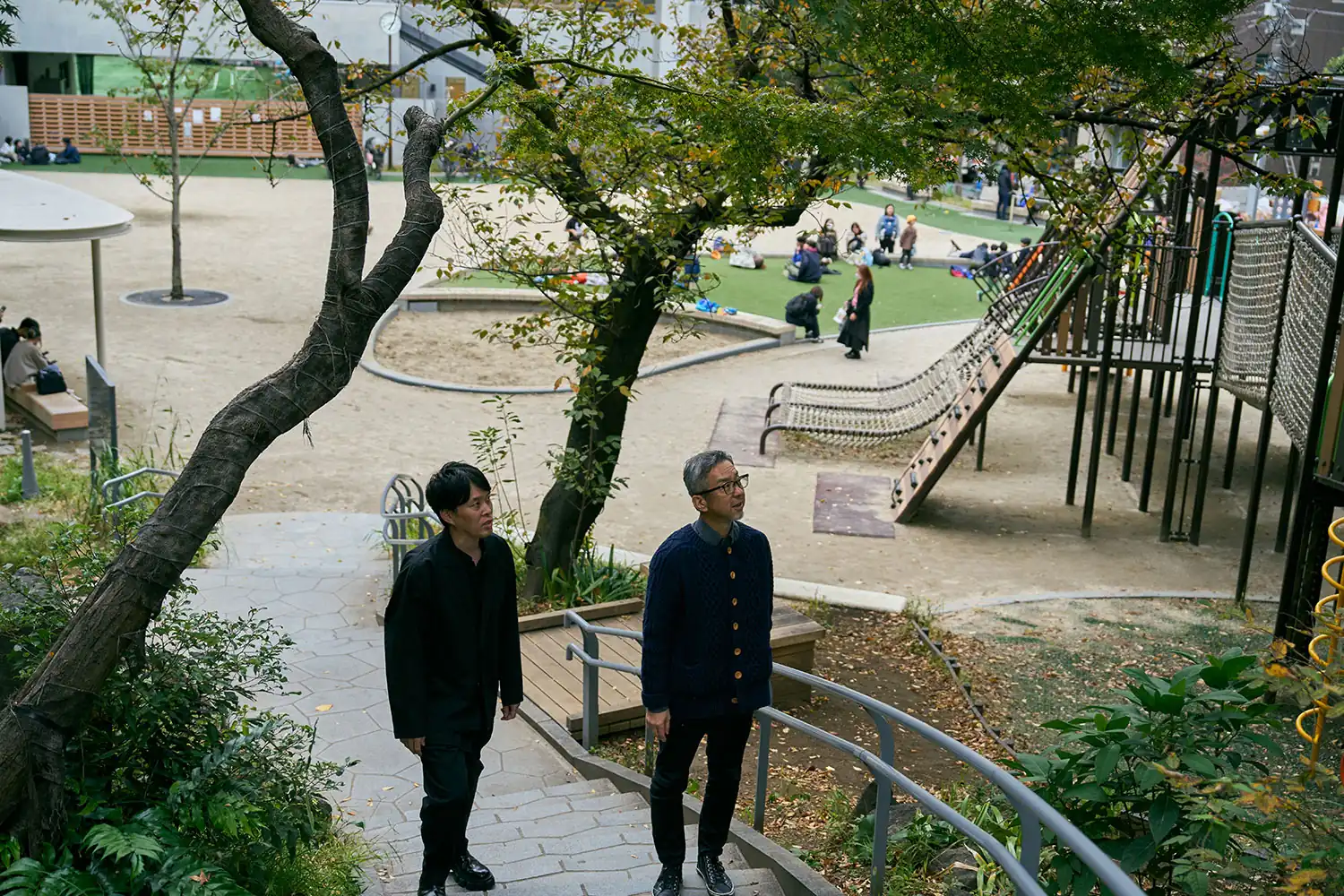
Ota What specific ingenious devices did you use in the park where we are right now?
Yamada Because children move wildly on playground equipment, this area is loosely separated from the area in which people can run around. As a result, the open area covered with artificial turf became the most popular spot. We considered natural grass, but decided to use artificial turf because there are buildings on the south side and insufficient sunlight, and because being used this much, it would soon turn bare.
Ota The way the children are playing is very assertive, isn’t it? I thought that they would be playing quietly because we are in the city center, but...
Yamada Not at all! Some children fetch water and pour it into the sandbox, and some children catch creatures in the pond. Just now, there was a child intently collecting fallen leaves, wasn’t there?
There are some places where we decided not to put up fences so that children could go right into the middle of nature. If there is a fence, they can’t go in, so we put them around the outside only and kept the inside open.
Ota When a space changes, behaviors also change, right?
Yamada Yes. Another example in which behaviors have changed is Kudanzaka Park. It used to be so gloomy and overgrown that no one came near, but after we spruced it up, more people came to see the Statue of Oyama Iwao on horseback. To be honest, I didn't initially think anyone would be interested in a statue, so I was surprised in a good way.
Ota That's wonderful. From my own experience of working in local government for about three years, I have always felt the importance of “informal public spaces,” which are not homes, workplaces, or cafes. That feeling has grown even stronger after going through the COVID-19 pandemic.
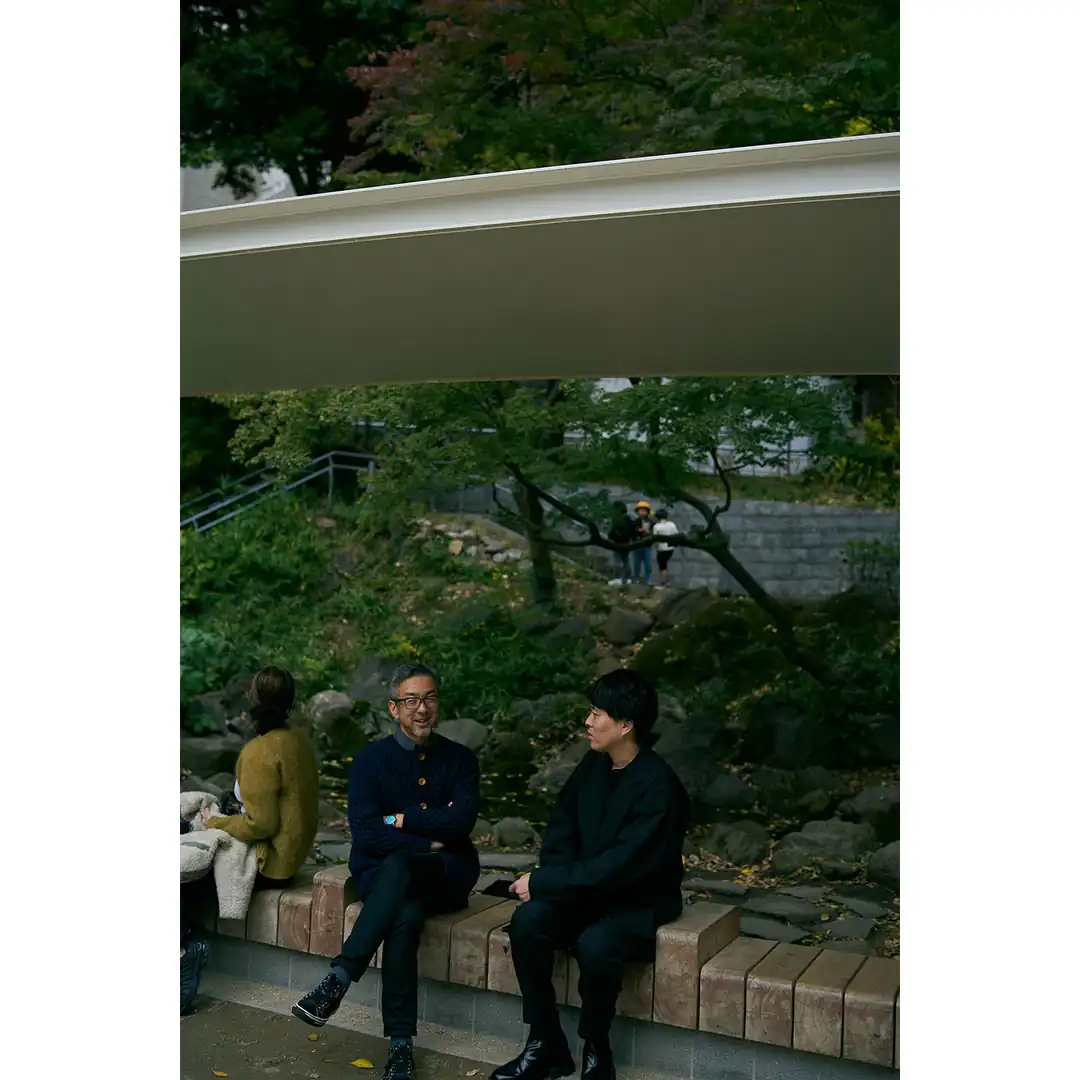
Yamada This park is designed with exactly that kind of place in mind. For example, if people are surrounded by walls or plants at their backs, they can feel at ease sitting there for a long time. We intentionally created these places which can “have people’s backs” around the perimeter of the park, and placed a roofed rest area near the pond.
Ota That’s true, there are places to sit throughout the park, aren’t there? The stone retaining walls have also been made so that you can sit on them.
Yamada Yes, in the middle of the day, office workers line up to eat their boxed lunches, so it's best to have many places to sit. We have set up stone retaining walls and other places where you can sit here and there, even without calling them “benches.”
Ota Changing perspective a little from the topic of seating areas, do parks have a role as urban infrastructure in addition to these visible ways of using them?
Yamada They do. Actually, invisible infrastructure is buried in this park, too.
In Chiyoda City, parks are required to have a rainwater storage function, and this park, too, has an underground reservoir. Not only that, the soil and grass areas also play a role in allowing rainwater to soak into the ground. At a time when climate change is causing far greater rainfall than was imagined, we cannot keep up simply by discharging rainwater into sewers. We have no choice but to absorb water little by little here and there in the city streets.
It’s not the case that “This was doable because it’s Chiyoda City”
Ota While this great initiative could become a reality in Chiyoda City, the officials in charge in regional local governments with limited resources may feel that they can't do the same. Where do you draw the line between what can could be done because this was Chiyoda City and what could be applicable anywhere?
Yamada It’s difficult to draw a line like that, but I feel that the parts which are applicable make up the vast majority, at least. In fact, we have already received requests for advice from several local governments. The most common request is not to create many similar parks within the local government area, but to allocate functions to each park and create an overall plan.
Public works projects inevitably face opposition from residents. On the other hand, it is easier to gain their understanding if you can explain that “this place plays this role” in relation to the parks round about. I think that this idea of sharing out functions to create the whole is applicable to any local government.
Ota I see. Am I right that reform-minded chief executives are essential to pushing this forward?
Yamada It is important to build consensus within the organization, but I think that the enthusiasm not only of the chief executive but also of the staff and of people in various positions is important.
In this example from Chiyoda City, too, there is no doubt that the mayor’s intentions were important, but without the staff who could put them into practice, they would never have been realized in a good form. This project worked precisely because there were people with vision on both sides, the designers and the government. I feel as though various elements have come together to make it a reality.
Ota You mean that the power of people is important... In that case, if there are other strengths unique to Chiyoda City, what might they be?
Yamada As the city has a small population, administrative decisions are made quickly, and this environment and ability to act which allowed us to quickly try various things were unquestionably strengths.
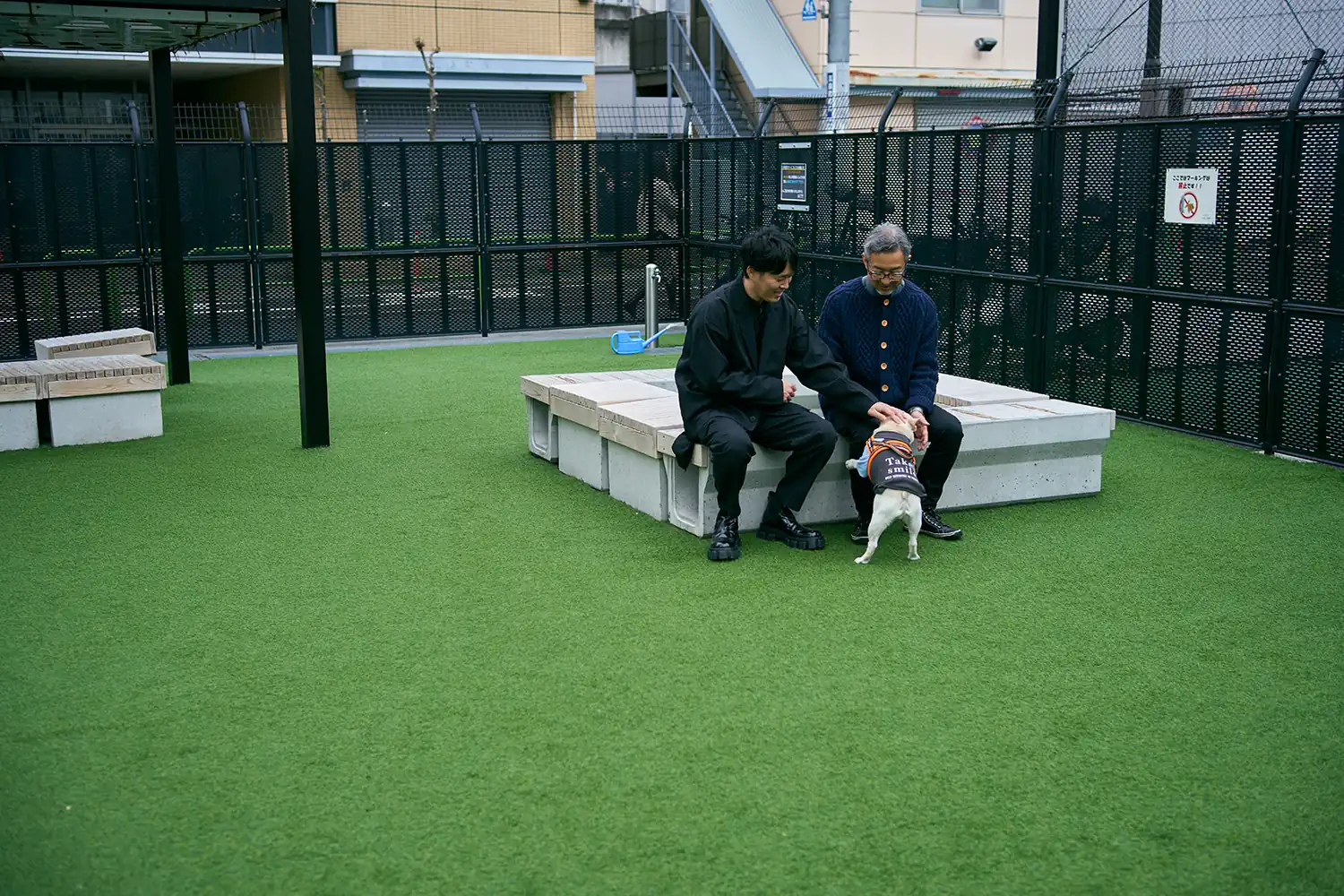
Having said this, I don't think it’s the case that other local governments could definitely not implement this initiative. For example, in terms of the financial side, the bench-like furniture in Dog Garden Iidabashi, which you saw earlier, is actually just U-shaped gutters with boards placed on top. Precisely because this is a temporary type of structure, we were able to create many places to sit at a low cost.
Ota I see, yes... So it's not just a matter of having a big budget.
Yamada Yes. They have a tight budget, and they are thinking as hard as they can under these circumstances. I myself work with local governments that have limited financial resources across the country, so I have to ask myself how I can be creative in places where there is little money. In places where they have a budget, we use durable materials to make things that will last for a long time, and in places where budgets are limited, we make up for it with intelligence. I think it's important to have this variety.
Another thing that I think can be applicable to other local governments is a perspective that does not stop at parks. With this project, we mapped all of the “outdoor places to be” in the city, including publicly accessible open spaces belonging to private buildings. For the residents, it doesn't matter whether somewhere is a park or a publicly accessible open space, so we reconsider both as one network. This concept is incorporated in our basic policy.
Ota The idea is to go beyond the category of parks and redesign the neighborhood’s places to be as a whole, right?
Actually, we conducted a follow-up survey of past winners this year, in a first for Focused Issues. “Magical Dagashiya Tyrol-Do” in Nara won an award three years ago, and after getting the award, they apparently received many inquiries from all over the country. However, since the core of the system is the thought of “adults losing a little at a time,” it cannot be reproduced simply by copying the form of the initiative. If they don't communicate the thought along with the initiative, it won't take root in society as a whole. So I hear that they've published a book that summarizes both the thought and the practice, deciding to embark on the initiative of open sourcing it.
I wonder if this initiative by Chiyoda City has a similar idea of “unlocking knowledge” like the Tyrol-Do.
Yamada Yes, very much so. These are public works, so there is no reason to keep our way of doing things closed. I hope this kind of method will spread throughout the country, and I am proactively introducing it in lectures for local governments. Because of this, I sometimes receive requests for advice from local governments saying that they too would like to do this in their areas, as I mentioned earlier.
Doing “things you aren’t asked to do”
Ota If you were to give lectures at architecture or construction-related universities, what would you like to tell the students in order to pass on this knowledge to the next generation and disseminate it more widely?
Yamada I would start from the premise that the field of “public space design” itself is still in the process of development. There are very few companies or players specializing in this domain, so I hope more young people will take the plunge. For this to happen, I want to communicate to them the appeal that I feel through my actual work.
Also, one more thing I want to tell them is the importance of “doing things you aren’t asked to do.” There are set specifications for public works projects, and in most cases, the basics follow these. On top of this, I then go one step further and suggest things that I believe are important but have not been asked for directly. Because public spaces are things that will endure for decades or centuries, I don't think it's enough to simply do what I’m told.
Ota That’s important, isn’t it? If we just look on the surface, public works projects may seem rigid and boring. There are fixed procedures, and the degree of freedom seems to be low. But the reality is different.
Yamada Yes. In fact, there are quite a few cases in which the government side, too, wants ideas which go beyond the specifications. Although they write “We want you to do this,” I feel as though they really want to know if I have a better suggestion or a better way of doing it.
The background to this is the fact that it is difficult contractually for them to ask for anything beyond what is stipulated in the specifications. For this very reason, I feel that it can be meaningful and appreciated for the designer’s side to take a proactive approach.
Ota You make suggestions even if you aren’t asked for them. That attitude eventually results in improving the quality of public space.
In the private sector, it is normal to work on one site or one building per client. But this time, with Chiyoda City as the client, you were in a position to take an overview of all 58 parks. That's why you were able to create a design for the whole, such as concentrating playground equipment in one park and making another park suitable for quiet strolls.
Yamada That’s right. Being able to handle various scales at once is a unique property of work on public spaces carried out together with local governments.
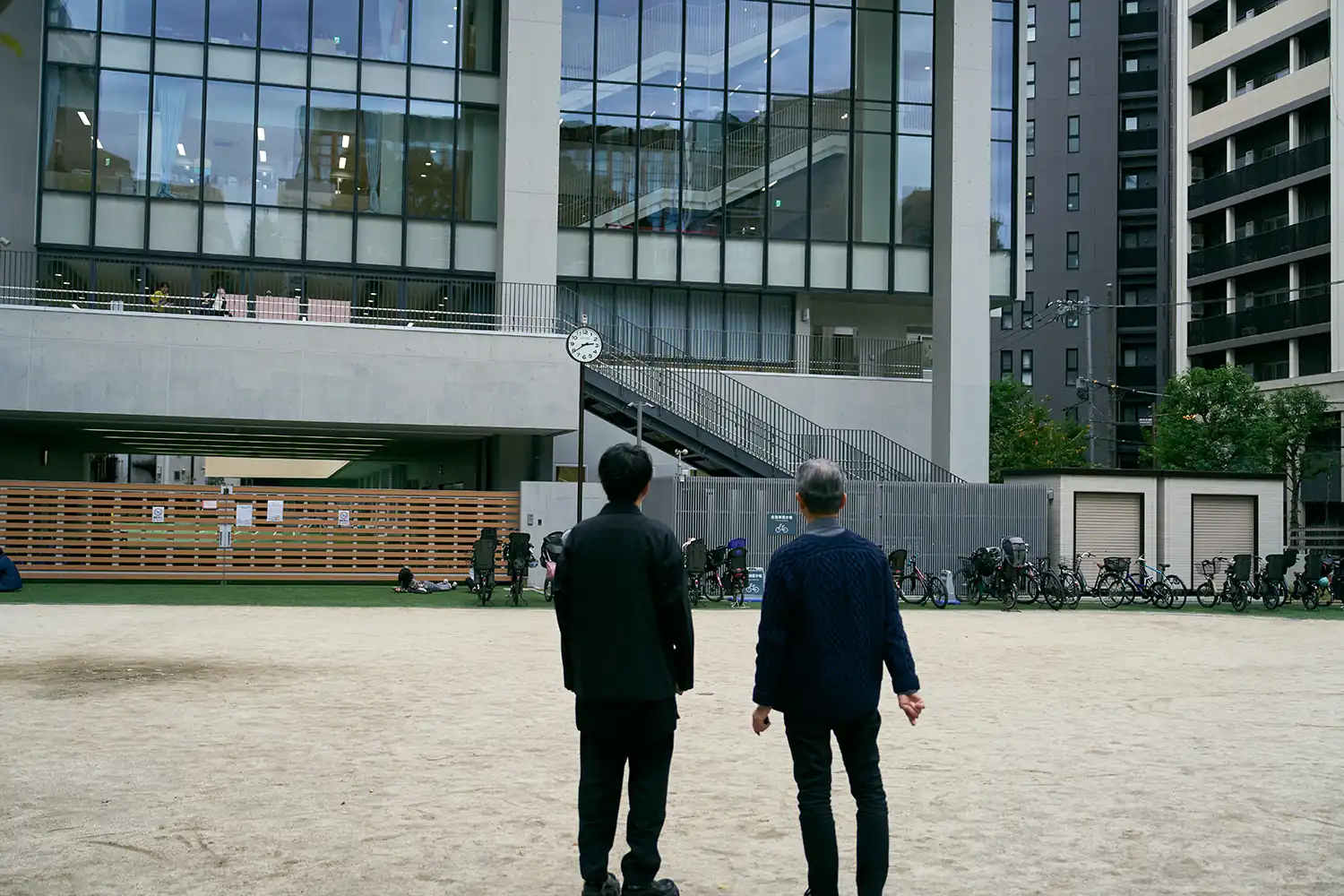
That’s true not just of the scale, but also of the length of the time axis. For example, in this park, we planted a single cherry tree facing the main gate of the elementary school. In 20 years’ time, it will perhaps grow into a big tree and become a new symbol. Elementary school students in the future may keep the memories of these cherry blossoms as they become adults. Because this is a public works project, I feel that I do not have to hesitate about investing in things like these which take time.
Ota That’s good! If parents and their children go to the same school, the day may come when they will say, “When your father graduated, this cherry tree was still small.” I think it’s a very happy thing that this will be the view which elementary school students see as they go to and from school each day.
When a park changes, it also changes the everyday lives of the people who live there. Even though each change may be small, if they happen in parks across the country at the same time, the landscape of this country itself could change drastically. As I listened to you talking today, I realized once more that this kind of initiative quietly overwrites the “operating system” of society and generates new blanks spaces and renewal in the world.
Yuki Yamada
CEO, Tetor inc., Co-Principal, Fukeikobo inc.
Born in Niihama, Ehime, Japan in 1984, he holds a bachelor’s degree from Kumamoto University and a PhD in Engineering from the University of Tokyo. He is the CEO of Tetor inc. and Co-Principal of Fukeikobo inc. His work focuses primarily on the design of public spaces and civil infrastructure, including parks, roads, bridges, and river environments. He received the Good Design Gold Award in 2025 for Chiyoda City Park Development Plan. His other honors include the JSCE Design Award, the JSCE Publication Culture Award, and the JLAU Award 2024 (Newcomer Prize and Jury Special Prize).
Naoki Ota
Co-creation Partner | New Stories Ltd. CEO
Until 2014, he was a management member of Boston Consulting, overseeing the Technology Group in Asia. From 2015 to 17, he was an assistant to the Minister of Internal Affairs and Communications, working on digital strategy and regional development. In 2018, he launched New Stories Ltd. to create future value leveraging his expertise and network. He helps to create communities that leverage technology.
Tomohiro Kurimura
writer/editor
Born in Aichi, his professional skills include gathering information, writing, editing, and project management. Manager, De-Silo “Unknown Unknown.” He is also active in multiple business companies, startups, and Web media. He graduated from the School of Humanities and Social Sciences, Waseda University. He has competed in baseball, basketball, karate, track and field, and handball. He lives in Kanagawa with a cat and a rabbit.
Takeyoshi Maruyama
photographer


Related Articles
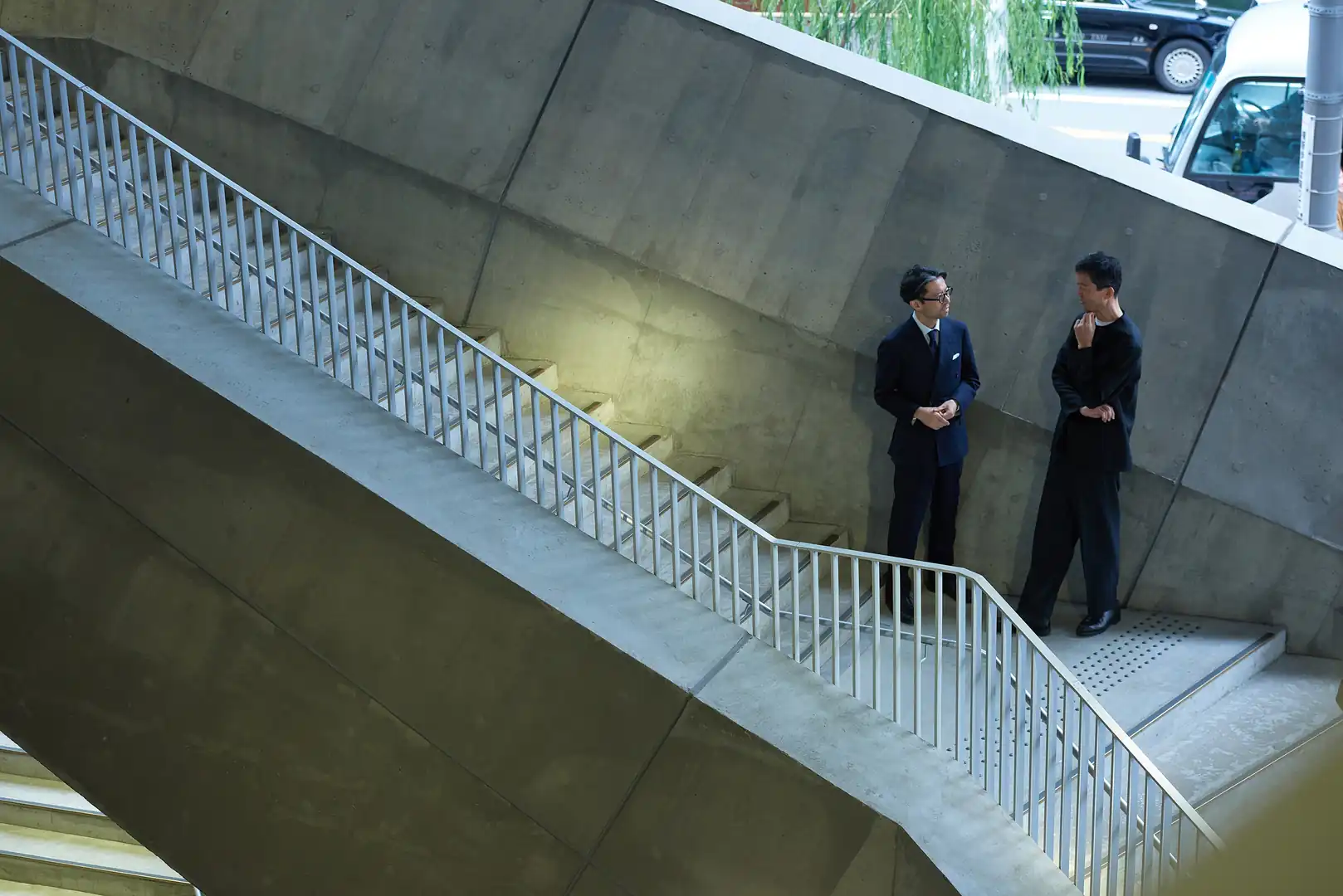
Design of “blank space” given shape in Ginza - Daisuke Nagano of Ginza Sony Park Project talks with anthropologist Yutaka Nakamura
Focused Issues is an activity that considers and recommends new possibilities for design through the Good Design Award screening process. In advance of the announcement of the 2025 GOOD DESIGN AWARD Focused Issues, this article gives a sneak peek at the conversations which took place as part of this process.
Free Design, Unleash Design: 2025 Focused Issues Report Released
A “wave” of design, “Free Design, Unleash Design,” seen through the GOOD DESIGN AWARD 2025, and six proposals for society to address
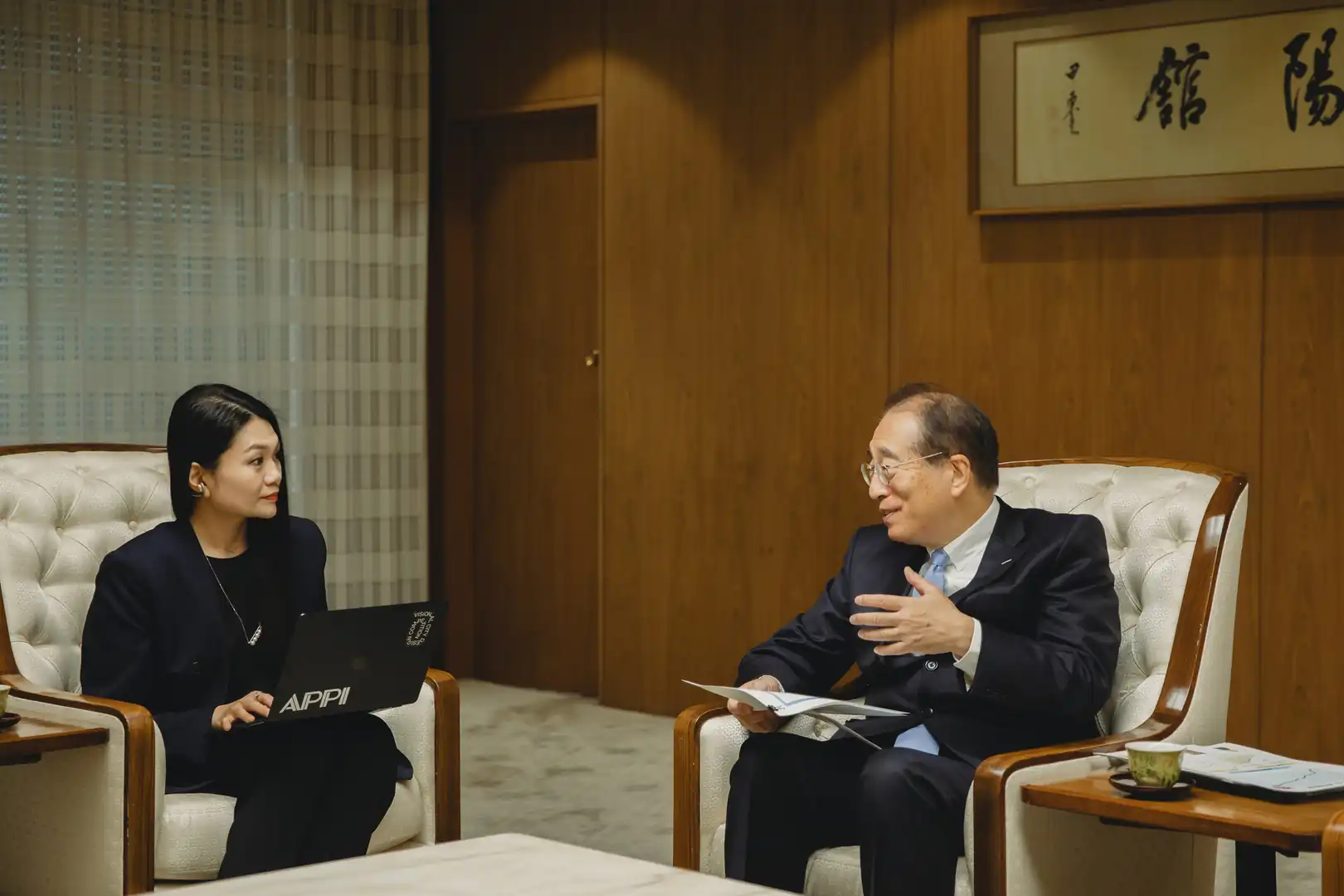
What is the happy relationship between design and management? – Shingo Torii and Aki Hayashi
Aki Hayashi, Focused Issues Researcher, made the proposal “design centripetal force in the age of centrifugal force” in 2025. She asked Shingo Torii, Chairperson of the Osaka Chamber of Commerce and Industry and Representative Director, Vice Chairman of the Board of Suntory Holdings Limited, for dialogue to deepen the proposal. The full text of the dialogue is presented, including episodes that could not be included in the report due to space constraints.