
What challenges should designers face now, as found at the GOOD DESIGN AWARDs.
FOCUSED ISSUES is a GOOD DESIGN AWARD initiative that depicts the future of design in society through the screening process.

FOCUSED ISSUES 2025
Free Design, Unleash Design
Exploring “centripetal force” design from the Sigma BF, which is pervaded by a return to the roots
2026.04.28
Aki Hayashi, Focused Issues Researcher, put forward “design centripetal force in the age of centrifugal force” as her 2025 proposal. The example which she cited as embodying this proposal was the Sigma BF, a full-size interchangeable lens mirrorless camera which won the 2025 GOOD DESIGN GOLD AWARD and the ECONOMY, TRADE AND INDUSTRY MINISTER'S AWARD.
Each camera body takes more than seven hours to carve from an aluminum ingot; the user interface is streamlined to the limit; and moreover, the logo, fonts, and packaging were refreshed at the same time as the product development. What kind of thinking lay behind the birth of this product, which reexamined the raison d'être of cameras and took on the challenge of going back to their roots?
Through a dialogue with Kazuto Yamaki, CEO, Sigma Corporation, and Hanna Morita, Manager, Brand Strategy Section, International Marketing Department, we explored the source of the centripetal force that was born by "carrying through" a concept.
Can cameras stay as they are? — The departure point for Sigma BF
Hayashi To start with, could you tell us again about the development background and concept behind the Sigma BF, which won awards this year?
Yamaki Let me begin with the camera market. The market peaked around 2012, when I became CEO, and has since shrunk to about 1/3 of that size. At that time, about 20 million interchangeable lens camera bodies were dispatched globally each year, but this has now fallen to fewer than seven million. The number of interchangeable lenses has also decreased, from 30 million at its peak to around 10 million.
The reason behind this is a huge improvement in the quality of images taken with smartphones. Technological advances in the computation corrections known as computational photography mean that smartphones are taking over from cameras when it comes to taking pictures. Of course, we do not mean to negate taking pictures with smartphones; they are now great photographic devices, too.
However, as manufacturers of cameras and lenses, we cannot help but feel a sense of crisis: can cameras stay as they are?
Hayashi With the market shrinking to 1/3, you had to reconsider the very meaning of making cameras.
Yamaki Yes! The camera industry is rather conservative, but our company doesn't have as high a share as the biggest players. The Sigma BF is a project that began with the intention of taking the plunge and reimagining what a camera should be, starting from its roots.
Morita The idea of creating products that do not exist in the world, rather than pursuing “products that will sell” in terms of numbers, is deeply rooted within our company. However, there is a limit to how far they can spread if we only reach existing camera users.
I am in charge of brand communications, and am in the position to think about how to deliver and communicate the value of Sigma's products and brands to our customers. As part of this, in the past few years in particular, I have come to feel strongly that our communications need to reach a different segment of society than they have done so far.
Hayashi You aimed for a camera which would reach a wider audience than just existing users. The need to rethink arose precisely because the market had shrunk, didn’t it? What kind of ideal camera did you come up with based on this?
Yamaki In a nutshell, “a camera you'll want to carry around with you every day.”
By having a camera in your hand, I think that situations in which you naturally want to press the shutter at random moments in your daily life arise more readily. One of the attractions of carrying a camera is that it lets you notice the unassuming beauty in things to which you do not usually pay attention, such as the shadows in back alleys or the light shining through the window in the evening. “A device that inspires a creative sensibility just by carrying it,” you might say.
You can take pictures with your smartphone, too, but oddly, you don’t feel like doing so, right? Even if you do take pictures, it doesn’t go beyond group photos or pictures of food; it’s hard to have the sensation that you’re noticing the modulation of light in your daily life and pressing the shutter. I think that carrying a camera draws your gaze to sudden beauty.
Hayashi Because it has fewer functions than smartphones, it has the power to draw people to take pictures, doesn’t it?
Yamaki That’s right. That's why I want you to carry your camera with you not only for special photographic occasions, but especially in your daily life. For that, you need a size and weight that do not cause problems even if you have it in your bag every day, and a texture and appearance that make you happy each time you pick it up. Something which is simple and elegant, allowing you just to focus on taking pictures. After focusing on this ideal from various angles, we discovered the concept for the Sigma BF.
The origin of the camera is a “dark box”
Hayashi “An experience you want to carry around with you” is simple to put into words, but turning this into a product can’t be easy. In concrete terms, what kind of concept did you have when designing it?
Yamaki I want to make something about which people will say 50 years from now, “Sigma made that kind of camera, didn’t they?” With this in mind, we focused on going back to the roots, which is to say “approaching the essential.” One of the concepts with which we came up based on this was a “modern camera obscura.”
“Camera obscura” means “dark room” in Latin. The name “camera” is said to have come from this etymology. In other words, the roots of the camera are a “dark box” that captures light. We can say that it's the lens that creates the image, and the camera itself is just a vessel to catch that light.
Hayashi The lens creates the image, and the body of the camera is the vessel that captures it. If you think about it in this way, today’s cameras feel far removed from this origin. We might say that the more features we add, the harder it is to see their fundamental role.
Yamaki That’s right. Of course, there is a reason why features accumulated. However, despite being a tool which is carried around every day, there are a lot of buttons that you don’t use: it isn’t beautiful, and we can’t call it sophisticated, either. In that case, why not take the plunge once more and try returning to a “dark box,” I thought.
The initial sketches I made for the design had only a single shutter button and a single dial. I asked the designer if he could do something similar to the iPod Classic’s click wheel, but in the end, he said no (laughs).
Hayashi Perhaps it was because there was a clear direction of “paring down to the absolute minimum” that the entire development team could reach the same goal.
Yamaki Maybe so. The materials incorporate the same kind of determination. The bodies are carved one at a time from aluminum ingots, taking more than seven hours per item.
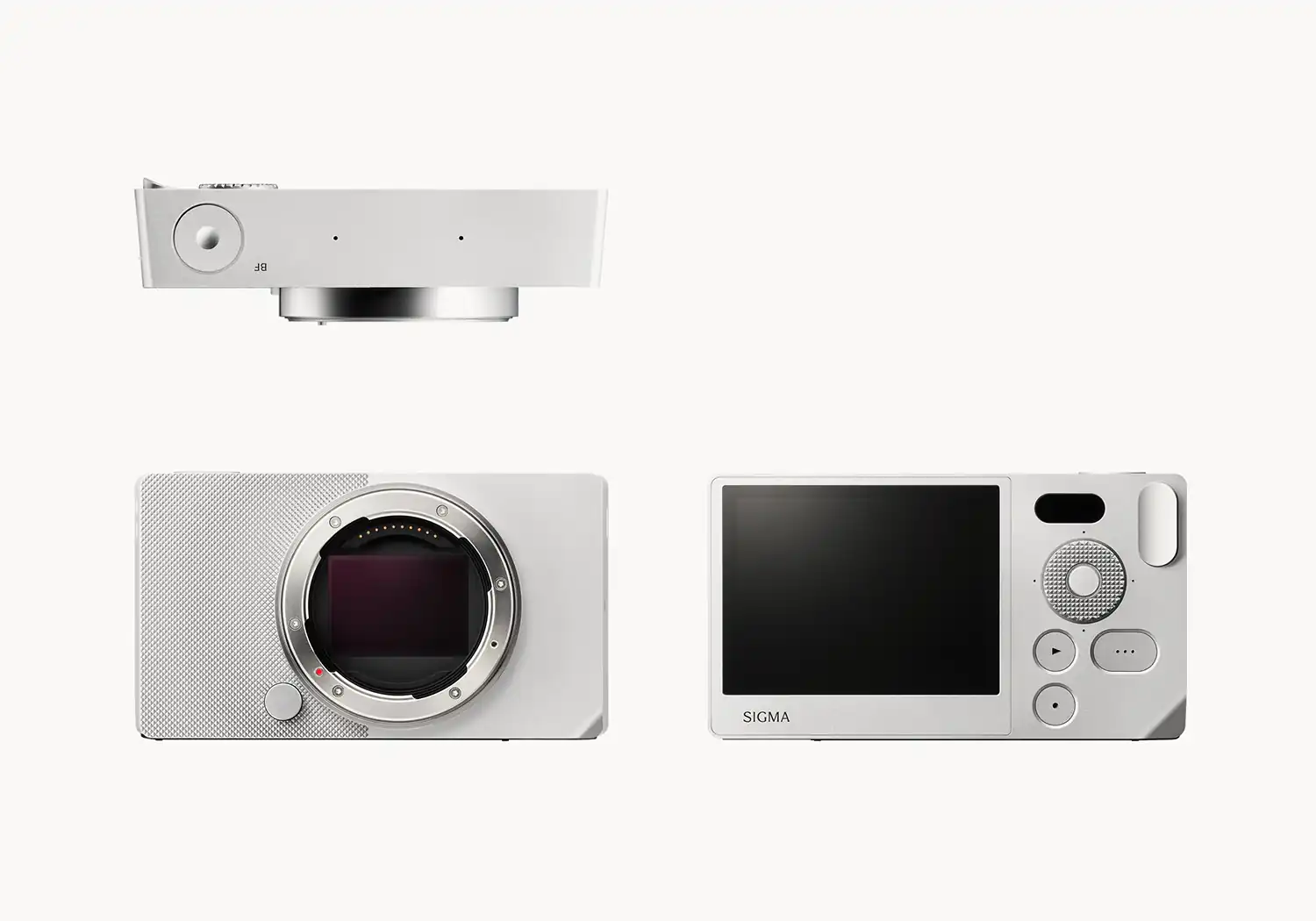
Morita When you actually try using it, I think that you will find it has a surprisingly friendly feel. There are few buttons, so you don't get lost, and taking pictures is purely fun.
The use of tactile feedback was also chosen taking into account the user experience. Buttons and wheels tend to get worn out over time, but tactile feedback is generated electronically, so it doesn't deteriorate and feels as comfortable as it did years previously.
On that basis, we would be very happy if people just used it naturally without noticing such technological tricks.

“Going back to the roots” rather than “rebranding”
Hayashi The design of the camera itself would have been challenging enough, but this time you have also refreshed the logo, font, and packaging. Please tell us why you went so far as to revamp the entire brand, not just the individual product.
Yamaki As it happens, we were originally discussing changing the way the brand was viewed, separate from the development of the Sigma BF. In order for Sigma to continue to be a brand of choice for customers, we thought it necessary to reconsider our visual identity.
Hayashi What was the context which led to discussion of your brand?
Yamaki Our company is a family company, founded by my father. With a listed company, the change of president may be a turning point, but the management of a family company continues on to the next generation and the ones beyond. Inevitably, we have to look decades ahead.
We believed that we had been committed to manufacturing until now. However, this is an extremely difficult thing to convey to the world. In that case, we decided to take the plunge and completely rethink the way we viewed our brand so that our company philosophy and attitude would come across. That process eventually coincided with the development of the Sigma BF.
I don’t really like the word “rebranding,” though. That’s because it carries the nuance that “Everything so far was a mistake, so we’ll change it.” Instead of denying what we've built up, we return to our roots once more and reconsider what we have truly valued. We wanted to express this spirit of “going back to the roots” across the entire brand.
Hayashi Not “rebranding,” but “going back to the roots.” This choice of words itself shows respect for the path you have trodden, doesn’t it? What specific process did you follow to refresh your brand?

Morita Together with a Swedish design company called Stockholm Design Lab, we discussed each aspect from the logo to the packaging and gave it shape.
As the majority of our company's sales come from overseas, how to expand globally was one of the major themes when refreshing the brand. For this reason, the Stockholm Design Lab strongly recommended that we make more use of “Made in Japan” in the global market. However, it’s not a case of pushing “Japan” to the forefront. I was told that it would be better for the brand as a whole to have a look that modestly yet naturally conveyed high quality and technical expertise.
Hayashi It's suggestive that the designers who got to the crux of the makeover were from outside the camera industry. It says that this outside perspective was essential in order to reexamine what was taken for granted.
Morita That’s exactly it. For example, in the camera industry, it’s the norm to dispatch even 200,000 or 300,000 yen lenses in plain cardboard boxes. We never even questioned this, either. But when they asked me, “Why is a 300,000 yen lens in a box on which you’ve spent so little effort? They take much more care packaging sweets, don’t they?” I knew that they were right. It was an opportunity for outside eyes to reexamine what we had taken for granted.
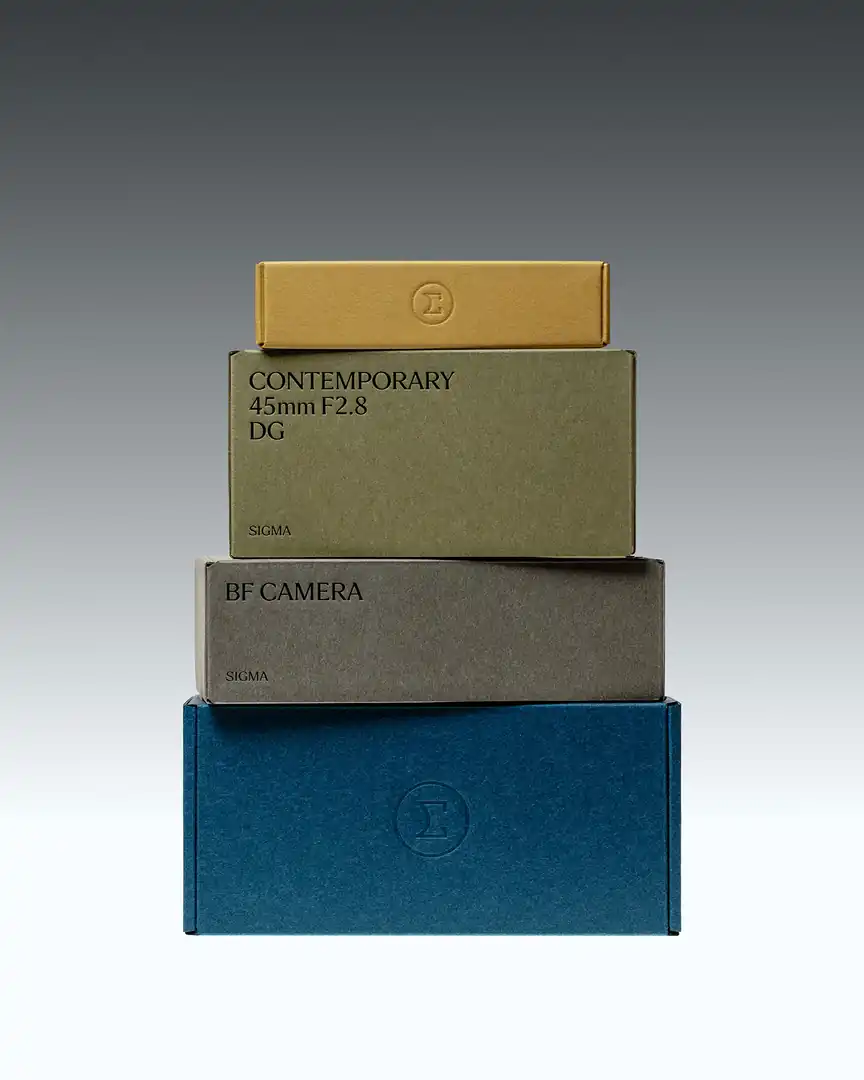
Hayashi I see. These are words that really hit you. You updated the logo as well as the packaging, didn’t you?
Morita Yes. Our wordmark was refreshed, and we developed a new proprietary font, too.
I was worried about a backlash from existing fans and users, but they appeared to accept it surprisingly easily. We invited guests to an unveiling ceremony at Sigma headquarters, including from overseas, and everyone reacted very positively when they saw the Sigma BF and the new logo side by side. Because things which had been progressing separately came to fruition at the same time, I think that the message “We are changing because we want to do this” came across directly.
Hayashi The product came first, and the change to the brand followed naturally. Maybe they were accepted on a deeper level because things happened in that order.
What does the “BF” in the product’s name mean?
Yamaki It means “beautiful foolishness,” a phrase which appears in Kakuzo (Tenshin) Okakura’s “The Book of Tea.” There may never have been such naming, with an expression combining paradoxical words, until now.
The centripetal force born of “carrying through”
Hayashi I proposed “design centripetal force in the age of centrifugal force” in this year’s Focused Issues. How do we design the power to draw in people in an age when both goods and information abound and people's attention is constantly scattered? From what I’ve heard you say so far, I feel that the Sigma BF really embodies that centripetal force, in terms of both product and brand.
Yamaki Thank you very much. If this camera has the centripetal force that you say it has, I think it is entirely the result of “carrying through.”
Reexamine the raison d'être of the camera, return to its roots, and make something you want to carry around with you every day, something that makes you notice the beauty of light and shadow; we decided on this concept, and then carried it through consistently, from the design as a dark box to the user interface and the packaging.
Hayashi A clear concept and the determination to carry it through to fruition. When these two things are in place, a product has “the power to communicate without explanation.” That may be the true nature of centripetal force. What kind of reaction did you actually get from users?
Yamaki I was prepared for a 50:50 split between support and criticism, but when we actually presented it, it was highly rated even by our core camera fan base. I think they were also at least aware of the issue of whether or not the cameras of today could stay as they were.
Morita The way we are viewed by the media has also changed. The number of requests for interviews has increased, and we have started to get inquiries from media specializing in fashion and design media, with whom we had no contact at all before now.
And another thing: there was also a change within the company. Until now, our overseas subsidiaries have focused on lens sales, and to be honest, they have not been that enthusiastic about the business in camera bodies. After the introduction of the Sigma BF, though, there has been a clear shift in their attitude towards cameras, and some staff members have started planning pop-up stores of their own accord. They have a different look in their eyes.
Yamaki There's an episode which symbolizes this. An employee in France who had been in sales for many years reached retirement age; he liked fashion and had little interest in cameras. When he saw the Sigma BF, he told us that it was the first time he wanted a camera. As a retirement gift, we engraved his name on the body with a laser.
Hayashi What do you think is the reason why a single product has shifted people’s feelings so greatly both externally and internally?
Morita As Mr. Yamaki touched upon earlier, the fact that we carried it through without compromise was a big factor, I think. Sigma is a company with a high degree of freedom, but the flip side of this is that we have to decide for ourselves how far to go on the offensive and where to stop. Making these judgement calls one at a time pushed us to what we could be satisfied was the best possible place, and that was big. I feel like it's built on a really delicate balance.
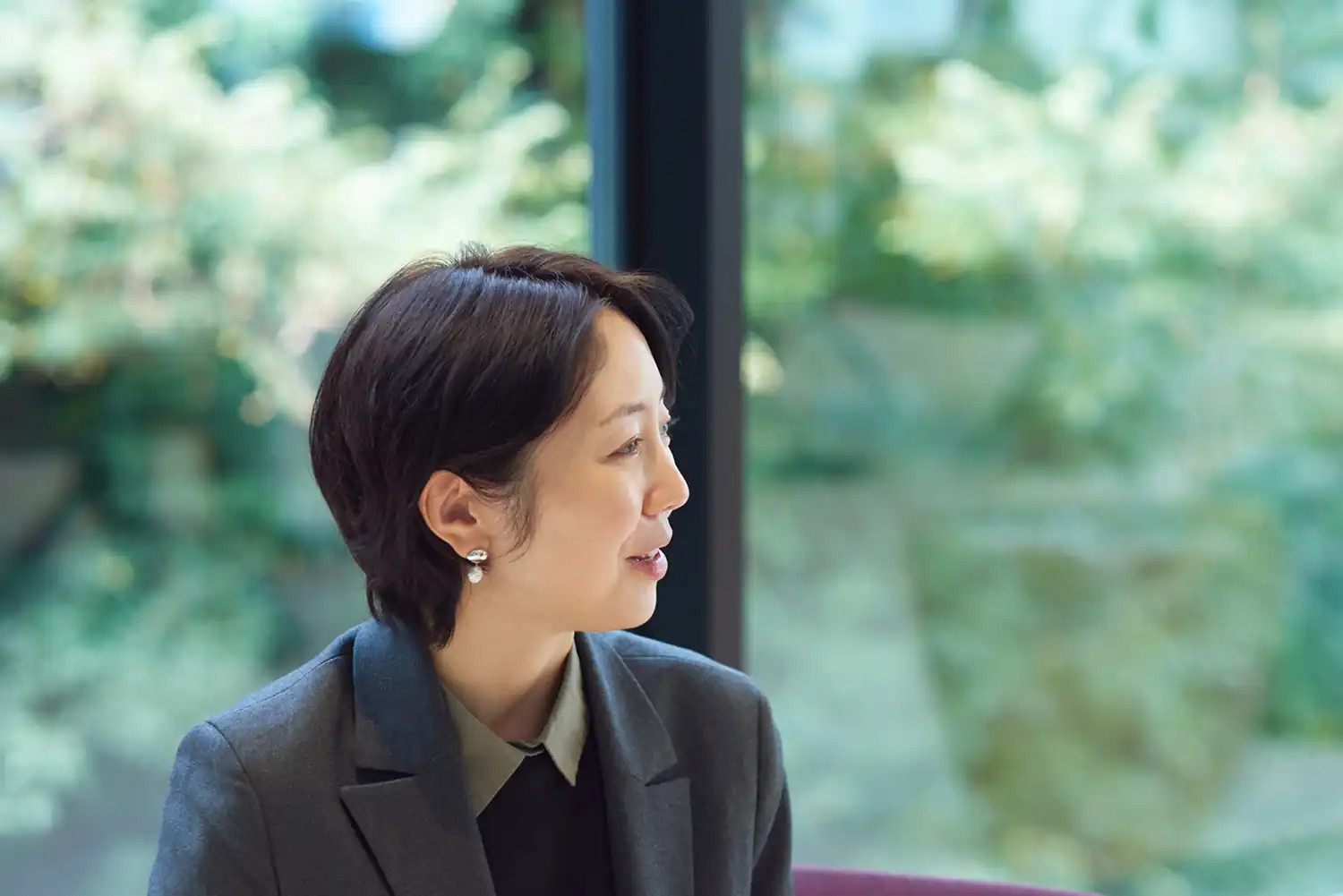
Yamaki When it comes to “freedom,” I also have my own foundational experience. Wako Gakuen, the school I attended when I was a child, has almost no school rules. Instead, the students are expected to think and act for themselves. I believe that the sense of thinking because there are no rules, which I acquired in that environment, also has something to do with the manufacturing policy at Sigma.
Morita In exchange for being able to do things freely, we have to think for ourselves about each thing, why we are calling this person or why this shape... We were able to walk the narrow, ideal path between freedom and restrictions right to the end. I think that the form of the Sigma BF is an expression of this result.
Hayashi Starting from the return to the roots with the dark box, right the way through to the user interface, logo, and packaging, a single concept runs through it all. The determination to “carry it through,” and the ability to maintain discipline within freedom. What I sensed from listening to you both is that the centripetal force of the Sigma BF was born not from a superficial design revamp, but from a return to the essence of camera-making. Thank you very much for sharing your valuable insights with us today.
Kazuto Yamaki
CEO, Sigma Corporation
Kazuto Yamaki joined Sigma Corporation in 1993. After being in charge of mechanical design, etc., he entered the Corporate Planning Office. He served as Camera Project Leader, which he started in 2000, and became President in 2005. In February 2012, he took over as the CEO of the company.
Hanna Morita
Brand Strategy Section Chief, Global Marketing Division, Sigma Corporation
Hanna Morita joined Sigma Corporation in 2015. After contributing to the launch of the Cine Lens Line in 2016 as a member of the Product Design Section, Product Planning Division, she transitioned to the Marketing Division. Since 2024, she has led the project to refresh the brand’s visual identity, and in July 2025, became the Section Chief of the Brand Strategy Section.
Aki Hayashi
Editor, director | President of Brand Journalism, Inc.
Joined the Asahi Shimbun Company as a reporter in 2009. Appointed Chief Creative Director of HuffPost Japan in 2017. Became Web Editor-in-Chief of Forbes JAPAN in 2018. Joined AlphaDrive Co., Ltd. in 2020, serving as Executive Officer and Editor-in-Chief, as well as Director of NewsPicks for Business. Founded Brand Journalism, Inc. in 2022 and became its President and CEO. Also served as the Editor-in-Chief of the business media Ambitions.
Shunsuke Imai
Photographer
He was born in Minamiuonuma City, Niigata in 1993. He became independent after working for amana Inc.
Tomohiro Kurimura
Writer/Editor
Born in Aichi, his professional skills include gathering information, writing, editing, and project management. Manager, De-Silo “Unknown Unknown.” He is also active in multiple business companies, startups, and Web media. He graduated from the School of Humanities and Social Sciences, Waseda University. He has competed in baseball, basketball, karate, track and field, and handball. He lives in Kanagawa with a cat and a rabbit.


Related Articles

Free Design, Unleash Design: 2025 Focused Issues Report Released
A “wave” of design, “Free Design, Unleash Design,” seen through the GOOD DESIGN AWARD 2025, and six proposals for society to address

What is the happy relationship between design and management? – Shingo Torii and Aki Hayashi
Aki Hayashi, Focused Issues Researcher, made the proposal “design centripetal force in the age of centrifugal force” in 2025. She asked Shingo Torii, Chairperson of the Osaka Chamber of Commerce and Industry and Representative Director, Vice Chairman of the Board of Suntory Holdings Limited, for dialogue to deepen the proposal. The full text of the dialogue is presented, including episodes that could not be included in the report due to space constraints.
Design which “overwrites the operating system of society,” spreading out from “city center parks” – Yuki Yamada with Naoki Ota
Focused Issues Researcher Naoki Ota made “overwriting the operating system of society” a keyword in his 2025 proposal. He focused on the “Chiyoda City Park Development Plan 2025,” which reimagines the 58 parks in Chiyoda City as a whole, as a real-life example embodying this phrase. Yuki Yamada (CEO of Tetor inc.), a landscape and civil engineering designer, took charge of the overall design. Ota spoke with Yamada to explore the possibility that this thought and method of park development which looks to the next 100 years could “spread” nationwide.