What challenges should designers face now, as found at the GOOD DESIGN AWARDs.
FOCUSED ISSUES is a GOOD DESIGN AWARD initiative that depicts the future of design in society through the screening process.
Thinking about the 2026 GOOD DESIGN AWARD
Dialogue between the Chairs
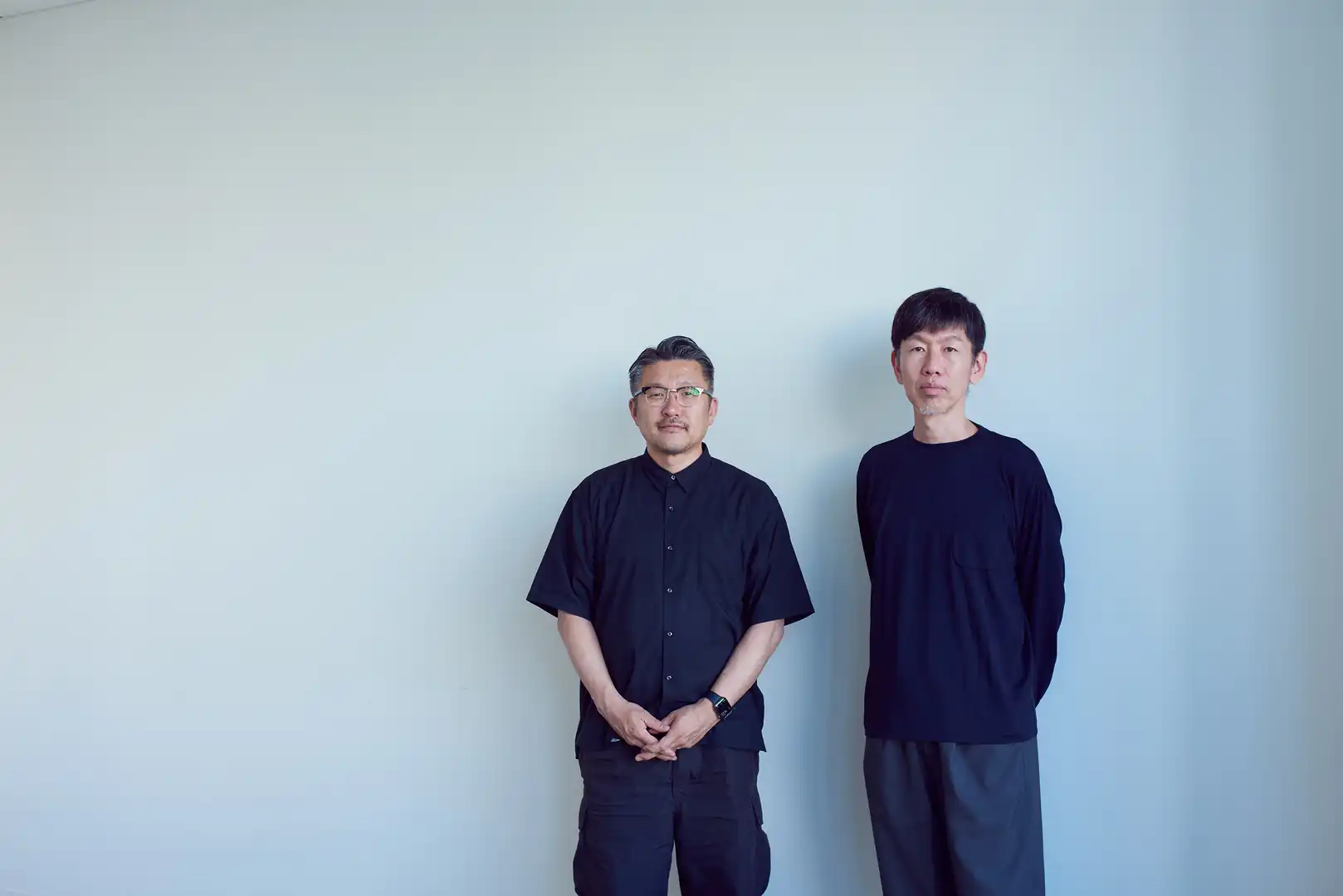
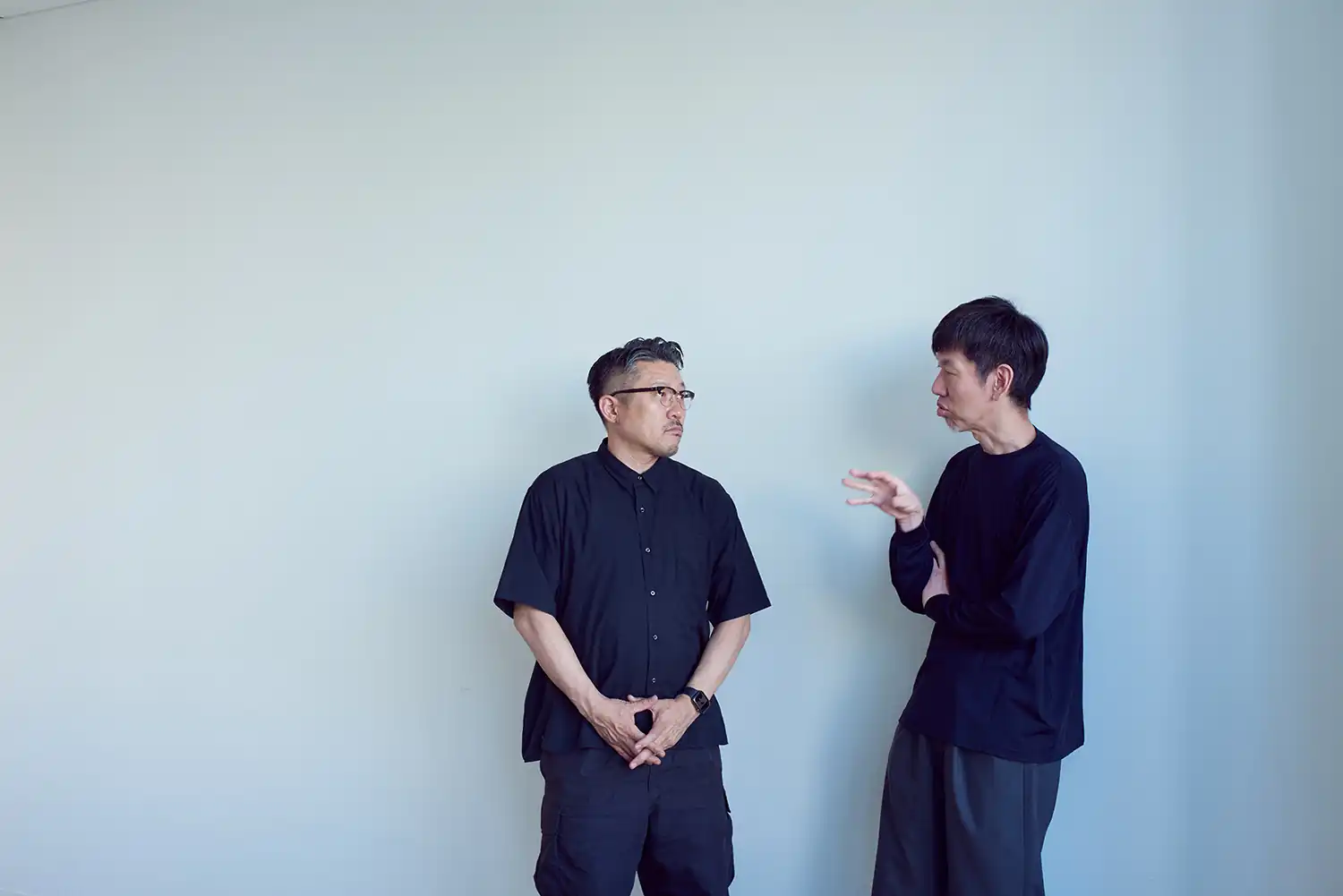
[Seiichi Saito and Jun Nakagawa] How can we join up design and management? As seen by the former and new Chairs of the GOOD DESIGN AWARD
2026.05.14
The 2026 GOOD DESIGN AWARD marks the 70th year since the awards were set up. A new team of judges was announced in March, and Jun Nakagawa (Manager/Consultant; Representative of VISION to STRUCTURE, Representative of PARaDE) took up the post of Chair. The selection of Nakagawa, who is the former President of Nakagawa Masashichi Shoten Co., Ltd. and has spent a long time in the world of business, to lead the screening for a design award can be seen as highly unusual, even from a historical perspective.
On the occasion of his appointment, Nakagawa said that he would like to strengthen the aspect of the GOOD DESIGN AWARD as “a place where managers and designers work together.” How will we pass on the value that the GOOD DESIGN AWARD has built up to date, and what challenges will we take on in order to meet the next era?
Together with Seiichi Saito, who served as Chair for 3 years from fiscal 2023 to fiscal 2025 before passing the baton to Nakagawa, he told us about where we are now and the future.
Building bridges from the management side to design
– Mr. Nakagawa, I think that your appointment as Chair, as a manager who is not a designer, is unusual in the recent history of the GOOD DESIGN AWARD. How did you feel when you were first approached?
Nakagawa As a matter of fact, I refused at first. This was simply because I thought “I’m not a design person.”
However, I had second thoughts later, thinking that there must have been a reason why they decided to approach me, and that it had been thoughtless of me to refuse without understanding their intention. When I listened again to what they had to say, I realized that there were problems because the power of design had still not been recognized within companies, or had not been solidly linked to management results. I thought that if this were the case, I could be of some use, so I decided to accept. Design itself was always by my side when I was the manager of Nakagawa Masashichi Shoten, and through my current branding work, I know to some extent how managers out there in the world perceive design, and the ways in which they are not making full use of it.
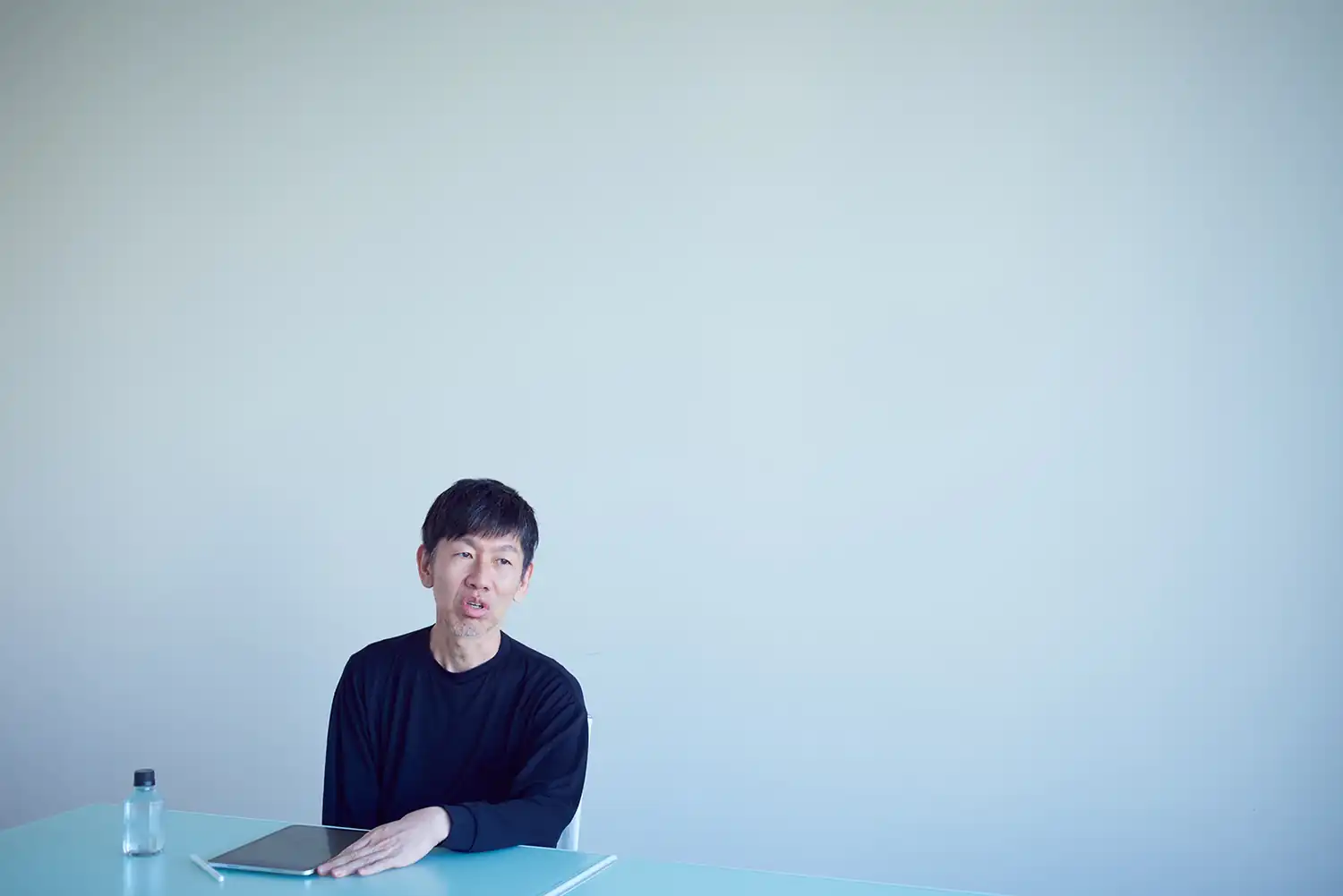
Saito I was also surprised when I first heard that Mr. Nakagawa would follow me. However, based on how we have developed so far, I think he will be a replacement who brings great potential.
I myself served as Vice Chair for five years before serving as Chair for three years. To go even further, in my involvement with the GOOD DESIGN AWARD itself since 2015, I have always said that we should not think separately about tangible design and intangible design. As a result, the range of award winning objects has expanded, and I think I have been able to play some small part in the changes that have occurred, such as the expansion of the domain with which design deals and the emphasis on design within public administration.
On the other hand, I felt that the approach taken by designers to the challenge of turning the value of design into social infrastructure had limits. Although there have been many cases of building bridges from design to management, there have been few moves from management to design. That’s why I think there are things that only Mr. Nakagawa can do, and I think that this can be a good handover based on the context we’ve created so far.
Nakagawa I have known Mr. Saito for a while, and he has long been talking about the importance of “the creative literacy of managers” and “the management literacy of designers.” I cannot approach public administration and so on and incorporate design as a big framework, as Mr. Saito has done. But I also think that in order to get managers to listen, the words of other managers are probably best.
In fact, today’s managers keep design somewhat at arm’s length. As the domain of design continues to expand, there are many people who don’t like the sense of being trampled upon by phrases which they don’t understand, like “design management,” aren’t there? They don’t want people to think that their inability to understand is down to their own lack of skill, so they undervalue design and keep it at a distance. I felt that someone was called for who could go in there and bring the message that “No, no, if you use it well, your company will get better.”
I want to reassess the value of the G Mark for users
– Mr. Saito, could you tell us about the challenges you felt in terms of the screening for the GOOD DESIGN AWARD when you became Chair three years ago and the specific approaches you have taken over the past three years?
Saito There are a few. First of all, I felt that screening solely by units (editor’s note: groups made up of judges for each application category) was becoming more and more difficult. For example, we need to consider a single tire not only as a mobility item, but also look at the cyclical aspect of reuse and recycling. In order to achieve this goal, we have increased the opportunities for judges to communicate with one another beyond the boundaries of the unit. I feel that the flow of the screening process has improved considerably as a result of being able to say “It’s difficult for us, but how do you rate it?” and pass questions on to others.
Also, we used to go overseas to screen there, but putting everything together afterwards was always difficult. I think that collecting the screening objects in one place so that they could be screened using the same standards is also a great improvement in terms of the flow.
Also, as I mentioned earlier, I have been consistently working since I was Vice Chair to ensure that we do not think separately about tangible design and intangible design but instead combine perspectives from both as we screen. Recently, it has come to be said that we have moved from the era of the tangible to the era of the intangible, but in my opinion, the era has come when we can design the tangible and the intangible together. I think that being able to make this point clear in the screening criteria was one of the positive things.
– You also launched a new system in which the Chair or a Vice Chair serves as the director of “Focused Issues,” a project to further explore the important questions that design needs to face today.
Saito I think that Focused Issues, which Kazufumi Nagai started in 2015, is a very important initiative. At that time, the categories were fixed to a certain extent, but when I thought about its role in the current era, I came to think that there was a need to pull together recommendations as a representative of the judges. It was also good to be able to touch on the value of design in public policy and management within this.
So I feel like have been able to do what I wanted to do three years ago, to some degree. If I were to say what I wanted to tackle a bit more, one example would be overseas-facing communications. The rarity of an “award that combines (classical design and) social design” is also highly appreciated by people overseas, so I wanted to strengthen those communications.
I also wanted to come up with an approach that would do more to draw out designs which consider the geological strata and elements that lie dormant in various parts of Japan. However, I believe that Mr. Nakagawa’s accession as Chair will increase the number of people interested in this domain.
– Mr. Nakagawa, taking into account what has just been said, what do you hope to work on going forward?
Nakagawa In terms of the flow of the screening, I have not been able to completely follow what has happened recently, so I intend to think about this after seeing the first year’s screening. However, I think that there are two main things which the GOOD DESIGN AWARD should do.
One is to improve the relationship between management and design. There are actually few things that can be achieved through design alone, but on the contrary, there are many things that will lead to great results through collaboration with management. As I mentioned earlier, my understanding is that the relationship between the two is not very good, and we need to break this open.
The other is to increase the value of the GOOD DESIGN AWARD for users. This is related to the first issue, but in the end, the biggest benefit for companies that receive an award is that they will be positively received by their customers as a result of having the G mark. Simply put, it is the contribution to sales. I think that there is more we can do about this point.
For example, when you look for an item, you don’t currently say, “Let’s search on the GOOD DESIGN AWARD site,” do you? That’s because the search system only utilizes the year, the awarded company, and the award winning designer. I think the value to users will change considerably just by changing this so that they can go directly to the online shop.
Creating a “common language” for the brand is the first step
Saito One of the missions of the GOOD DESIGN AWARD is to “cherish new growth.” In other words, the main role of this award is to praise initial velocity and to tell society that “this kind of era is here!” So far, we’ve been thinking about how to empower individual designers and people in the design sector in corporations and public administration.
On the other hand, as Mr. Nakagawa said, I don’t think that we managed to convey the beauty and functionality of these products to users in an easy-to-understand way, so that when they appeared on the shelves, people would reach for the GOOD DESIGN AWARD-winning products instead of other items. The value of the AWARD has not reached this level. I usually start with GOOD DESIGN AWARD winners when I am looking for a product to buy, but most people don’t do that, do they?
Nakagawa I believe that this “distribution” is one of the biggest issues in Japan, especially for major manufacturers. No matter how much you sell in a space like a mass retailer, there’s no way you’ll get people to notice the world the brand creates, and no way the design will be appreciated properly. We need to change the way we communicate with users.
– Are there any openings that will lead to change?
Nakagawa As I have said all along, it is important to create a “common language about the brand” within a company. Managers usually use management language when they talk, and designers use design language. In this context, the brand is an intermediary theme upon which people who use different languages can ride. I think that having a common understanding of what makes you different from others and what kind of worldview (individuality) you have is probably the start of everything.
Saito I know exactly what you mean. Even before I became the Chair, I had been wondering how I wanted people to think about design investment in companies. The reason is that if management talk is used at the time of the final decision, design will lose out. Because it cannot be explained in words or numbers, the discussion ends up with “Why do we have to invest in something like that?”
But actually, if you design well and communicate well at a good price point, it is sure to come back to you in the end as improved sales. This is clear from looking at the GOOD DESIGN AWARDS, too. I thought that you were spot on in saying that the word brand could serve as a bridge at this present time, when this is not well understood. If you can raise the value of your brand through the power of design, share prices and valuation will also go up. It’s important to turn these cogs smoothly, and I’m sure similar changes are happening not only in the design of products, but also in the design of public parks by local governments, for example.
Nakagawa In the first place, the field of study of “brands” has not yet become established. There is no basic logic, so most managers cannot understand it. I view a brand as a sphere consisting of three layers (the brand structure): the “product” visible on the surface, the “lifestyle” as the worldview inside, and the “life stance” as the thought or philosophy at the core. I dare to suggest this because I think the only way to start a discussion about a brand is to have some kind of common understanding.
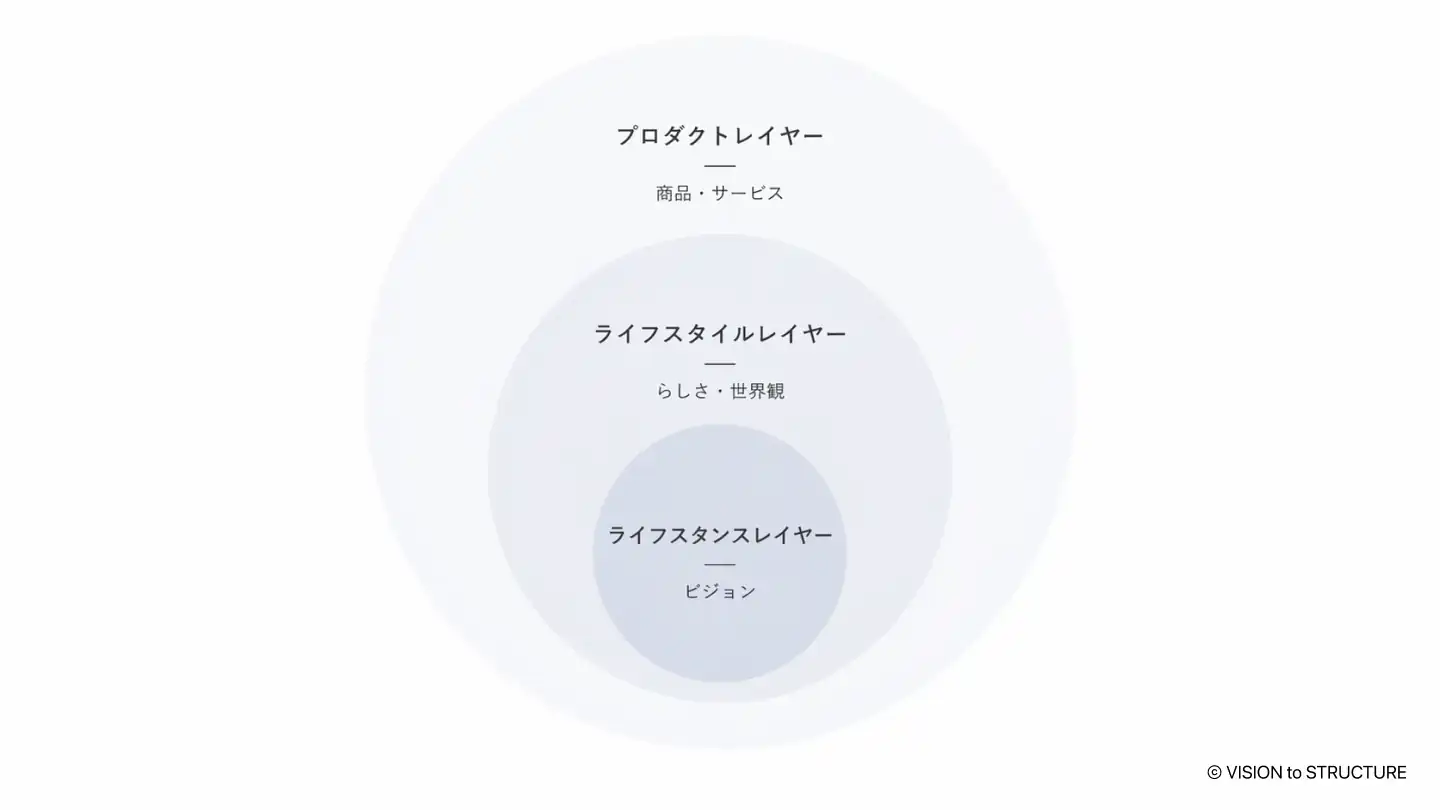
And if everyone follows this premise, it will become clear that the significance of design cannot be discussed only in terms of the product aspect, of “whether or not it will sell.” Even supposing that a product does not sell, it may reinforce the brand’s worldview, express the company’s thought and purpose, and communicate with the outside world. If we can show the logic of how it is working on each layer in the short, medium, and long term, I think we will be able to make a design investment as an overall judgment.
Creating an environment which produces “individuals” who can connect design and management
Saito Investment in design can come back to you as organizational culture, or it can come back as trust or human resources. However, I am certain that cash points and economic value will be generated somewhere along the way. I really want the managers of companies to take a look at that point, but I feel that there are many cases where it is not understood because it is a medium- to long-term discussion.
Nakagawa I thought maybe they didn’t believe that design was working there. In other domains, I think they do understand that the benefits which come back in areas related to people, such as hiring or training, become sales and profits a few cycles down the line...
Saito No, I’m not sure about that. I don’t think many people understand the fact that we need a long-term perspective. This is a structural problem for companies, isn’t it? With a system in which managers regularly switch roles, as though they were hired managers, the only perspective from which they can approach management is to “protect the castle inherited from past generations for three years,” right?
Nakagawa That may be the case particularly for large companies. It is true that few managers are able to invest properly in building the corporate culture while simultaneously producing short-term results and watching the big trends. Even if such people do emerge, they tend to be called “heretics.”
Saito The other day, at a Focused Issues event, I spoke with Shigeo Usui of Panasonic and Kazuhisa Horikiri of Fujifilm. Both are former designers, but also serve as executive officers of their respective holding companies. Although they are not managers, it is essential that people like these two individuals emerge in each company in order to allow them to conduct business from both short- and long-term perspectives. It is quite difficult to realize such a final decision through a system, and in the end, I think that the only thing for it is for a designated individual to lead from both management and design perspectives.
Nakagawa I’ve been consulting for nothing but small and medium-sized companies until now. Looking back, I think it’s of course important that they get better; but the impact on Japan as a whole is small. Now that I have been given this position, I would like to grasp the opportunity to support the transformation of large companies.
I think there has been an example in which the importance of a specific role was recognized in large companies in the past: CFO (Chief Financial Officer). In the last 30 years, the position the person in charge of finance has changed significantly. If we can study the context which gave rise to this movement and make the same thing happen this time with the Chief Design Officer (CDO), the situation ought to change considerably.
Towards a new screening for the GOOD DESIGN AWARD
– Your first screening will start soon. Based on what you’ve said so far, what kind of year do you want to have?
Nakagawa In my inaugural message, I proposed “Design that contributes to the vision.” I also think that there is not much meaning in a discussion about breadth, whether to deal with tangible or intangible design, as Mr. Saito said. Rather, I want people to become aware of how effective design is in “harmonizing the brand,” including vertical depth, lifestyle, and life stance. I am now in the process of communicating this to the people who will be doing the screening.
As for the value of the GOOD DESIGN AWARD, in addition to the contribution to sales that we talked about today, I would like to put more effort into networking among the winners. In addition to communicating with the designers who serve as judges, the promotion of internal communications between the management and design teams through the application process is another major plus for companies. If that kind of understanding is gained, the award will become one about which people will say, “It was worth participating,” even if they don’t win.
Saito The networking function is very important, isn’t it? The GOOD DESIGN NEW HOPE AWARD (editor’s note: this award is given to designs by students who are currently enrolled in universities or vocational schools, or new graduates who are just beginning their careers, with the aim of supporting the activities of the new generation who will be responsible for the development of the design field of the future), which started in 2022, was born with precisely this in mind. However, it was difficult for us then because of the ongoing effects of COVID-19, so I have hopes for the future. By the way, what are you going to do for Focused Issues?
Nakagawa Of course, we will continue. This year, we have three Vice Chairs. We asked Gen Suzuki from the domain of product design, Yuma Harada from the domain of graphic design, and Noriko Kawakami, a journalist, because we wanted to emphasize brand communication. In addition to these three, there are two Focused Issues researchers, and of course, I, as the Chair, will also be a member of the team making the next proposals.
Saito I’m looking forward to something different from what we’ve seen until now. The GOOD DESIGN AWARD belongs to no one in particular, and it’s better to keep moving rather than coming to a stop. When you move in different directions, people say a lot of things from the outside, but I think that the way everyone can say different things about this award is also one of its good points.
On the other hand, the mission of the GOOD DESIGN AWARD is to forcibly freeze such diverse approaches to design in place just once a year. This is where the difficulty lies, but passion and issues arise from freezing it in this way. I hope you enjoy this process.
Nakagawa I believe that this award is the result of the efforts of various people in the past to address and change the issues of each period. Of course, there will be some things that go well and others that don’t, but I hope that we can stick to this process and build upon it.
I also want to take this opportunity to attempt to define the word “design.” Just like with “brand,” we need to have a common understanding in order for both managers and designers to understand each other, so we need to put some words in place.
In the meantime, I am provisionally saying that design is “Identifying the constituent parts without excess or lack, creating and deciding upon options, and incorporating them into a harmonious form.” Using such a definition, you realize “Huh? Isn’t this way of thinking the same for management and design?”, and when you “incorporate them into a form” at the end, it also becomes evident that there is expertise corresponding to each output, such as products, graphics, management plans, and so on. I hope that this will lead to understanding and respect for each skill and bring about a big change in the relationship between management and design.
Masashi Sasaki
Writer
He worked for a childcare and early childhood education publisher for 10 years, and moved to Shiga in 2017. He works as an editor in the fields of education and design with a focus on child welfare.
Masaki Koike
Editor
Editor. He carries out planning and editing in multiple media, mainly in collaboration with researchers and creators.
Shunsuke Imai
Photographer
He was born in Minamiuonuma City, Niigata in 1993. He became independent after working for amana Inc.


Related Articles
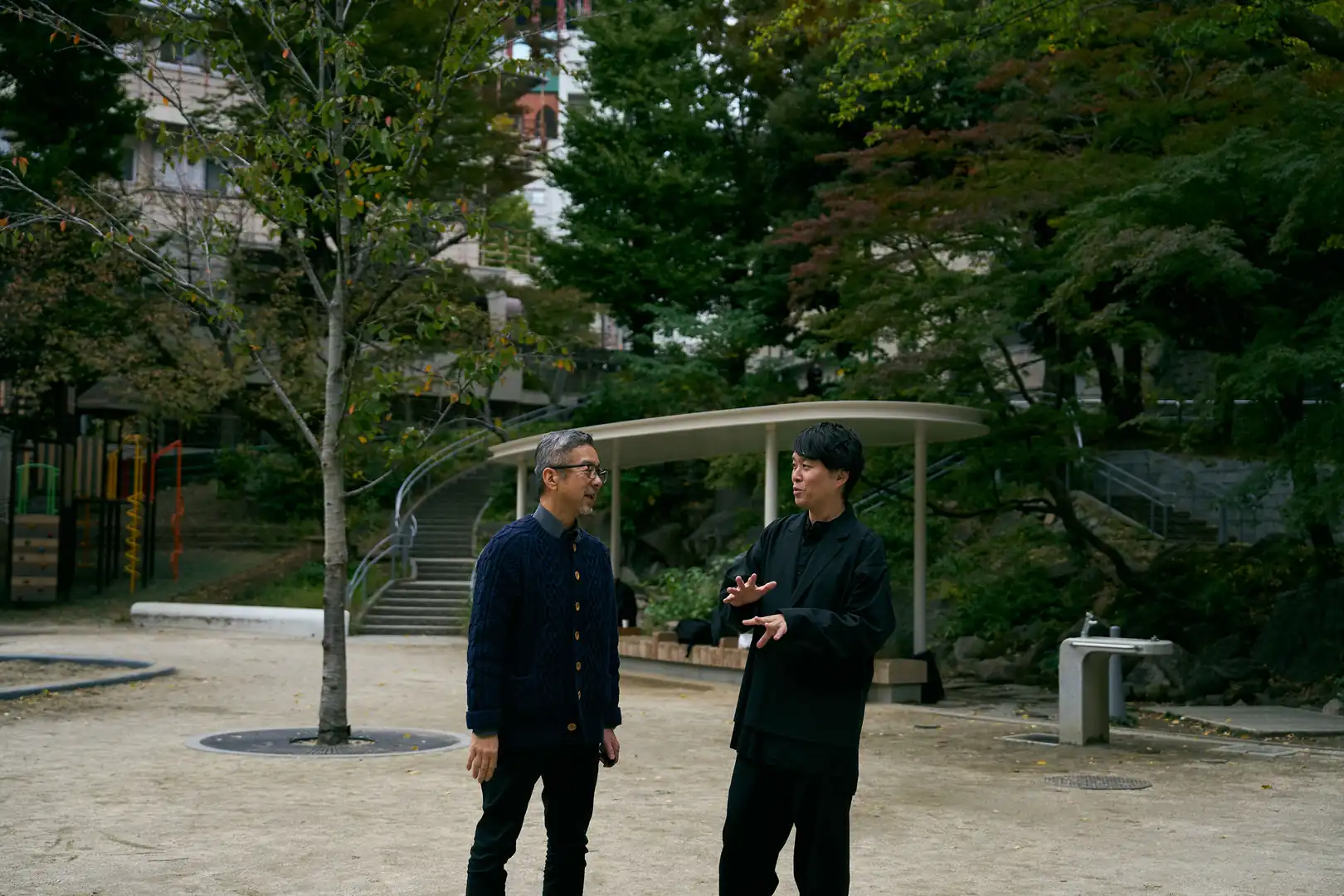
Design which “overwrites the operating system of society,” spreading out from “city center parks” – Yuki Yamada with Naoki Ota
Focused Issues Researcher Naoki Ota made “overwriting the operating system of society” a keyword in his 2025 proposal. He focused on the “Chiyoda City Park Development Plan 2025,” which reimagines the 58 parks in Chiyoda City as a whole, as a real-life example embodying this phrase. Yuki Yamada (CEO of Tetor inc.), a landscape and civil engineering designer, took charge of the overall design. Ota spoke with Yamada to explore the possibility that this thought and method of park development which looks to the next 100 years could “spread” nationwide.
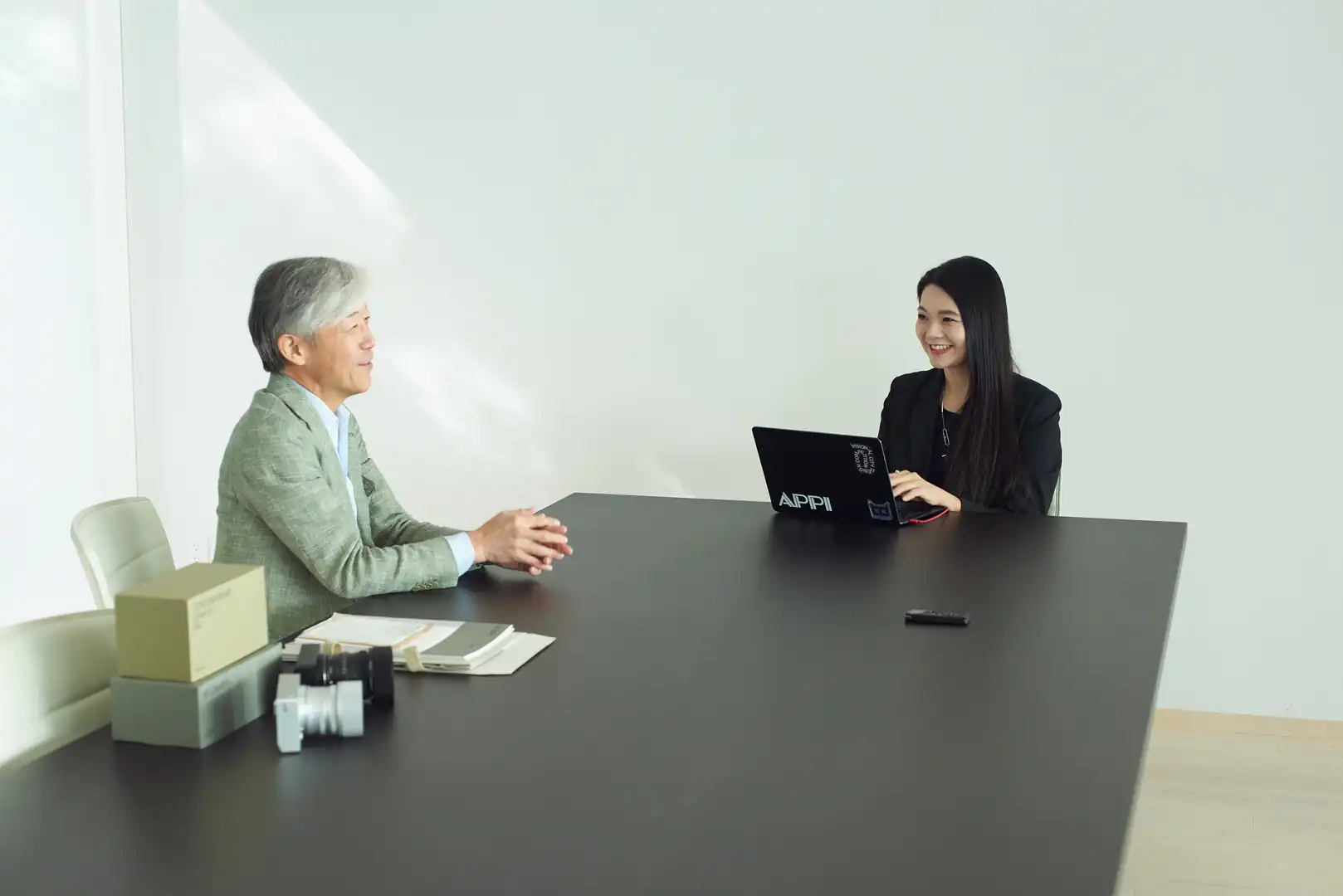
Exploring “centripetal force” design from the Sigma BF, which is pervaded by a return to the roots
Aki Hayashi, Focused Issues Researcher, put forward “design centripetal force in the age of centrifugal force” as her 2025 proposal. The example which she cited as embodying this proposal was the Sigma BF, a full-size interchangeable lens mirrorless camera which won the 2025 GOOD DESIGN GOLD AWARD and the ECONOMY, TRADE AND INDUSTRY MINISTER'S AWARD. Through a dialogue with Kazuto Yamaki, CEO, Sigma Corporation, and Hanna Morita, Manager, Brand Strategy Section, International Marketing Department, we explored the source of the centripetal force that was born by "carrying through" a concept.
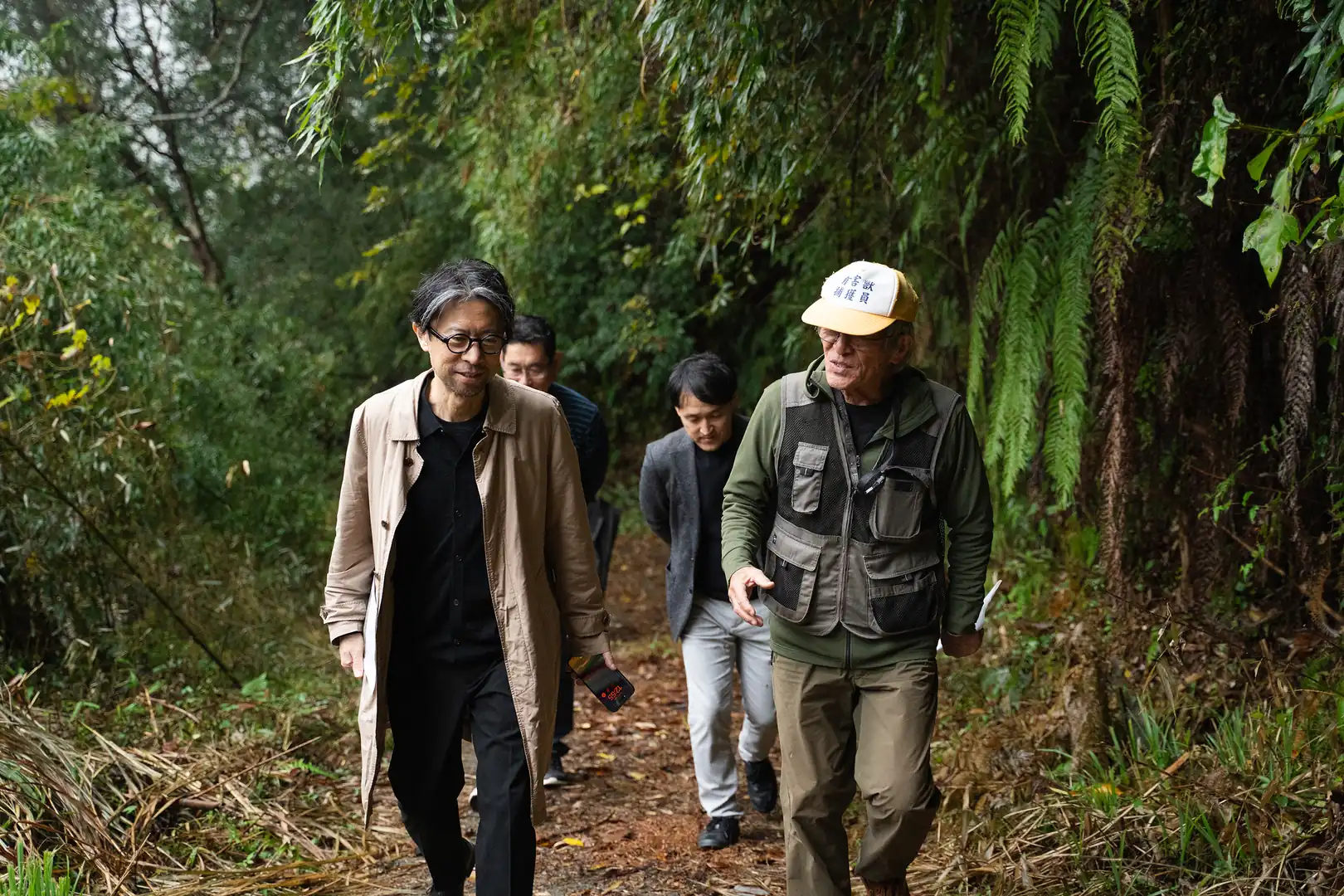
Oohito Subaru Micro Hydropower Plant: Design for the Future of the Village - Unanimous Consensus, Nearly 100 Million Yen in Funding, and Appearance that Blends in with the Community
Yutaka Nakamura, Focused Issues Researcher, made a proposal in 2025: “Wild finance preserves the rhythm of indigenous life.” In the process of developing the proposal, he went to Oohito Subaru Micro Hydropower Plant in Hinokage Town, Nishiusuki Gun, Miyazaki Prefecture, to do fieldwork. Together with Hiromichi Tanaka of Oohito Agricultural Cooperative for Power Generation (which is the principal implementing business), Terukazu Yamashita, who was involved in the research design and commercialization of the power plant, and Tomoki Takebayashi, who designed the building and surrounding environment, I walked in the field and asked them how the power plant came to be; from the process of consensus building, a system created to raise funds, their experimental approaches, and the background of the design that blends in with the local landscape.