
To the place where "good design" was created
Good design, excellent design, design that opens up the future, ideas that move people's hearts, and actions that lead society always have small beginnings.
Interviews with designers at the birthplaces of good design to find hints for the next design.
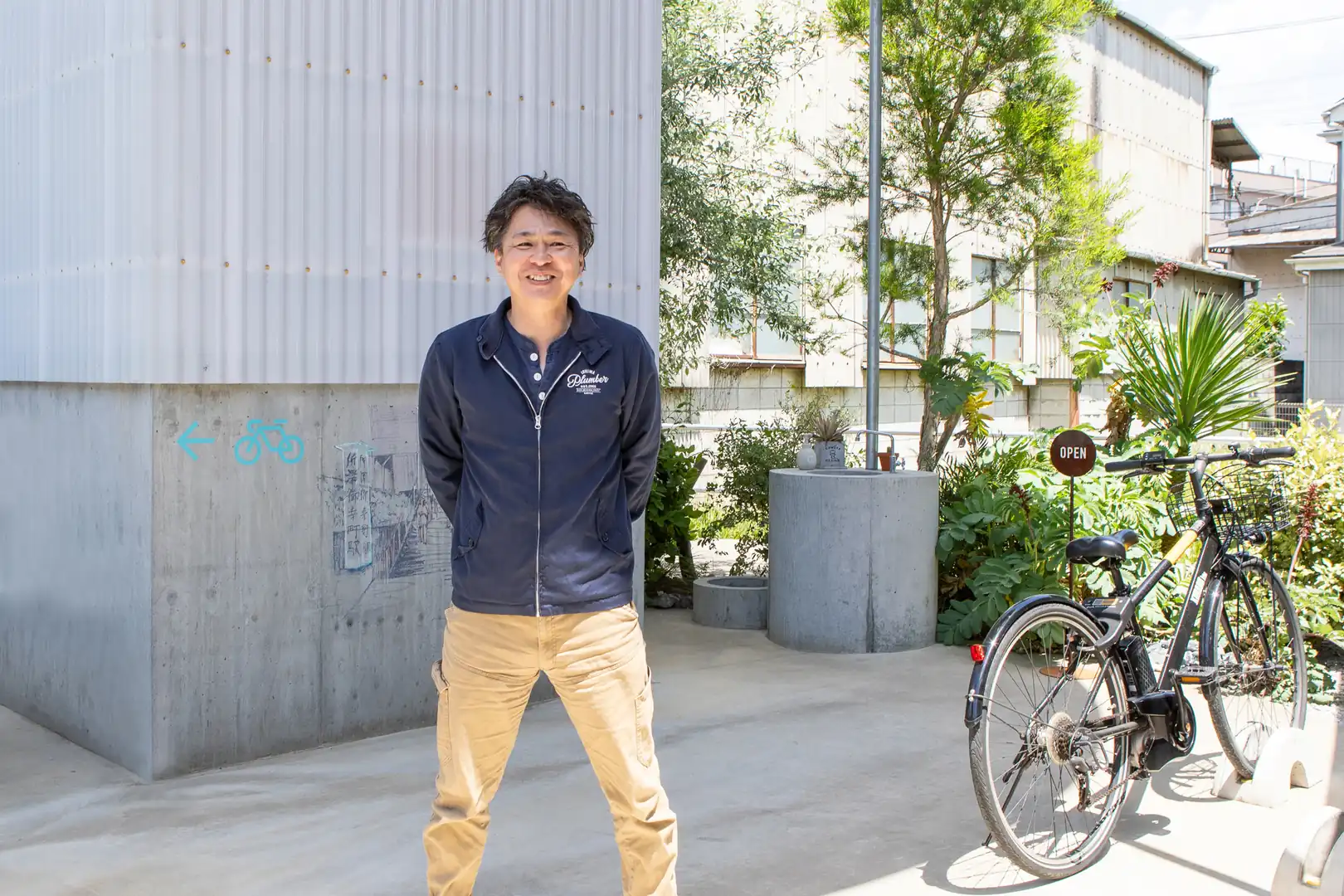
Destination
Ishiwa Plumbing Ltd. (KAWAYA-DESIGN)
Beyond the company’s activities is society (Part 1)
2026.6.19
A plumbing company that built public toilets – you may imagine that this is one aspect of contribution to the local community, or a corporate social responsibility project. However, the “Infrastructure Stand” developed by Ishiwa Plumbing Ltd. of Tokorozawa City, Saitama Prefecture, is a bit of a different story. This project, which began with an extremely unique attempt to build a public toilet as an extension of their showroom, was also a business strategy with an eye to the company’s future: in the words of CEO Daigo Ozawa, “This is both a publicity tool and a recruitment tool.” After taking the company’s activities to their utmost limit, a place in which people come together is born, and the scope eventually broadens to encompass community and disaster preparedness, all while drawing in private enterprise and government. Rather than trumpeting their social contribution in a loud voice, the next step beyond the company’s activities is society. We asked about how this was put into practice.
A public toilet that began from business
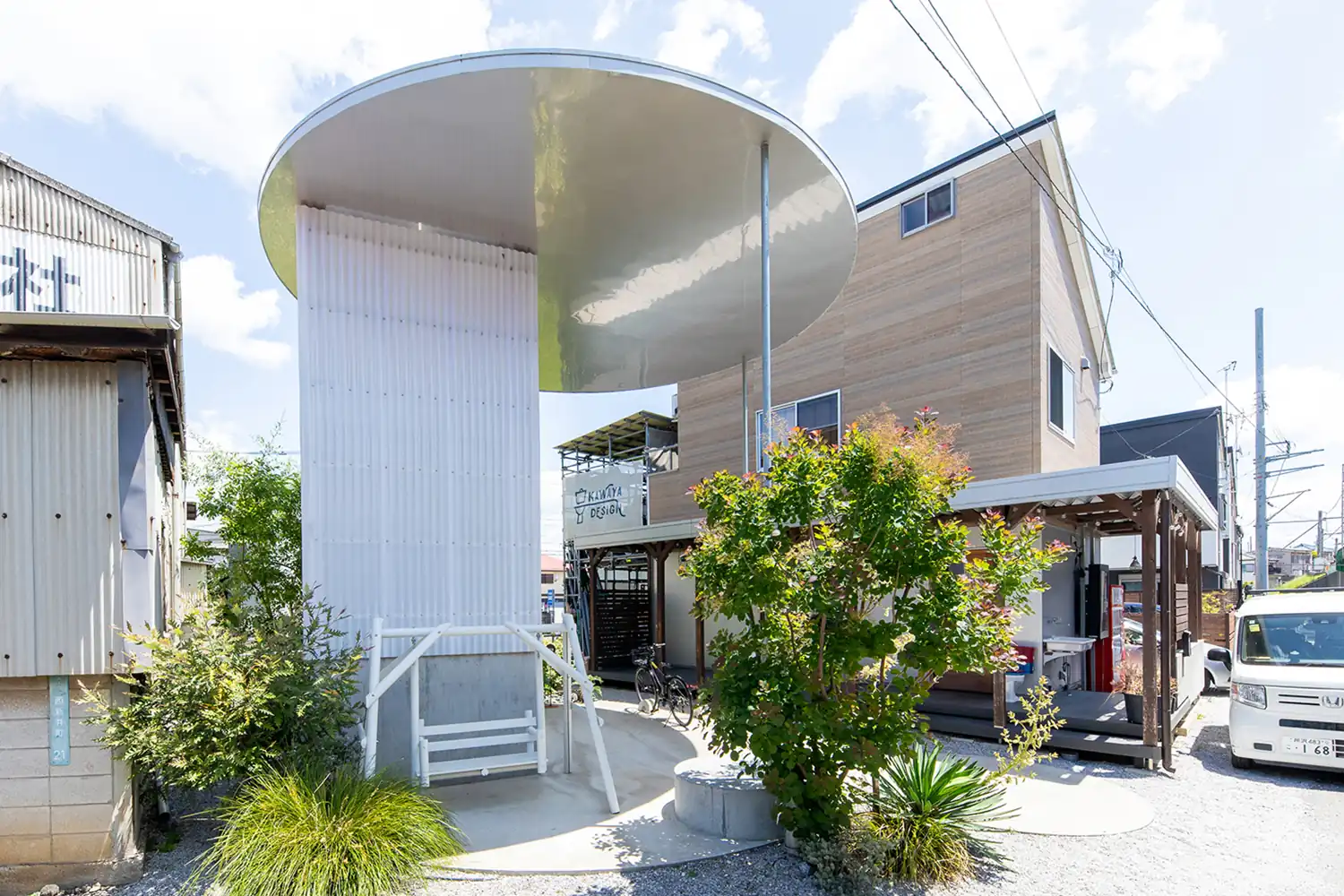
– The Infrastructure Stand opened in August 2022 and has become a landmark in the neighborhood in the space of a few years. I think this initiative is often talked about in terms of community development or social contribution. Can you begin by telling us how the idea for it was born?
Daigo Ozawa (CEO, Ishiwa Plumbing Ltd.) I think that the idea of sustainability is very important in community development. It’s just that in my case, what prompted this initiative was completely a business idea. It’s a pretty down-to-earth story. The Infrastructure Stand is, in the first place, a public toilet that utilized the site where our company formerly stored our materials. However, from the company’s point of view, it is a publicity tool, a recruitment tool, and an awareness-raising tool.
– That’s why it’s described as a showroom, right?
Ozawa We hold an event called KAWAYA Market, centering on the Infrastructure Stand, a few times each year. The event costs money. For a company the size of ours, this cost is no small burden.
However, when I considered it as a recruitment cost or a publicity cost, I thought that it was actually cheap. When you hear about companies that are successful in recruiting, they spend a lot of money to get a single applicant. But we’re not a company that can afford that kind of budget.
On the other hand, by continuing these activities, the Infrastructure Stand and KAWAYA Market, the number of people interested in our company has grown, and we have received five job applications so far. Some of these actually joined the company. This alone made the activities worth doing.
And on top of that, this is also the way we get media coverage. These initiatives have been covered by newspapers and magazines; if you converted this into publicity costs, I think it would come to quite a large amount.
And so, even though it is community development, we have established it on a sound business footing, and we can spend money on it. I think that’s the reason we’ve been able to continue with it.
Creating a place for people to gather together
– Could you see all of this from the start?
Ozawa I didn’t look that far ahead and plan it all out; there were so many things that I learned as a result of trying. Encounters with people were also really big.
I’m a plumber through and through. I think that the only skill I can offer to society is plumbing. But if I hold an event, I get introduced to architects and artists. This gives me opportunities to come into contact with their ways of thinking and sensibilities.
Sometimes I think “This person is really interesting,” or “Oh, you could also look at it that way...” And on the other hand, I talk to them about community development or what happens on site. These kinds of encounter spread and become bigger and bigger.
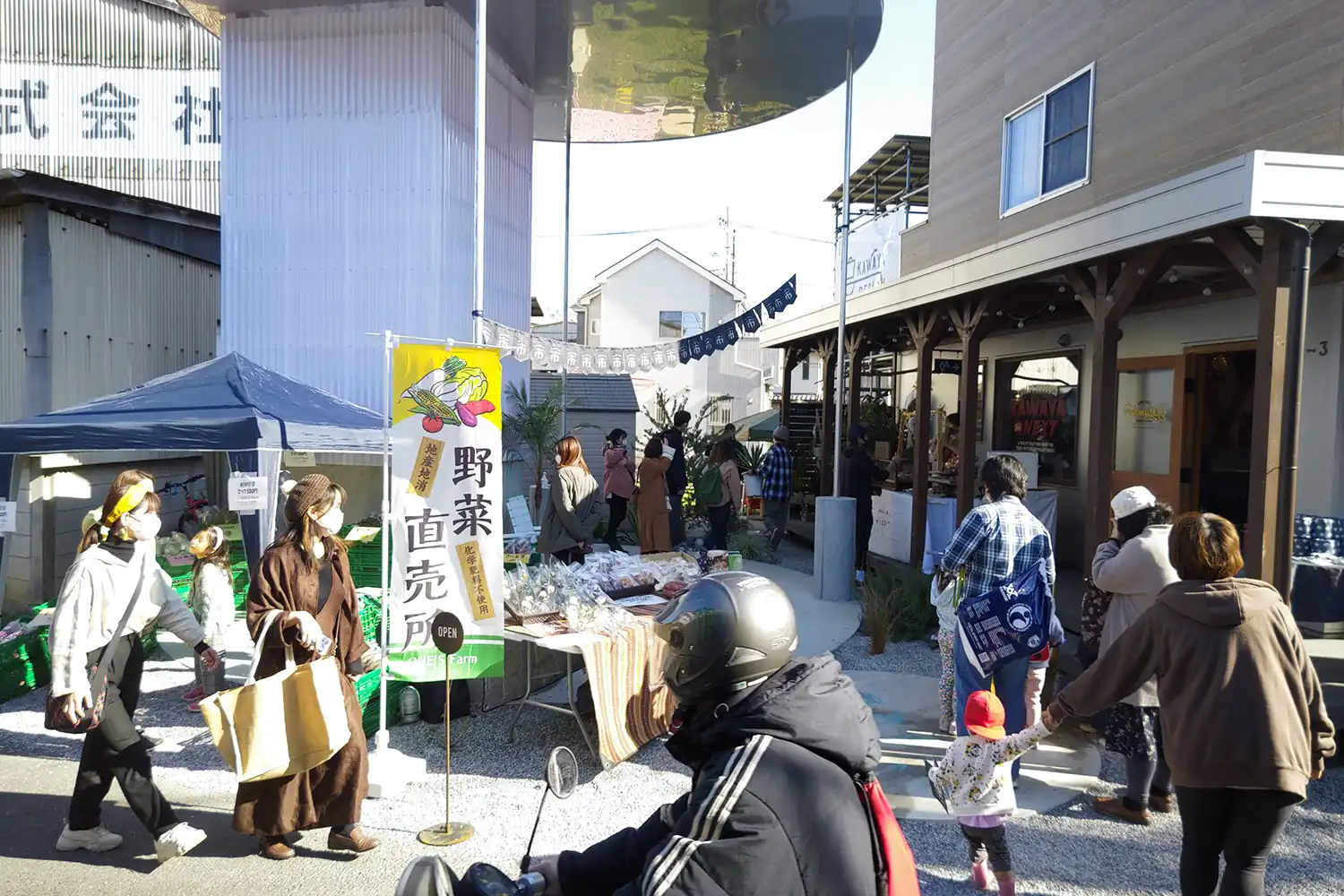
– I don’t think it’s easy to start an event outside your area of expertise. How did KAWAYA Market begin?
Ozawa We planned to hold a market right from the concept stage of the Infrastructure Stand. It started out really small. Using the space at the site, we invited the owners of a curry shop which we had renovated to come along; we borrowed some space and invited the people from the plant shop which we had asked to do the planting around the Infrastructure Stand... It began from these relationships. Then Tokorozawa City came in, then Seibu Railway, and it gradually expanded.
Why a plumbing company decided on a toilet
– Why did you choose a public toilet in the first place? It feels quite surprising for a plumbing company to go in that direction.
Ozawa Our work as plumbers is invisible. Piping that is hidden in the wall or buried in the ground – these kinds of task are at the heart of what we do. Of course, we carry out this work very carefully on the site. There are times when we think, “It turned out so beautifully this time,” and we feel like taking pictures to show everyone.
But from the customer’s point of view, no matter how cleanly the piping is done, this doesn’t increase the value. A job that costs 100,000 yen will not become 150,000 yen just because it is done very neatly. Of course, this goes without saying (laughs). It’s just that, as the person doing the work, I want to be committed to a particular standard. But this commitment is “invisible” to the customer.
Something about this always felt not quite right. So I wondered about the kind of place in which our work would be more visible and valued. The answer I came up with was a toilet.
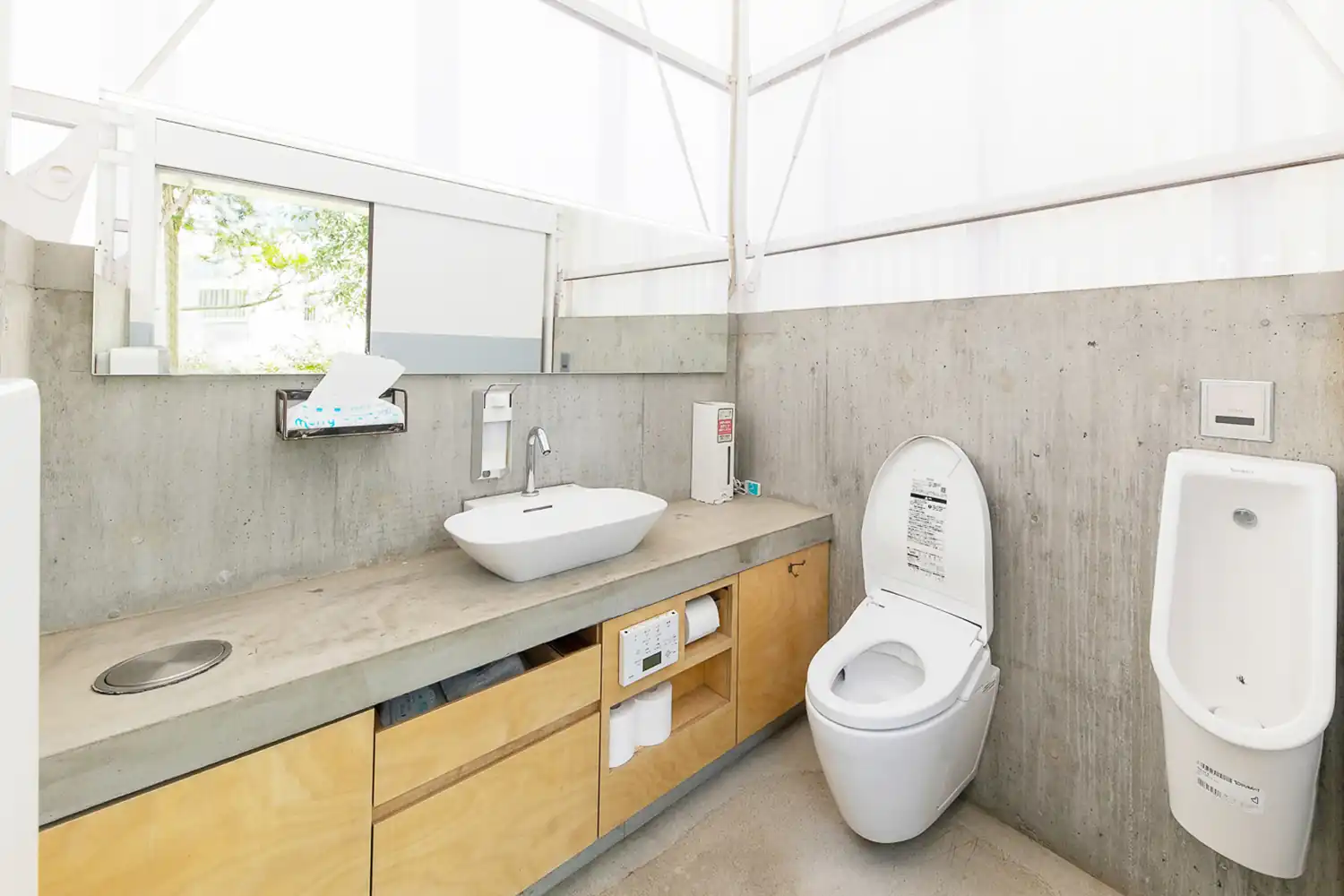
– So the choice of a toilet had a unique meaning for you as a plumbing company.
Ozawa It did. In general, when building a house, the main contractor or those responsible for the construction, the contact points with the customer, are mostly responsible for managing the budget for the plumbing equipment in places like the kitchen, bathroom, and washroom, including which products are used. On the other hand, we, the plumbers, are in charge of the actual installation, plumbing, and subsequent maintenance. Of course, the construction side has a role to play in bringing together the project as a whole, but as the person who actually does the work and will be involved with the equipment for a long time, I have had questions about the nature of this role for a while.
However, it has long been customary for the plumber to be responsible for the toilet alone. The toilet is a place where we can take responsibility for everything, including the plumbing and the hardware. So, talking about it in industry terms, it’s like a special domain for plumbers where they can make a profit and take responsibility. It was also a place where our work could be properly seen. So we thought that the toilet was the only place which had the potential to become our billboard.
– I knew nothing about this context. Did you have the idea of creating a public toilet like the one there now right from the start?
Ozawa No, not at all. It started with the idea that we might be able to use toilet lids as an advertising medium (laughs). We are surrounded by a huge amount of information every day, and the toilet is probably the only place where we can feel a little quiet and alone, isn’t it? It’s a small space, with little visual information. So, if there were something on the toilet lid, you would definitely catch sight of it, wouldn’t you? We thought that it would be effective.
We also participated in trade shows. The person in charge also seemed to find the idea interesting because it might catch on in the entertainment industry, and said that there might be possibilities, so I thought, “This will work!”
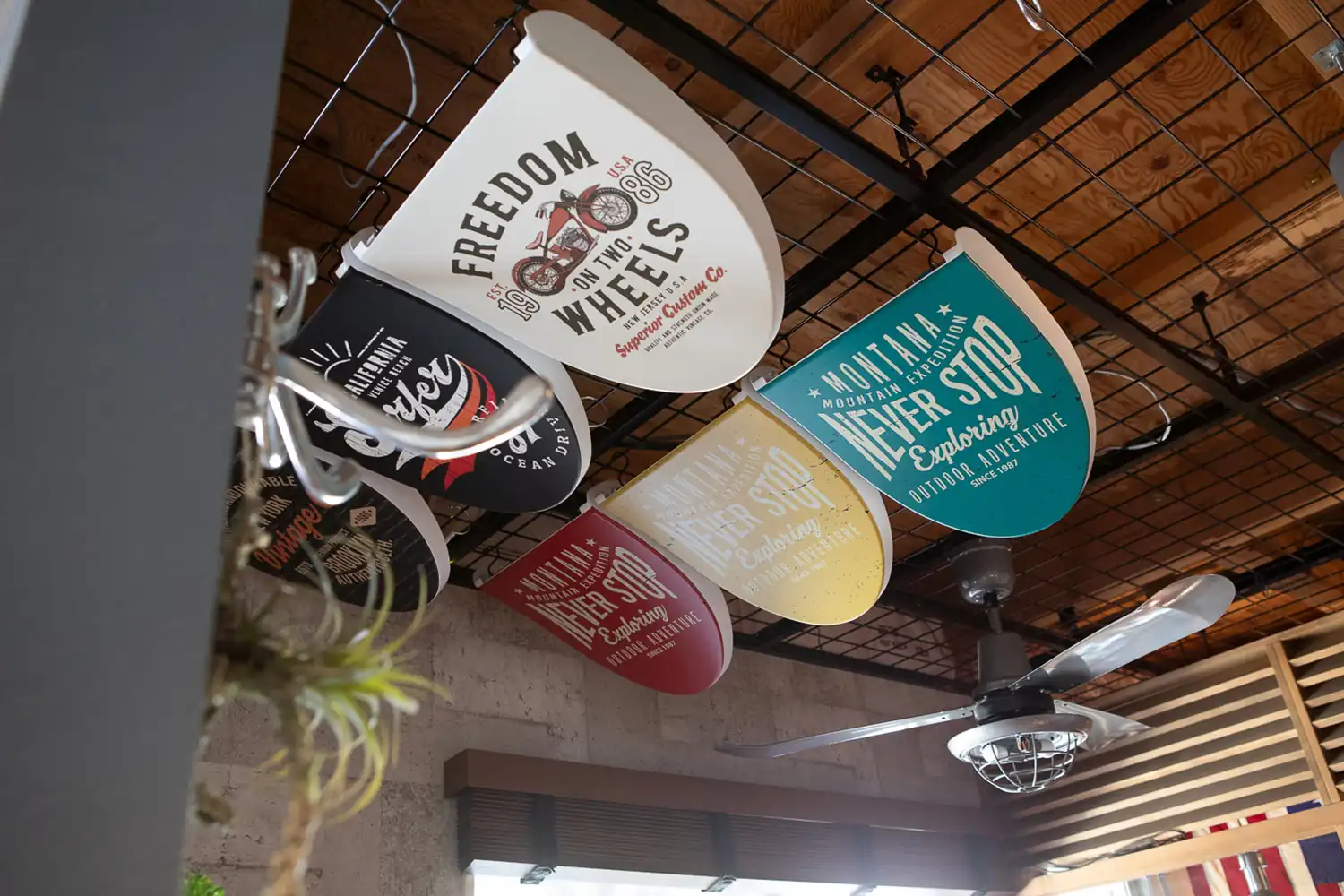
– However, you didn’t implement this in practice.
Ozawa We didn’t introduce a single one of these as an advertisement in practice (laughs). The reason is simple: the toilet’s poor image. There was resistance to the idea of associating a star or an artist with toilets in order to promote them.
Thinking about it now, that’s obvious. In the past, it was more likely to be associated with “dirty” and “smelly” images. It was when I was confronted with the reality that there were no advertisers even though it made sense that I realized, “Ah, we’ve got things the wrong way round.”
Before we can use a toilet to create advertisements, we have to change the image of the toilet itself. From there, we changed to the current direction.
– So you decided first to change the image of the toilet itself.
Ozawa I think I was really stuck myself. There is a sense of stagnation in this industry, where you simply work away steadily at your assigned tasks as a “subcontractor.” Plumbing is the job that I will continue to be involved with for a long time yet. In that case, I want to make it fun. If I’m going to do it more, I want to make it more interesting. To do that, I thought I’d start with the things I could do. I think it really began from there.
– You first had the idea of changing the image of the toilet, and you came up with public toilets as an extension of that, right?
Ozawa As I was thinking about toilets, I realized that at outdoor events, people tend to stay longer if they can feel safe about using the toilet. The longer they stay, the more money they spend there, and a time for them to interact with other people also appears. It can become a richer time for the community, too.
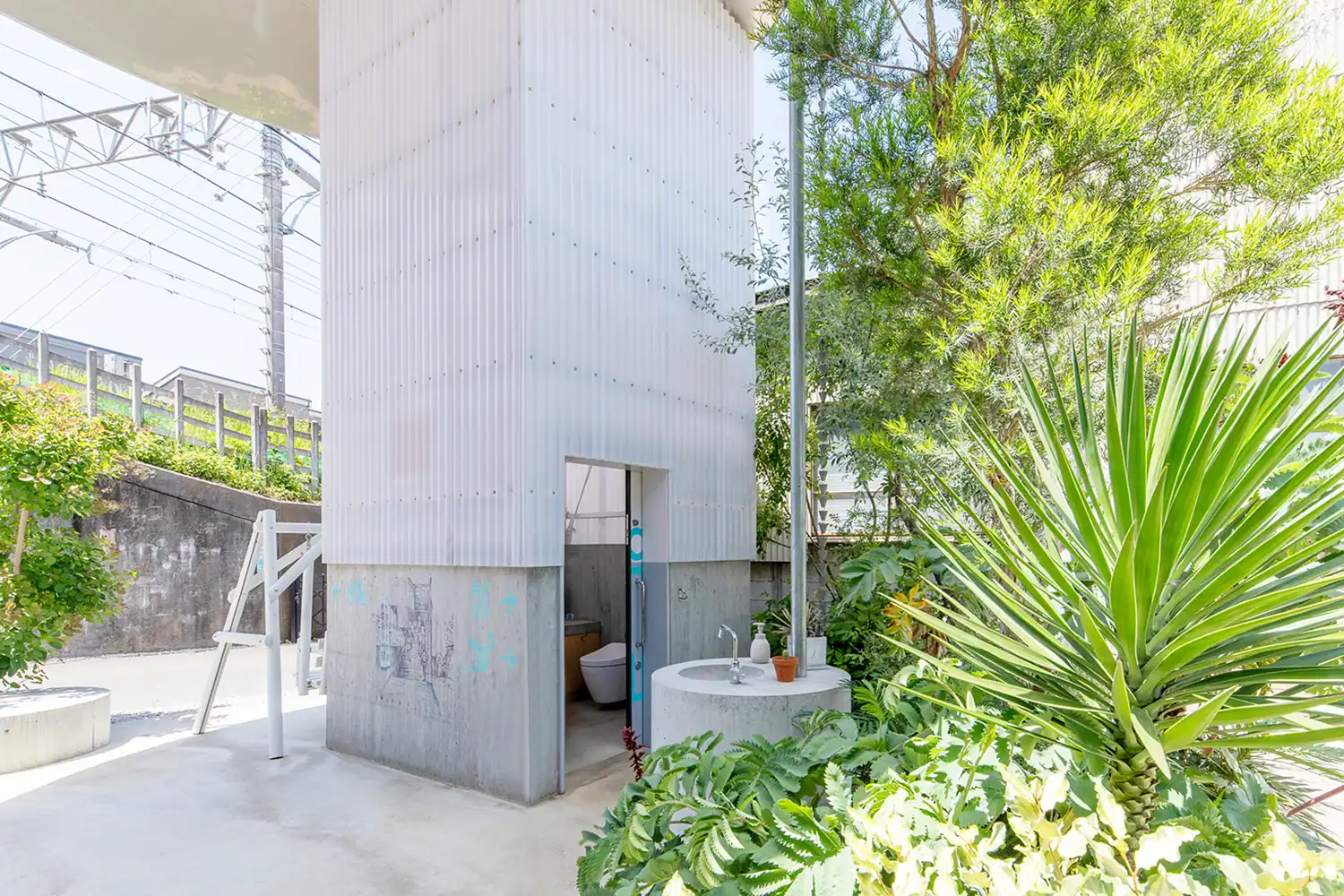
Ozawa That’s how I came up with the idea of holding a market centered on an outdoor public toilet. I felt “This might be surprisingly successful!” (laughs). However, if you say “public toilet,” people generally tend to imagine “stinky” and “dirty” places that they would “rather not use.” So I kept this in mind as we went ahead. I thought it would be worth doing if we could clear this hurdle. We didn’t aim to “build a community” right from the start.
Finding a “place where we can win”
– Marina Takahashi of Shin Studio was in charge of designing the Infrastructure Stand. I heard that you originally planned to do it yourself, Mr. Ozawa.
Ozawa As I had prior experience of renovations, I was thinking of having the renovation team in our company do it, and of just asking a professional architect to do the building confirmation application and other procedures. So I approached Ms. Takahashi, but just talking with her made me think, “Architects are amazing.” Our job is to follow the finished plan, so we’re not usually involved with architects. It was the first time I asked an architect for advice about building a public toilet, and when I did, she invited me to go and see “THE TOKYO TOILET” public toilets in Shibuya together because she thought it might be helpful.
– This project greatly expanded the potential of public toilets, didn’t it? It gave you some hints.
Ozawa I realized there was something interesting and meaningful about doing a wonderful project like this in Tokorozawa. It’s a challenge, isn’t it? Even if we built a toilet in Shibuya, it wouldn’t have an impact and I didn’t feel that we could win, but it encouraged me to do it in Tokorozawa, where we didn’t yet have any competitors.
I didn’t even have the idea that this could be a point of reference until Ms. Takahashi told me about it, so it was a big stimulus for me. She also told me about the example of Switch Room in Shibuya Hikarie, a trailblazer for public toilets. I was greatly influenced by this encounter with Ms. Takahashi, so I thought that I would like to learn through being involved together with her, and decided to send the plan which we had been developing internally back to the drawing board and entrust the project to Ms. Takahashi from the design onwards.
– How did you meet Ms. Takahashi?
Ozawa I happened to see a crowdfunding that Ms. Takahashi was doing when she went independent after her previous role. She is originally from Tokorozawa and was working in Tokyo, but planned to start her own business in Tokorozawa as she was going independent. The crowdfunding text was very unique. At the same time as making us feel her love of Tokorozawa, she also touched on the slightly uncool image that everyone has of Tokorozawa, and I empathized with this. I thought, “This person’s way of thinking is interesting.”
– That led directly to this job, didn’t it?
Ozawa One of the rewards for donating was an option where people could ask for advice on problems related to architecture, and so backing this funding request was the impetus. So it was very straightforward (laughs).
– Ms. Takahashi also wanted to get involved with the town of Tokorozawa.
Ozawa I think so. She herself expressed what she had been doing as “running away from her hometown.” In her student days, too, she was apparently hardly ever in Tokorozawa; she just came home to sleep. So I think she probably felt that she had never properly faced Tokorozawa. She probably looked at it from the outside from the long time, and wondered if that was good enough.
I don’t know for sure without asking her directly, though (laughs). But I think she probably thought, “Now is the time for me to give back to my local community.”
– In part 2 of this article, we hope to have Ms. Takahashi along to talk about that.
Community development that links up the players
– Anyway, KAWAYA Market, which began from a small step, is partnering with local players, communities, and hubs. Since 2023, you have also linked up with TOKOROZAWA DESIGN WALK, an event in which people explore the area, and awareness of the Infrastructure Stand has increased.
Ozawa As a matter of fact, we have been holding KAWAYA Market as a part of Tokorozawa City’s TOKOROZAWA STREET PLACE pilot project since it began. I think the main reasons for this were that Ms. Takahashi introduced the Infrastructure Stand initiative to the city government, and that it coincided with the period when Tokorozawa City began working in earnest to utilize public spaces and develop the community.
– It was good timing for you to have the opportunity, encounter various people, and link up with them.
Ozawa Tokorozawa has changed compared with five or so years ago. In the past, it was the local government and large corporations that built the city, and we felt that we were on the outside. Even if residents were interested, there were still few opportunities for them to take the leading role.
In recent years, however, various events have prompted local players to connect with local governments and companies, and the number of pleasant places has increased. The local government and big companies are now listening to us on an equal footing and offering to do things together. I think it was the various local players who made it happen.
Tokorozawa City, Seibu Railway, and the Kadokawa Group are also involved with Tokorozawa DESIGN WALK. We and Ms. Takahashi are participating, too, and we are all united in our efforts to move ahead with community development. I feel that big companies and the local government have recognized that we are all giving our best. I think the barriers between local governments, large companies, and private players are pretty much gone now.
Looking for a place where we can win
– Listening to you, I have the impression that you think a lot about what it is that you can do.
Ozawa Maybe I wasn’t confident. As a plumber, I’m not the type who has outstanding skills. I wasn’t the type to work faster or better than anyone else on site. So I was always thinking about where I could compete.
– Is that perhaps related to your experience of taking over the company from your father as the second generation to run it?
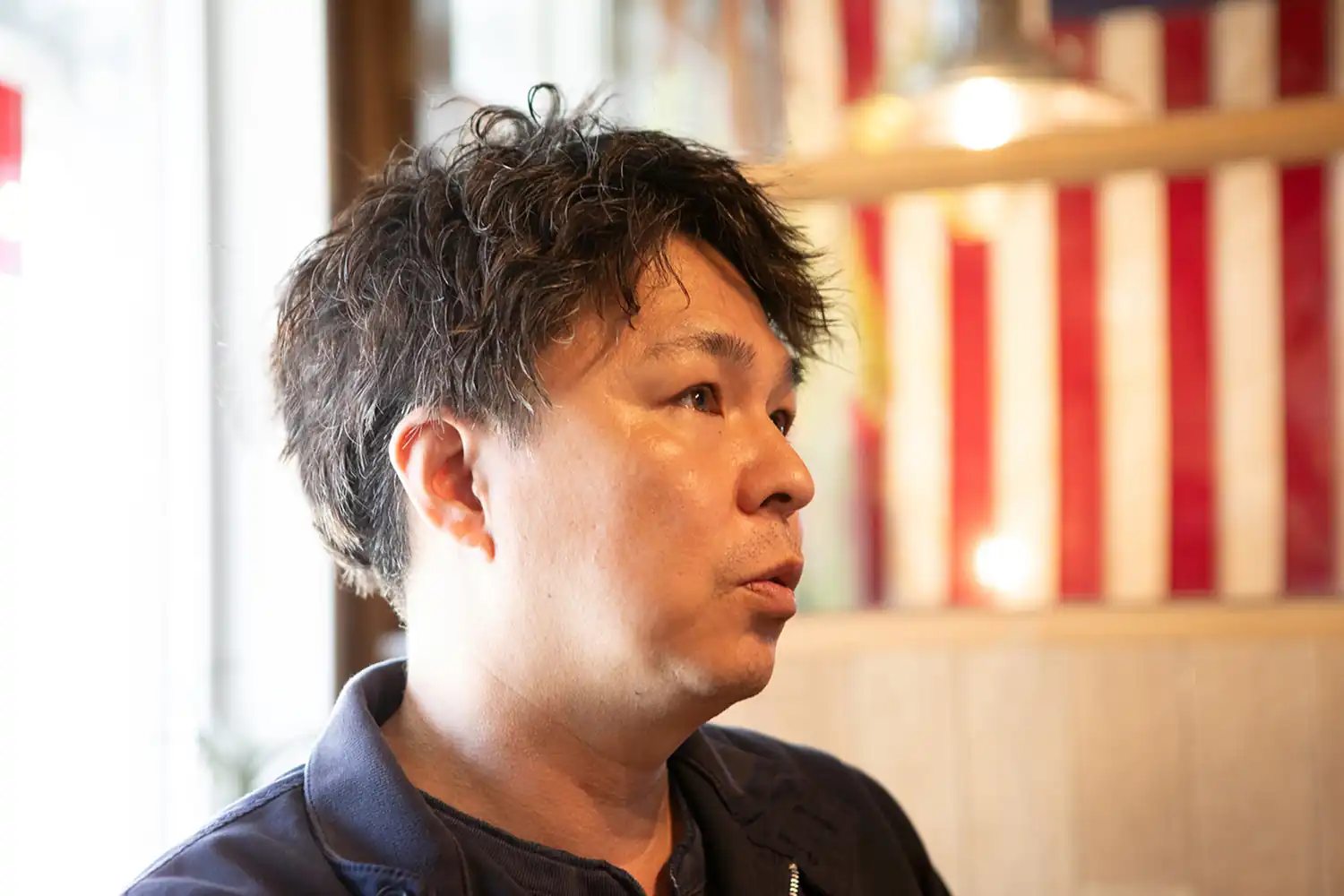
Ozawa It is. My family ran our own business, but there was a period during my father’s time when business wasn’t going well. What I thought at the time was that the company’s problems didn’t end with the company. When business doesn’t go well, family relationships break down. The atmosphere at home changes, and everyone suffers.
I was a child, so I didn’t understand everything, but I remember I hated it. So when I took over the company, I thought it was no good “just to make the work better." I thought there was no point unless the people working for me and their families were happy.
– That idea leads to “places where people gather together,” like the Infrastructure Stand and KAWAYA Market, doesn’t it?
Ozawa Yes, maybe it does. I’m probably not the type to do things alone. Nor do I think I have any special abilities. So I rely on people. I rely on the architect, I rely on the plant shop, I rely on the people in the community. Then they compensate for the things I can’t do, little by little.
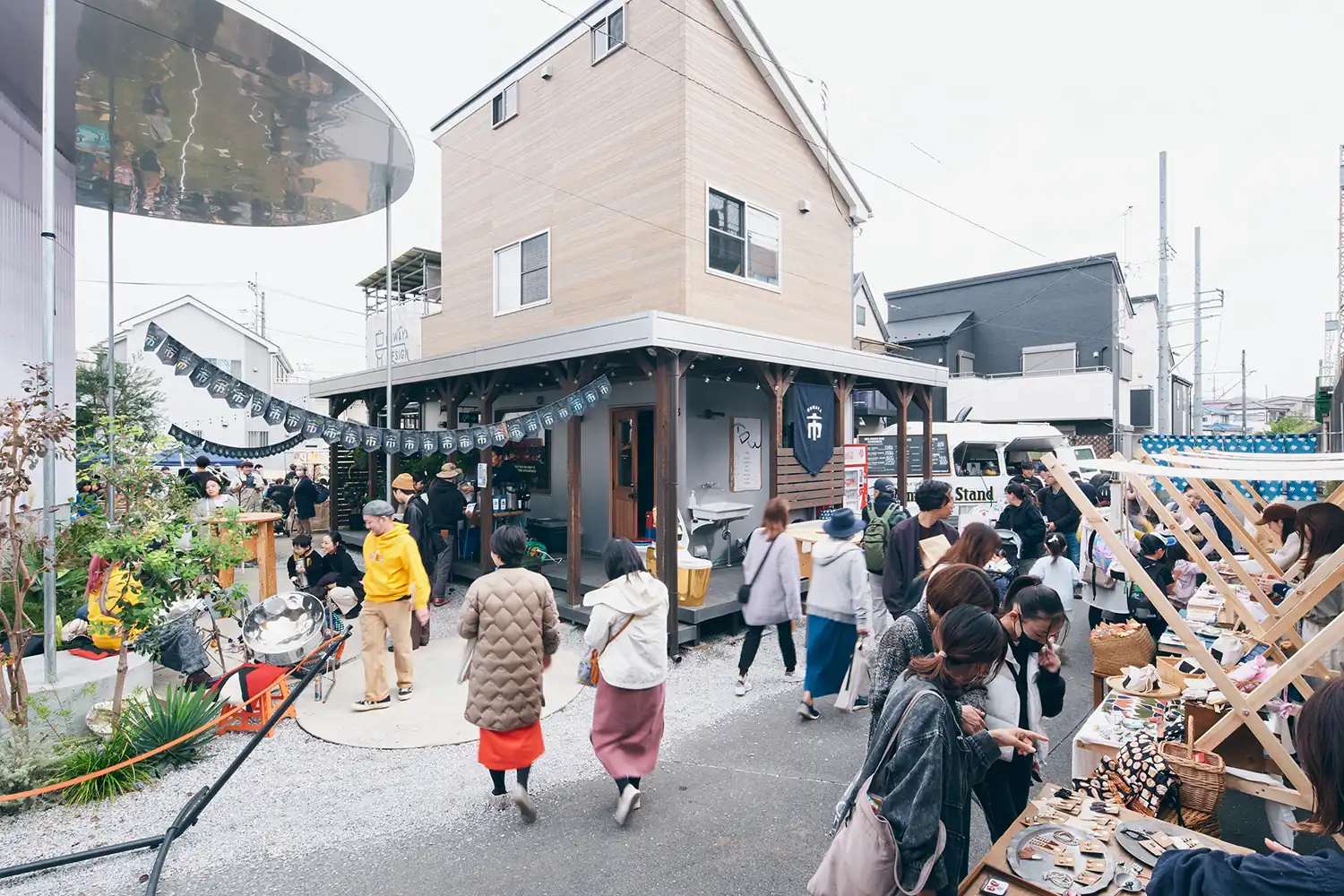
Ozawa We did not aim for community development per se, but right from the start we wanted to create a place in which people could gather together and stay for a long time. Everyone came together with the desire to provide value to the neighborhood, even if only a little. In the end, we have perhaps gone on attempting to communicate this desire.
– In Part 2, we will be joined by Marina Takahashi, the architect responsible for the spatial design of the Infrastructure Stand. What was the idea behind this space that connects people and the neighborhood? Mr. Ozawa is also currently working on the concept of “closed loop toilets,” which are connected to disaster preparedness and the environmental cycle. What does the future look like for this challenge, which began with public toilets? We will find out in the next article.
In GOOD DESIGN TANBOU (= exploring), we deliver interviews and introduce works based on a certain subject. This time, the theme is “future welfare.” Welfare means “happiness” and “abundance.” They desire to make future society better. What did they overcome toward achieving this goal? We will explore where these designs focusing on the future started from.
Public toilet Infrastructure Stand
Ishiwa Plumbing Ltd./Shin Studio
The Infrastructure Stand is a public toilet built by Ishiwa Plumbing Ltd., a plumbing company in Tokorozawa City, Saitama Prefecture, to function also as the company’s showroom. In addition to the toilet, it is equipped with a bench, counter, bicycle stand, and more, and was designed to be a place where passersby could casually call in. The circular roof, lighting plan, and natural ventilation have reinvented the image of public toilets, which tend to be seen as “dark, dirty, and smelly.” It is also used as a venue for markets and local events, hinting at a new way of being for public toilets that nurtures local communities.
- Award details
- 2024 GOOD DESIGN AWARD https://www.g-mark.org/en/gallery/winners/21075
- Designer
- Marina Takahashi, Shin Studio
Tomoko Ishiguro
Editor/writer
After working in the editorial department of “AXIS,” she became a freelancer. She writes, edits, and plans, with a focus on design and life culture. Her major editorial works include the LIXIL BOOKLET series (books, LIXIL Publishing) and “Oishisa no Kagaku” (magazines, NTS Publishing).
Chieko Shiraishi
Photographer
She started photography after taking a black and white enlarger course organized by her town. After working as an assistant photographer, she is now mainly active in taking photos for magazines and other media, while also creating works in her darkroom.


Related Articles
Designing agricultural heroes (Part 2)
“Saga Agri Heroes”: introducing design to agriculture, supporting the producers to build their own brands. This original initiative won a GOOD DESIGN BEST 100 award in 2022. In Part 1, we introduced Saga Prefecture’s mechanism for incorporating design into local government and supporting the brand development of farmers by accompanying them over a long-term period of four years. In Part 2, we explore the challenges faced in the second phase, which is currently underway (2023-2026), the differences from the first phase, and the ways in which design is changing people and local communities.
Designing agricultural heroes (Part 1)
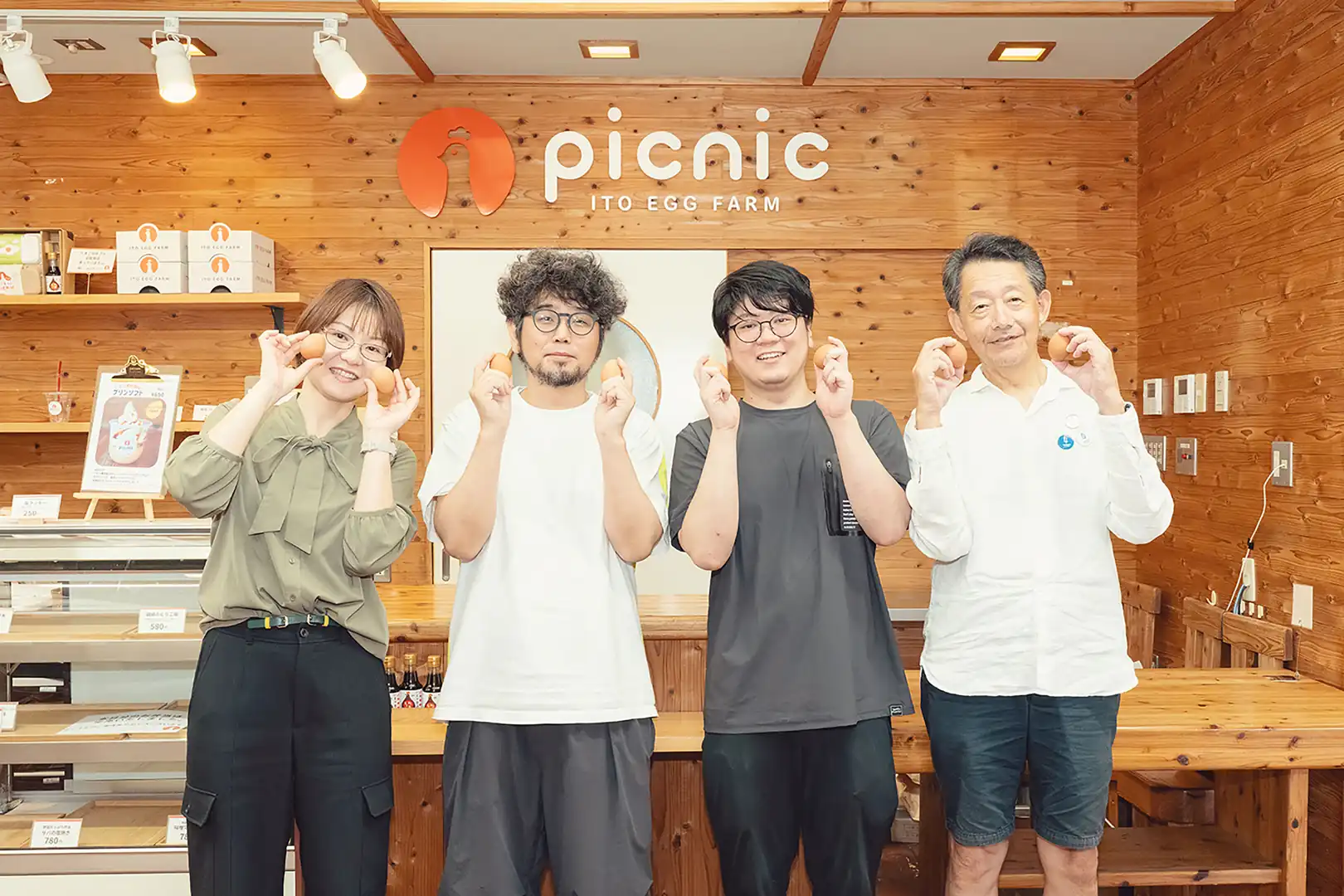
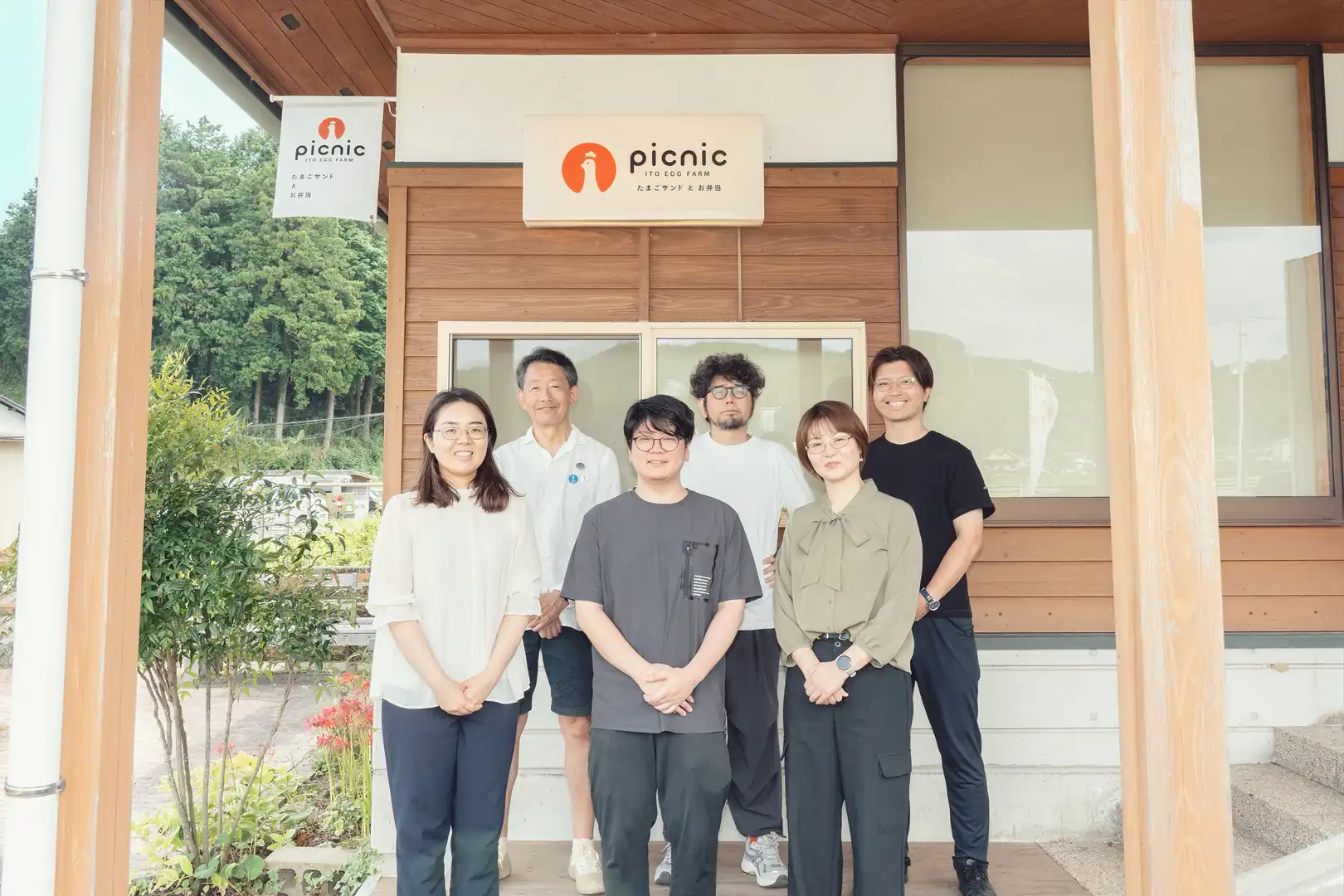
Introducing design to agriculture, supporting the producers to build their own brands... Saga Prefecture’s “Saga Agri Heroes” is generating new value in the local area through such highly original initiatives. In a context in which single-year subsidy programs are the norm, this initiative has instead adopted a four-year long-term support system in which farmers and designers work together to come up with ideas and develop products. A number of the brands created through collaboration between primary industries and design have attracted attention, and the project received a GOOD DESIGN BEST 100 award in 2022. In this article, we hear about it from its launch to the results of its first phase. We talked to Hiromi Ushijima of Saga Prefectural Government’s Agricultural Management Division and Issei Koga and Chika Sasaki of the prefecture’s Saga Design, producer Naoki Ezoe, Junichi Hayama of DEJIMAGRAPH, and Daiki Ito of Ito Egg Farm “picnic.”
Umbrella innovation that changes our daily lives (Part 2)
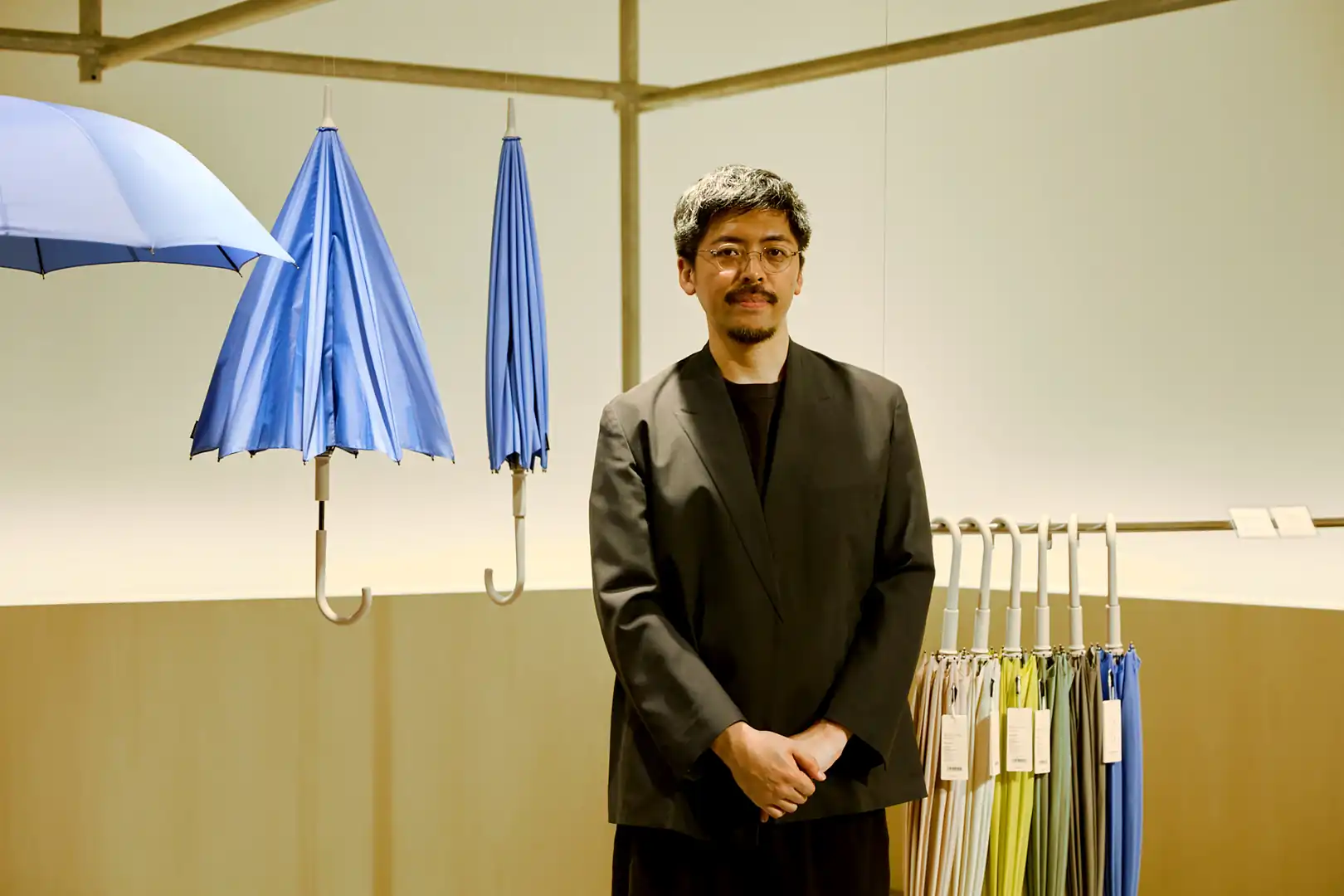
We should not overlook the “minor inconveniences” in our daily lives, but rather solve them through our own ideas... Starting from this stance, Marna Inc. has created many hit products. The Shupatto Umbrella, which was selected as one of the GOOD DESIGN BEST 100 in 2023, is an epoch-making product that revolutionized the very structure of umbrellas. In Part 1, we listened to the story behind the development of this umbrella, which was born from the idea of being able to fold it without getting your hands wet. In Part 2, we will unravel “Marna’s design thinking” which lies behind its product development.
Umbrella innovation that changes our daily lives (Part 1)
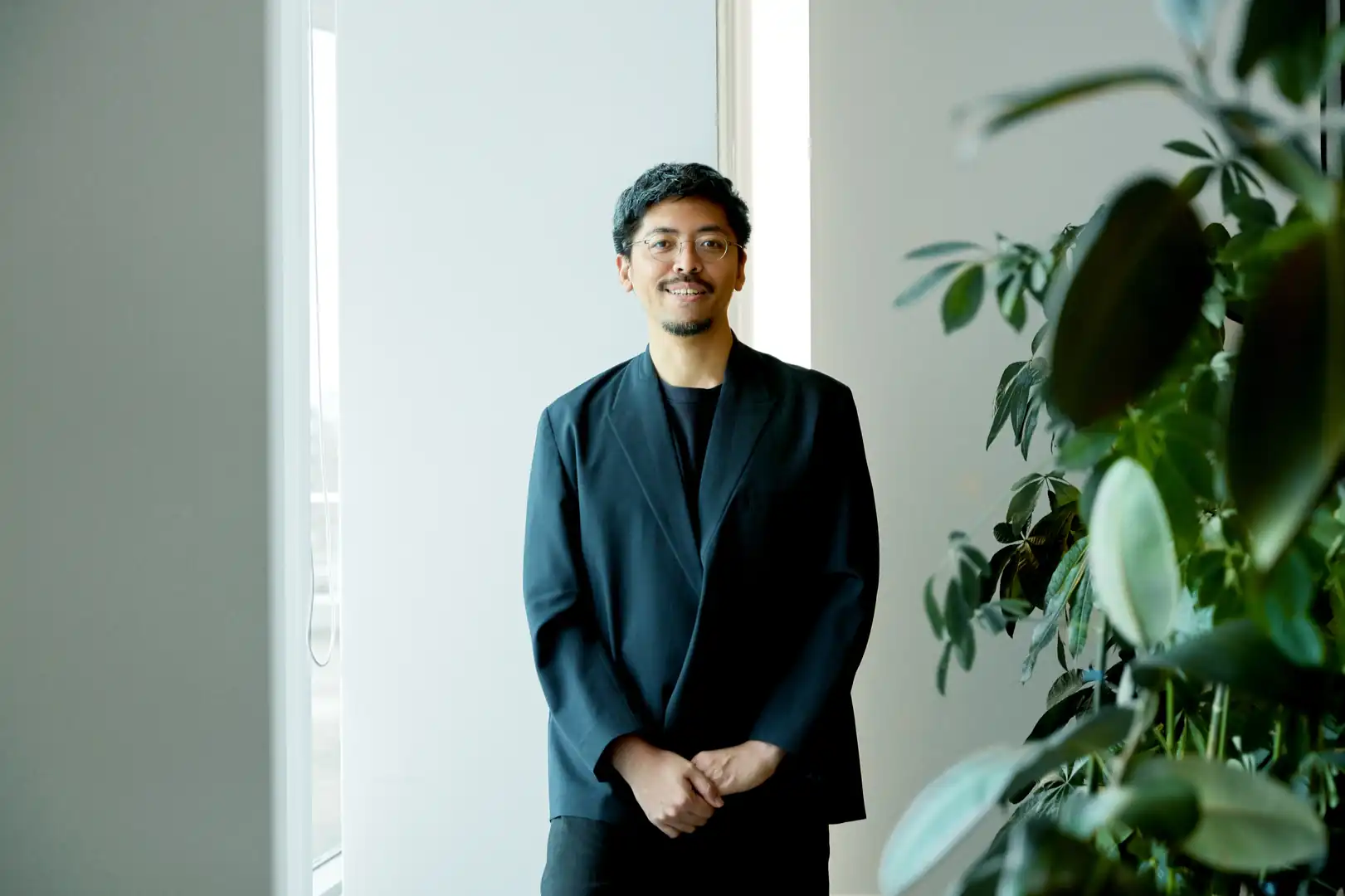
We should not overlook the “minor inconveniences” in our daily lives, but rather solve them through our own ideas... Starting from this stance, Marna Inc. has created many hit products. One of these, the Shupatto Umbrella, is an epoch-making product that has revolutionized the very structure of umbrellas. While folding umbrellas and design quality are the mainstream among the competition, this umbrella, which was born from the idea of being able to fold it without getting your hands wet, offers a new experience in which all the fabric comes together at once the moment you close it. And in 2023, it was selected as one of the GOOD DESIGN BEST 100. We interviewed Ryota Taniguchi, who led the development of this product, about the development process which spanned five years from the moment when the idea came into being, and the repeated trial and error which led to its commercialization.