To the place where "good design" was created
Good design, excellent design, design that opens up the future, ideas that move people's hearts, and actions that lead society always have small beginnings.
Interviews with designers at the birthplaces of good design to find hints for the next design.
Destination
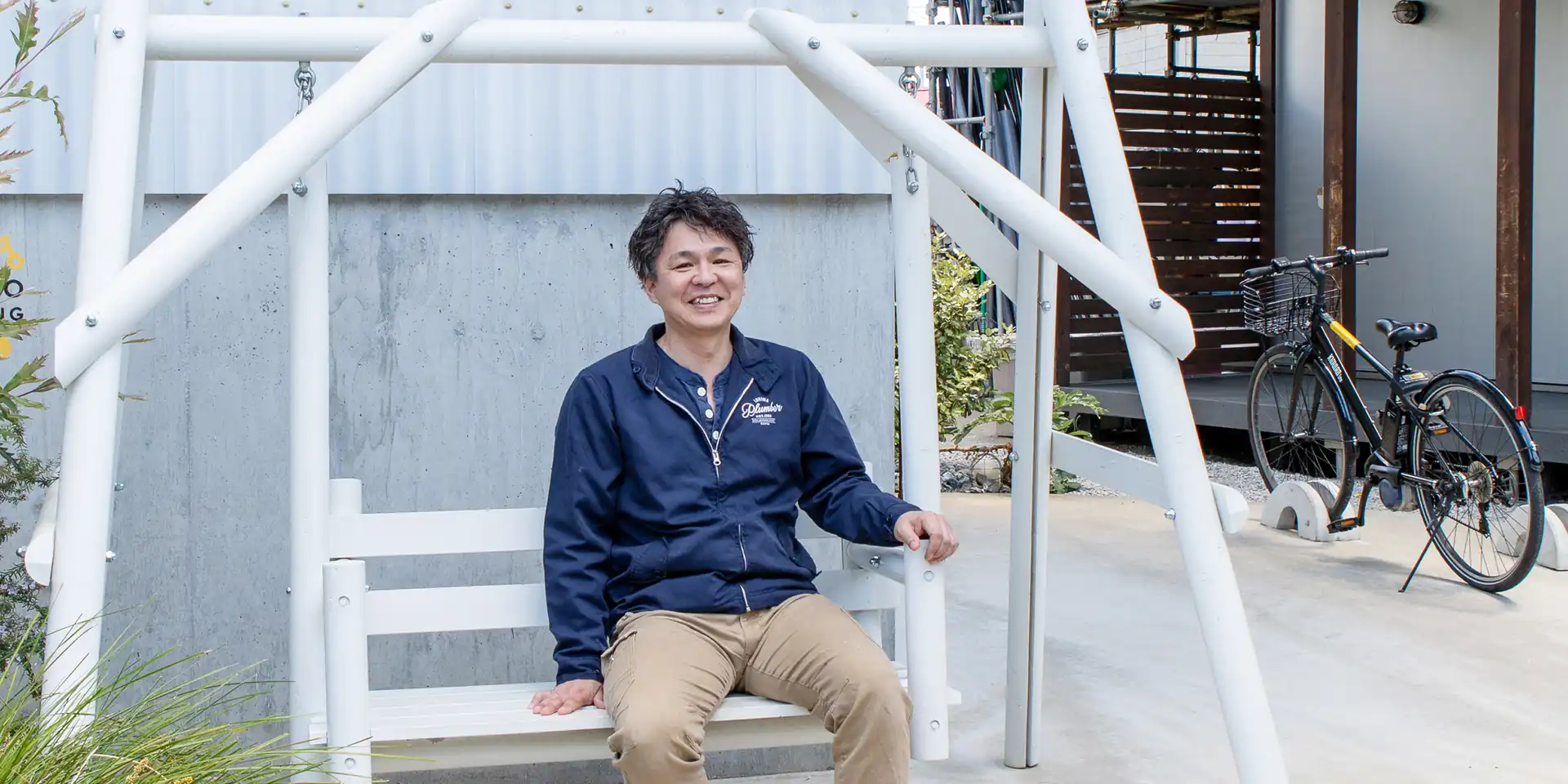
Ishiwa Plumbing Ltd. (KAWAYA-DESIGN)
Beyond the company’s activities is society(Part 2)
2026.7.31
“Infrastructure Stand” in Tokorozawa City, Saitama Prefecture, is a public toilet as an extension of the showroom. Mr. Daigo Ozawa, CEO, Ishiwa Plumbing Ltd., says that he started with “a business strategy with an eye to the company’s future.” In the first part, we introduced the Infrastructure Stand as a gathering place for people, and the process in which the activities of the Infrastructure Stand spread to the community by involving companies and the government. What Mr. Ozawa is looking at next is disaster preparedness and toilet issues. The Infrastructure Stand is now not just a public toilet, but is about to become a testing ground for a closed-loop toilet that can function even in times of disaster.
Why toilet disaster preparedness?
– I hear the next Infrastructure Stand initiative has started.
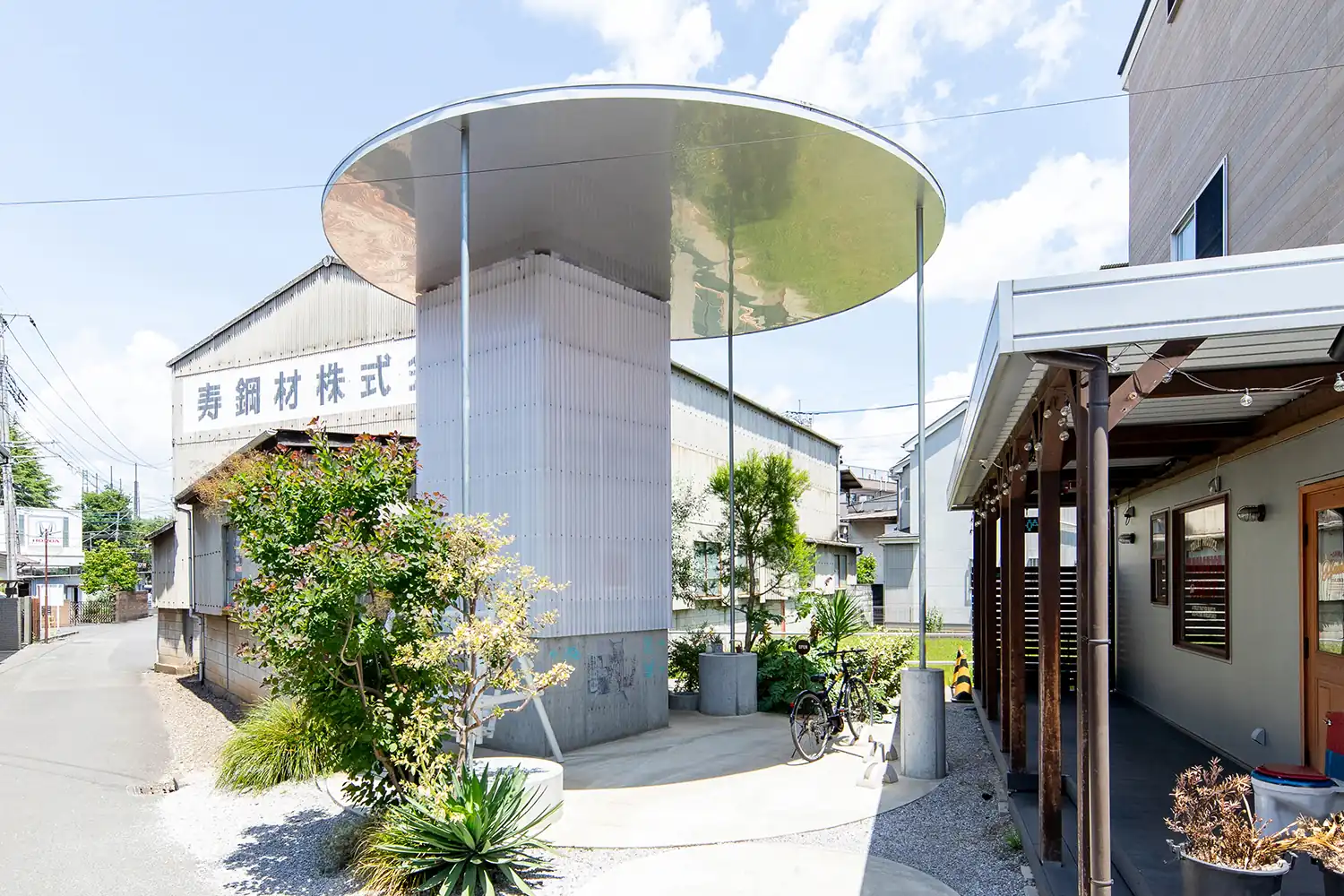
Daigo Ozawa (CEO, Ishiwa Plumbing Ltd.) At present, we are putting the most effort into a closed-loop toilet. Plans are also underway to develop the Infrastructure Stand into a closed-loop toilet. We are planning to collect data such as the number of users, usage time, water quality, and maintenance frequency while operating the system ourselves.
It’s not enough to build toilets. The maintenance of toilets is very important. Especially in times of disaster, we cannot use toilets when the water supply is cut off or the power is cut off.
So, we are thinking of a system that can operate a circulation pump by combining solar power generation and storage batteries without relying on large amounts of electricity. We want people to be able to use the toilets even during power outages. It will be a BCP (business continuity plan) measure for emergencies. Usually, it can be used as a normal toilet. Even in the event of a disaster, it functions with no changes. That’s what we’re aiming for.
– What are the issues with toilets in times of disaster?
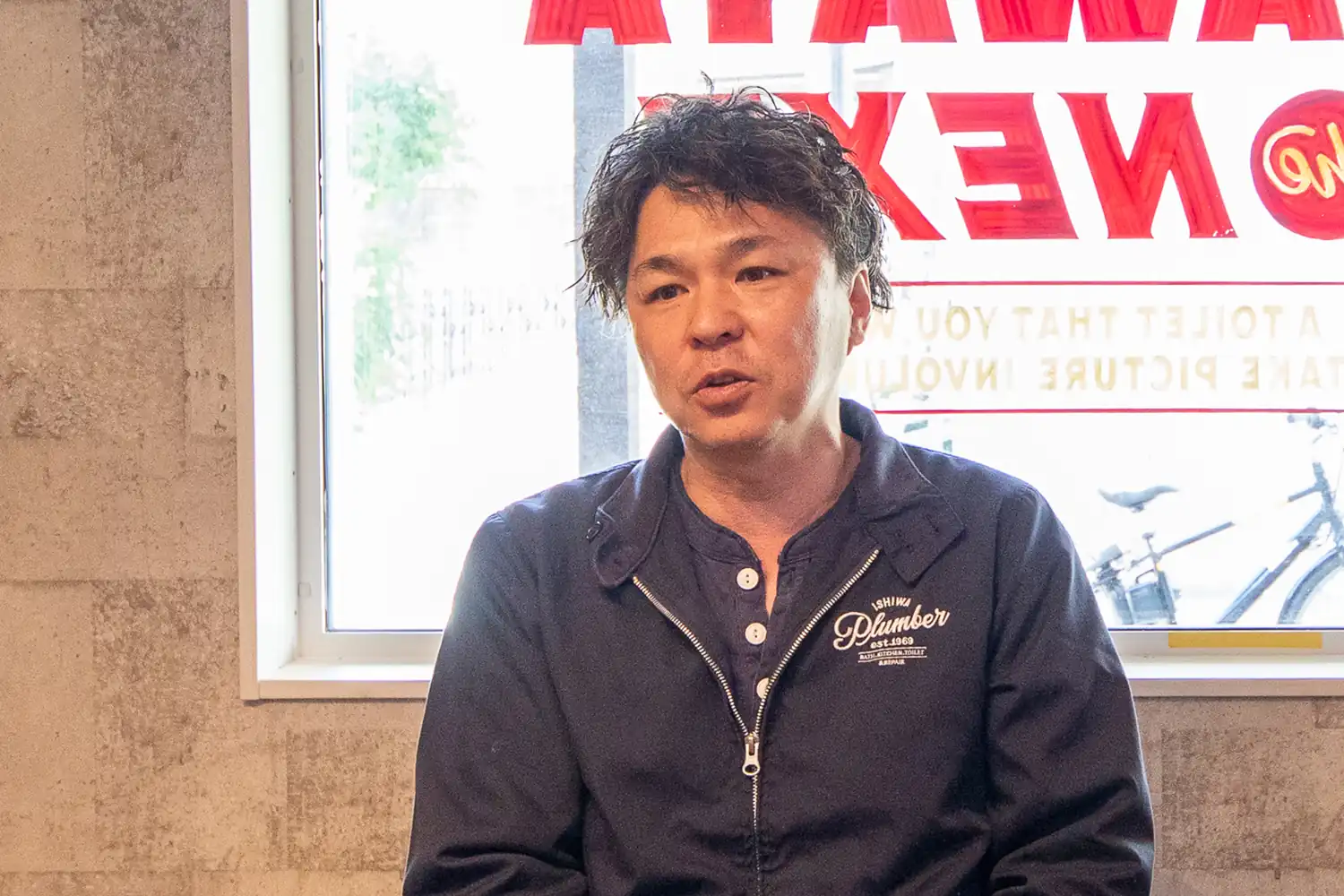
Ozawa Once a toilet gets dirty, it’s very difficult to restore the sanitary conditions. If there is a water outage, there will be no water to clean, and if there is a power outage, the equipment won’t work. It is not easy to restore a toilet covered with filth. That’s why it’s important not to make it dirty, not what to do after a disaster occurs.
– Stockpiling portable toilets is also being done.
Ozawa Of course, portable toilets are important, but I think it’s difficult to use them for the first time when a disaster occurs. I once explained how to use the portable toilet to high school students. They couldn’t set it up properly even while looking at the manual. If you do it in advance, you can do it easily. But it’s quite difficult to set it up in a chaotic situation during a disaster. That’s why I think it’s important to use disaster toilets on a daily basis.
– It’s the idea of not separating ordinary lives from extraordinary ones.
Ozawa Yes, it is. It is used as a normal flush toilet, and can be used in times of disaster. I think it is important that toilets can be used in the same way as usual even in times of disaster. That’s one of the solutions I think about regarding toilet disaster preparedness.
The challenge of a closed-loop toilet
– How does the closed-loop toilet work?
Ozawa The system purifies wastewater using biofiltration and reuses it as toilet flushing water. Actually, the technology itself isn’t new. Although this technology has been studied for many years, it has not been widely adopted due to maintenance and operation issues.
In the midst of this, a researcher, who had learned about our activities, asked us if we would like to try it in a real-life situation. Technology alone will not change society. Only when there are people who use it and people who maintain it, it can be established as a system. I think they expected the Infrastructure Stand to be a place for such experiments.
– You think about maintenance too, don’t you?
Ozawa Yes, I do. A closed-loop toilet filter gets dirty eventually. Sludge is produced by biofiltration. Therefore, installation is not the end of a project. The project will not be completed unless we consider who will handle the maintenance after the installation. I wonder if it can be turned into a new business in the plumbing sector.
A lot of the plumbing work is installation only. But a closed-loop toilet not only needs to be installed but also maintained. In other words, I think we can create a new model in which installation and maintenance are contracted together. We can make our own products. And I think it will be a business to continuously support local infrastructure.
– Is the Infrastructure Stand also a place to experiment with that?
Ozawa When you actually run it, you can see how much management is required and how much it costs. Now we can maintain the toilet because only one Infrastructure Stand is located in front of us. But what happens if there are several stands that are far apart? Taking such circumstances into account, we are thinking and trying various things.
Data will shape the future
– The usage situation will have to be understood for deployment.
Ozawa That’s very important. Biofiltration is a system to purify water with the power of bacteria. We need to design the system according to the usage situation. For example, the number of users is totally different depending on whether it is in a shelter or a park. We have to design based on data such as how frequently it is used throughout the year and when usage increases.
– Instead of searching for an ideal situation, you identify the conditions.
Ozawa Yes, it is. I’ll take all the data and identify them. For example, if 100 people use it over the course of an hour, the water might start to get cloudy. If this is known in advance, I think it can be avoided. What is important is to show data including stable operating conditions. I think it’s better for customers to understand before installation.
I don’t want to talk about how clear the circulating water will continue being, but rather about what is possible. I want customers to understand the characteristics including the number of users and the frequency of maintenance and management before they adopt the toilet. I think that is necessary for social implementation.
Ozawa I think any data will do. Try it first. While data is collected step by step, an expert may give us advice to collect this kind of data next time.
– It could even develop further from there.
Ozawa Tokorozawa has a community development organization called “Tokorozawa Area Platform,” where businesses, the government, and local residents gather. If we can use it and work together with universities and the local government to measure people’s movement and usage in various places in the region, we may be able to visualize regional issues with data. If people’s movement is visualized here and there in Tokorozawa, I think the way of thinking about community development will change.
Power to involve people
– Not only the Infrastructure Stand but also you will attract governments, businesses, and local people. I feel you are good at getting people involved. I hear that you also play a central role in the Tokorozawa Area Platform you mentioned earlier.
Ozawa Actually, I refused at first. I was busy at work, and I wanted to work on a closed-loop toilet. I didn’t think I could handle the area platform. However, I was offered again. At that time, I received comments from members of the Chamber of Commerce and Industry and people long involved in community development. They said that they would get involved if I was going to do it. When I heard such voices, I didn’t think I could refuse.
I understand what I can and can’t do. I don’t push myself, and I ask others for help. Respect is important at that time. I ask for help from the bottom of my heart because I think a certain person is amazing.
– You can get it across because you ask from the bottom of your heart.
Ozawa It’s more important to produce results than to keep up appearances. My pride comes from my results. Of course, I don’t just ask for help. I try to make win-win proposals, thinking together about what kind of future lies ahead.
– I think I’m starting to see the basics of Ozawa-style community development.
Ozawa Community development is the same. There are many local governments that have similar issues. If we work on it first, we may be able to expand it horizontally. We may be able to commercialize it in the future.
Instead of saying, “Let’s do it together because I want to do it,” I make proposals based on what they stand to gain. That’s why it can be easy to participate.
– I have the impression that once you decide, you don’t give up easily.
Ozawa That may be true. Competent people have a lot of choices. But I don’t. Whether it’s the closed-loop toilet or visualization of the community, these are themes I’ve wrung out from within myself.
That’s why I think I have to get through them. I can’t simply move on to the next option just because the first one didn’t work out. I have few options. So I won’t give up.
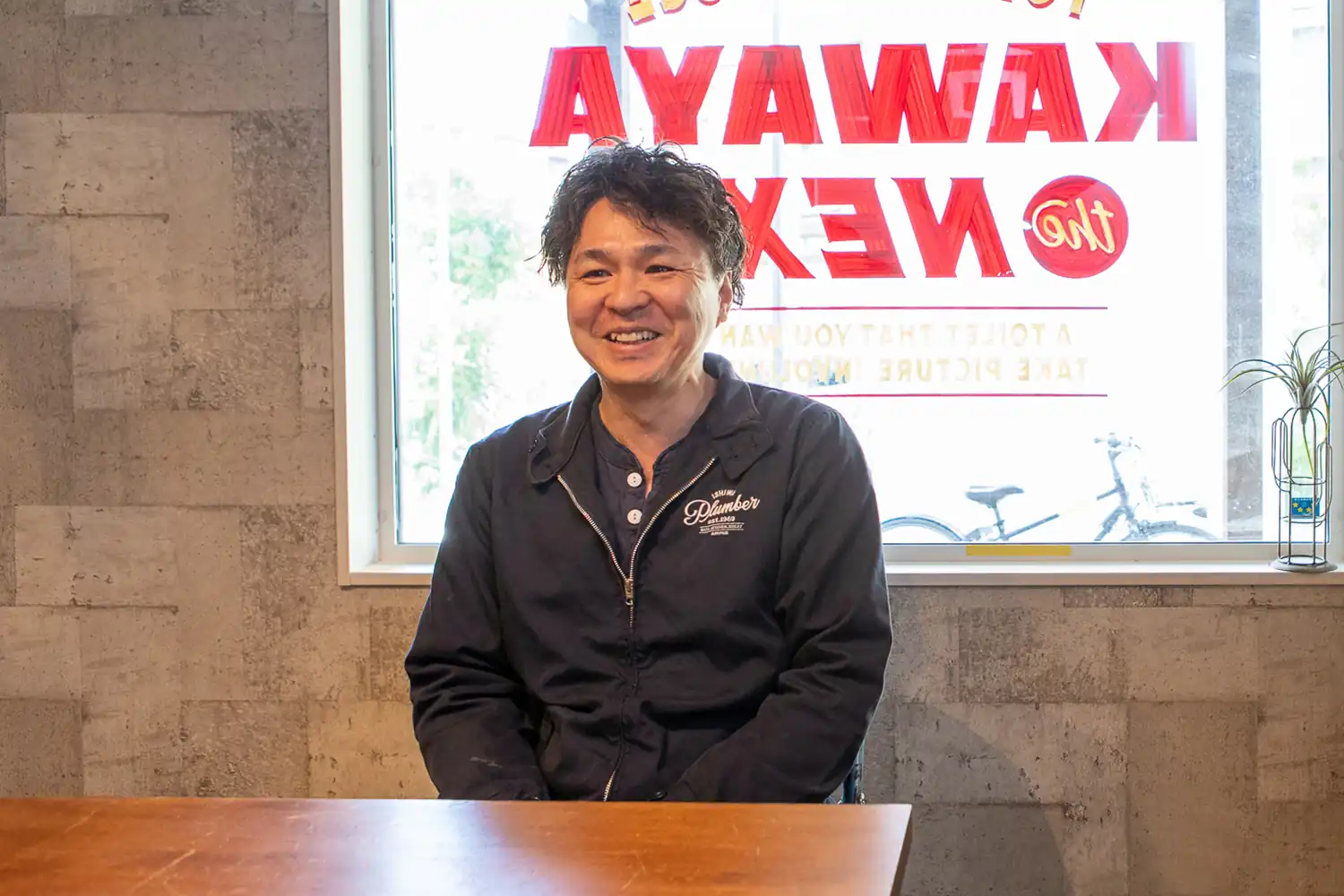
– Isn’t it difficult?
Ozawa Of course, it’s difficult (laughs). But it’s also a blessing. If I had any escapes, I would escape.
– So you’re happy to find issues.
Ozawa As I study about toilets, I can see disaster preparedness issues. As I think about disaster preparedness, I can see the closed-loop toilet issue. I am quite happy that I can see the next issue. Because I have a long way to go. If I keep doing what I’m doing, I’ll see the next issue. I don’t feel like I’m looking for something new.
– Giving shape to these issues one by one.
Ozawa There’s really only so much I can do on my own. There are people who can do things I can’t, such as architect Ms. Takahashi and other experts. They help me to proceed.
I don’t think I have great ideas or special abilities. If I see an issue, I’ll make an effort. If I can’t do something, I’ll ask someone who can. I repeat this over and over again.
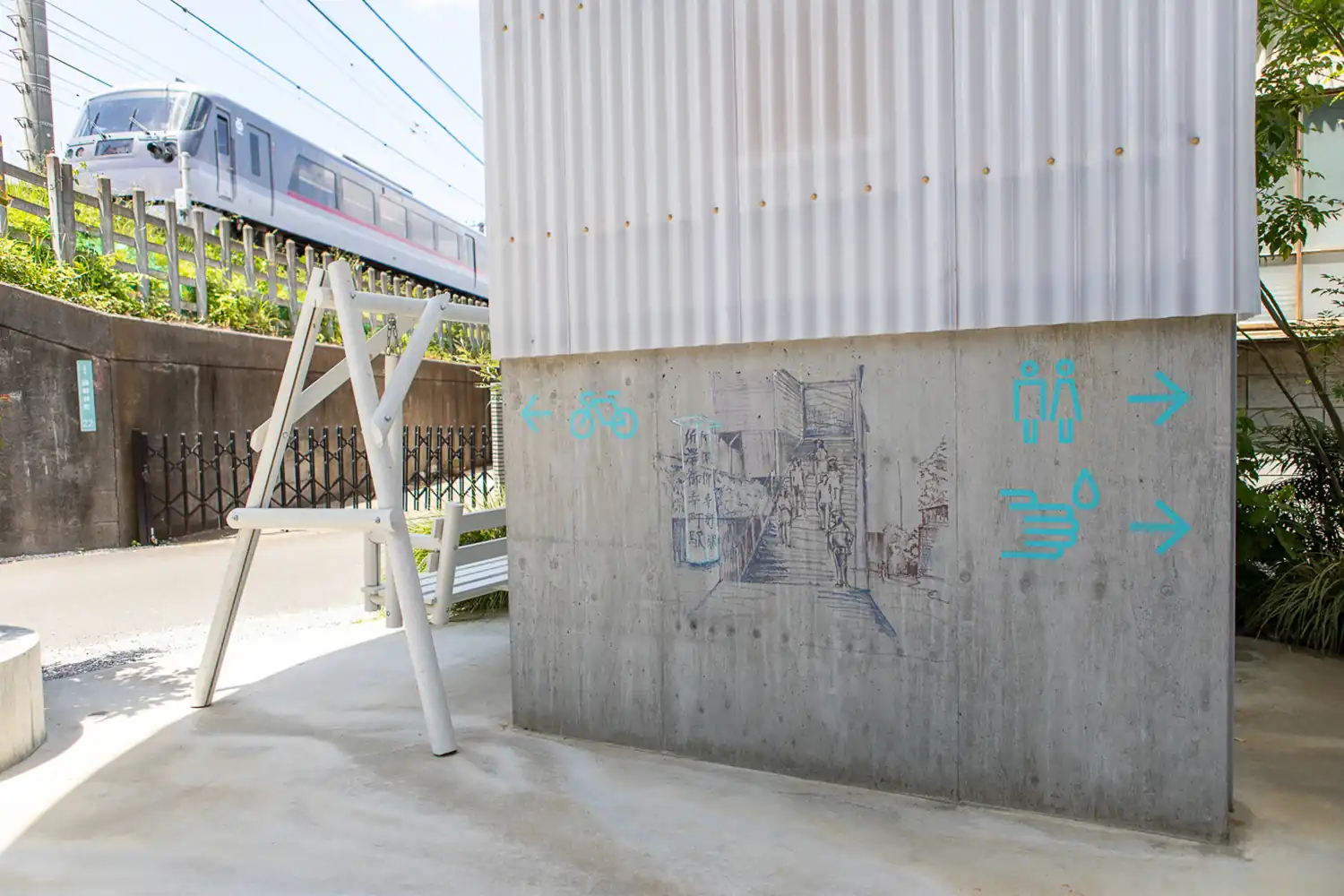
Ozawa I don’t think the Infrastructure Stand is completed yet. I have started community development, disaster preparedness, and the closed-loop toilet, but haven’t completed any of them yet. But I can see what I’m going to do next. I enjoy it very much.
– The Infrastructure Stand won the GOOD DESIGN AWARD 2024. Have you noticed any differences?
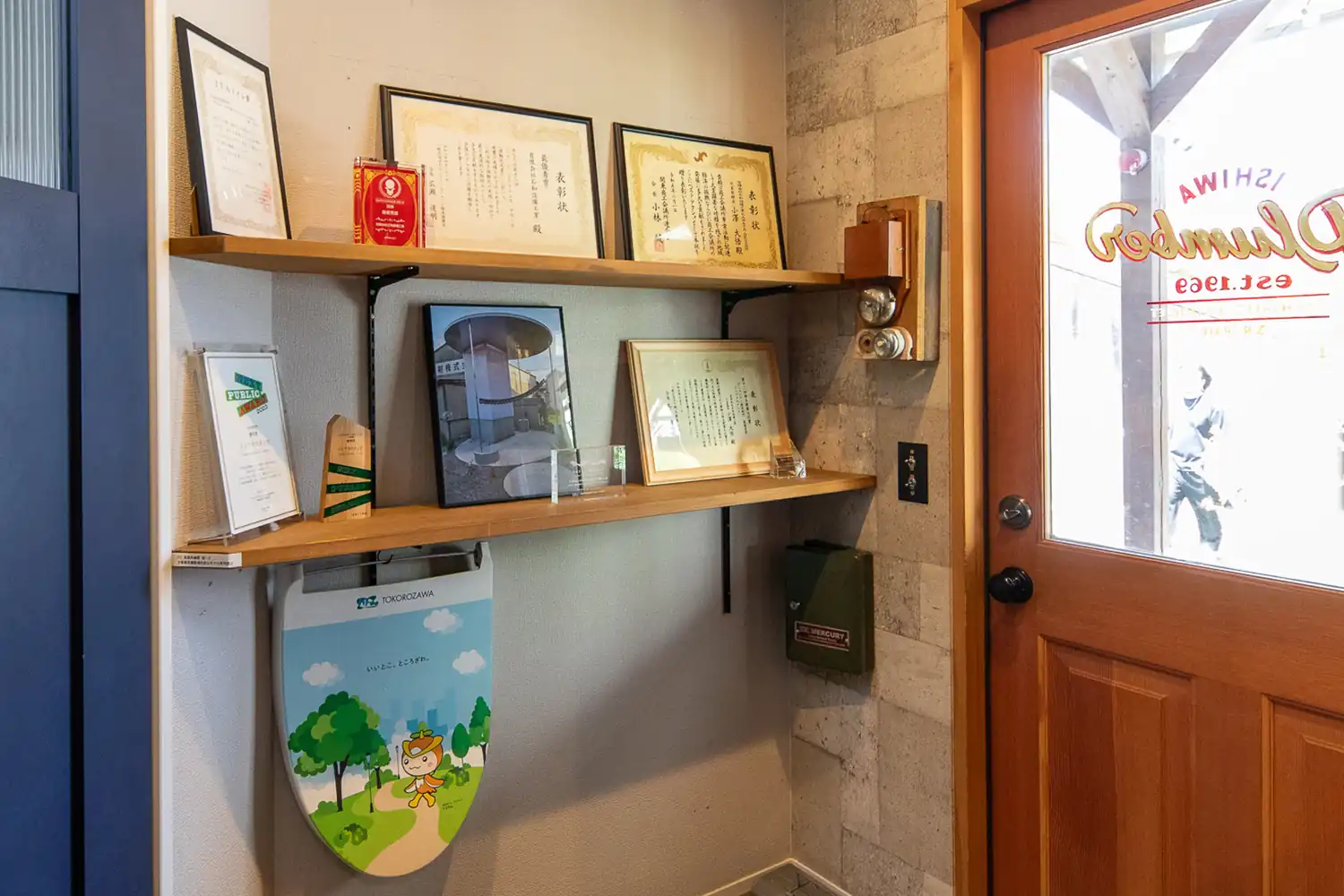
Ozawa I thought the GOOD DESIGN AWARD was amazing. For example, Japan Toilet Grand Prize is only known by people in the industry and the general public don’t know much about it. But the GOOD DESIGN AWARD is different. When I say that I won the GOOD DESIGN AWARD, people respond, “That’s great.” I realized that everyone knows this award.
– Ms. Takahashi is the architect who applied for the award, correct?
Ozawa Yes, it is. I would have applied in the community context, not architecture. She saw the possibility of evaluation as architecture. The Infrastructure Stand can be viewed both as architecture and as community.
Closed-loop toilets are now much talked about. If a closed-loop toilet is implemented, I think we will see a different view. The Infrastructure Stand is not completed. It is a testing ground for the next generation of public infrastructure.
– The Infrastructure Stand initiative, which began as a showroom, has expanded to include communities and disaster prevention. And your challenges continue. We also spoke with Ms. Marina Takahashi, the architect who shaped the space.
Ms. Marina Takahashi, the architect in charge of designing the Infrastructure Stand, met Mr. Ozawa soon after opening Shin Studio in Tokorozawa in 2021.
“Mr. Ozawa told me he wanted to build a new toilet showroom. A plumbing company is starting a new initiative with a toilet as their starting point. Moreover, I thought it was quite bold for a small company to build a new showroom.”
As she listened to him, she was greatly drawn to his concept of toilet space design and future plans.
When she was at the site, she felt that Mr. Ozawa’s vision of the future could not be realized simply by building a public restroom as a showroom.
“If you just build an ordinary public toilet, it will not be used because of its image as dark, smelly, and dirty. And it may become a nuisance to the neighborhood.”
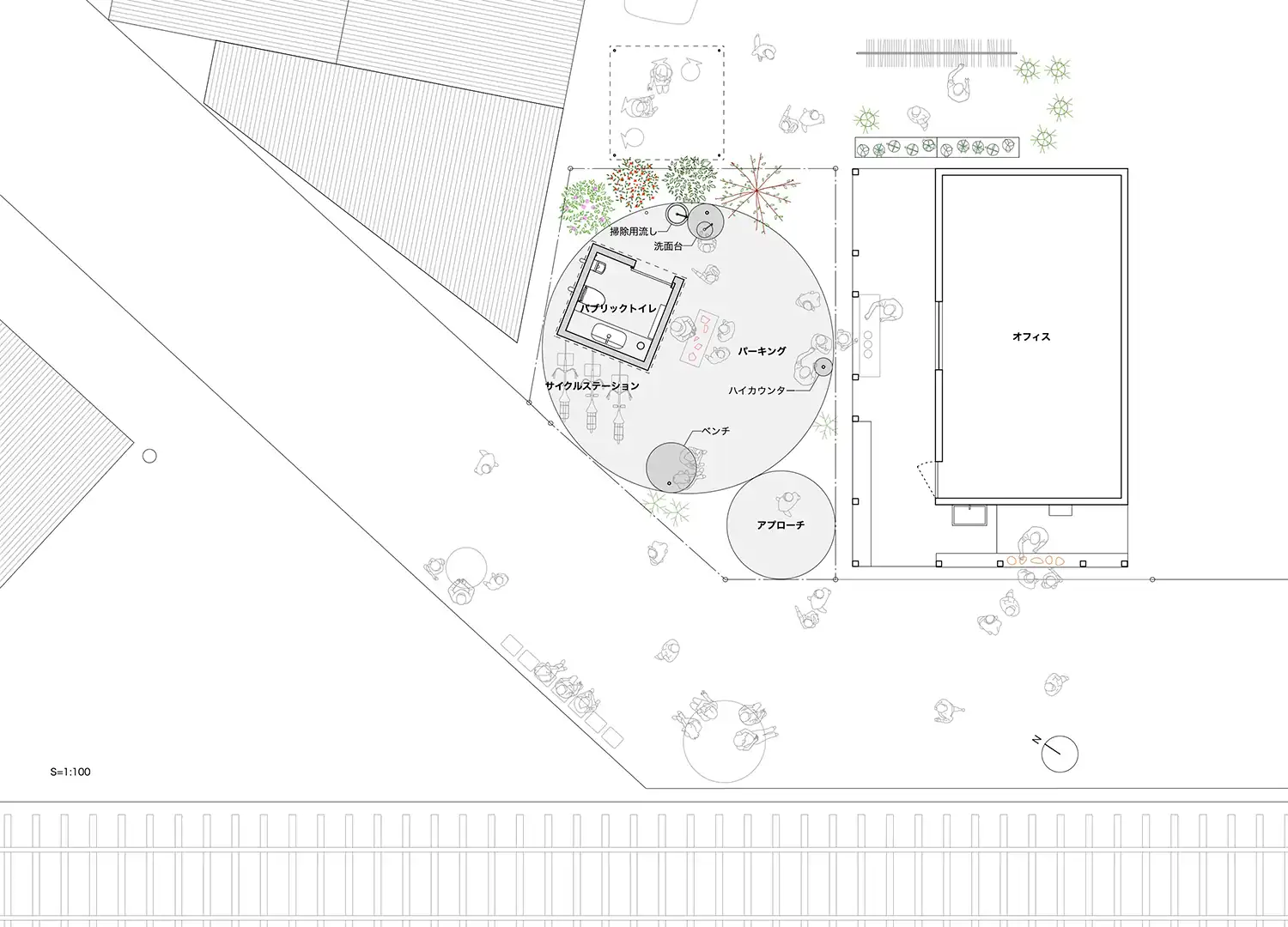
She then proposed a plan to build not only a restroom, but also an open space where people can gather and stay. The open space is equipped with benches and counters so that it can be used for events and kitchen car stalls. The toilet was positioned as infrastructure to support the activity. “I wanted visitors to use the restroom during their stay. I thought it would function as a showroom by creating a situation where people go to the bathroom.”
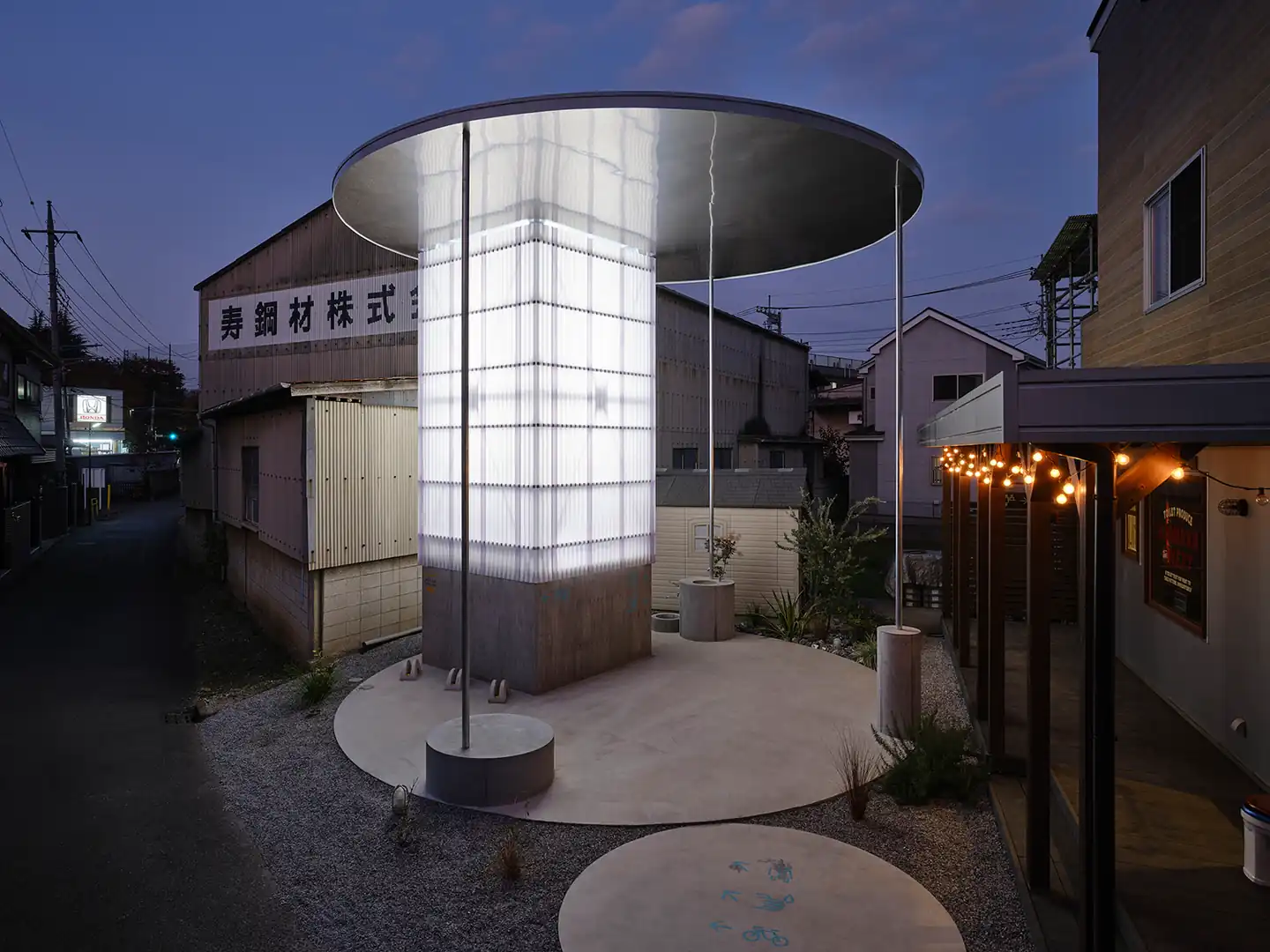
At night, the entire building lights up the surrounding area like a streetlight. Light leaks through translucent polycarbonate exterior walls, creating a sense of security in the dark.
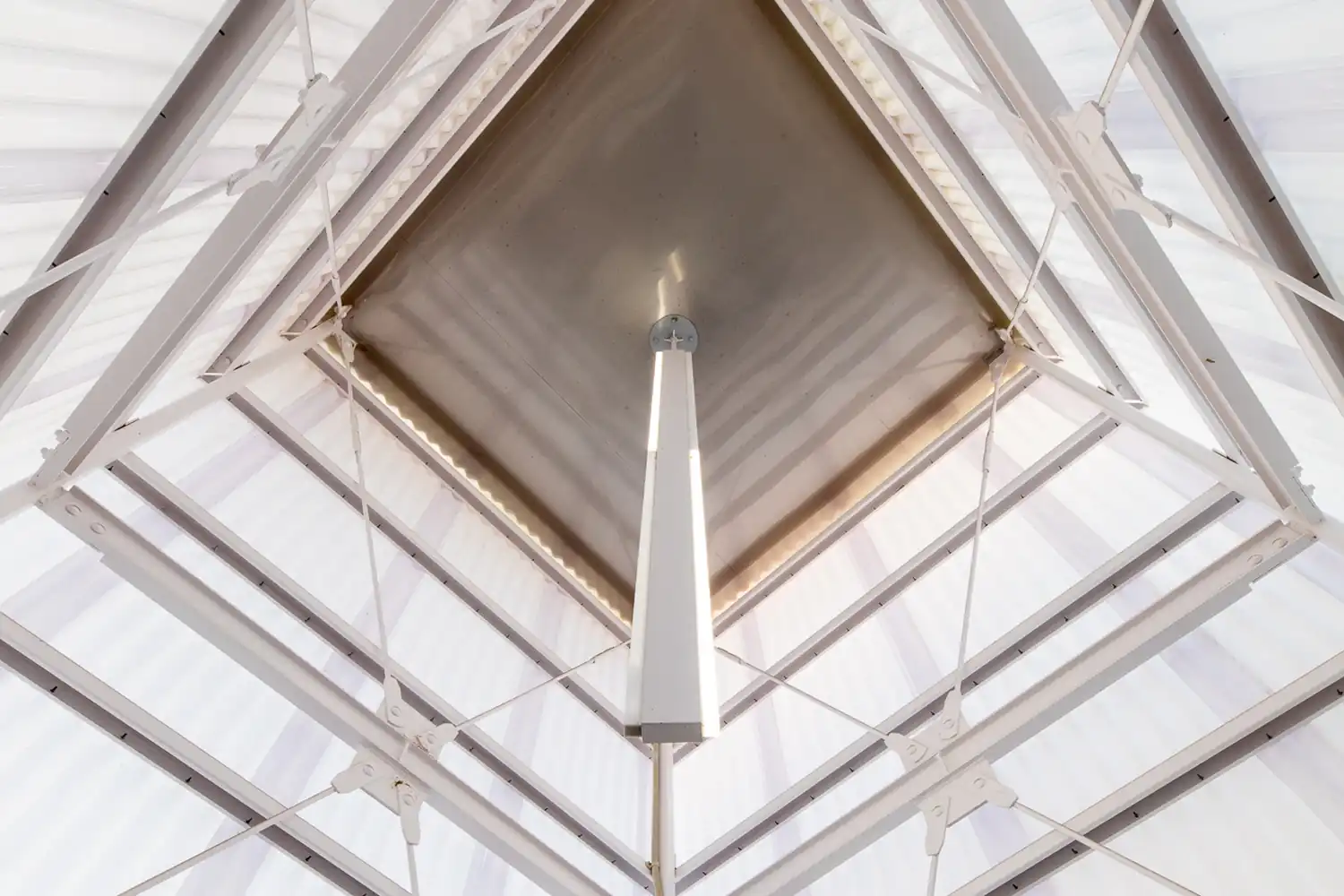
The tall tower shape also has significance. In the daytime, solar heat produces updrafts. A natural ventilation system is adopted to prevent odors from becoming trapped without having to use ventilation equipment. “In order to make this place known to the public, I made it into a tower shape as a landmark. At the same time, I made it function as a natural ventilator.”
She did not hide the foundation of the building. She exposed it so that it could be used as benches and counters. “Work in plumbing is hidden under roads, in buildings, and other places where it cannot be seen. Such invisible infrastructure supports society. By showing the foundation, I wanted people to look at something they don’t usually notice.”
She also proposed the name “Infrastructure Stand.” The idea is to shine a light on invisible infrastructure and turn it into a place where people can casually drop in.
Since its completion, KAWAYA Market and other events have been held continuously at the Infrastructure Stand. It has become a place where many people gather. She says she does not overestimate the benefits. “To be honest, I don’t think the community has changed dramatically because of the Infrastructure Stand. But it’s not limited to the Infrastructure Stand. I don’t think architecture alone can change a community.”
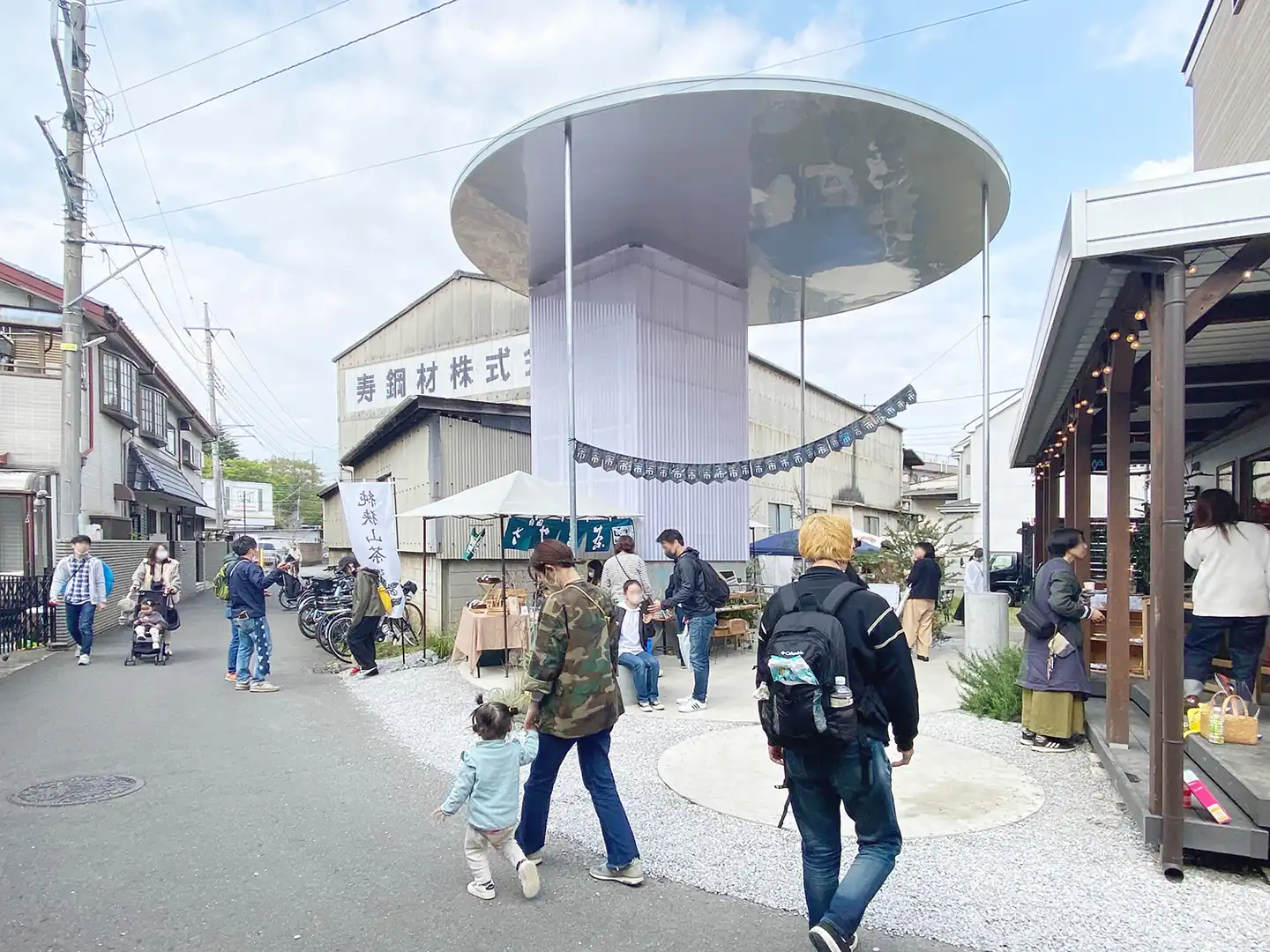
She says that what’s more important is continuity. “The number of private places open to the public will increase one by one. I think the accumulation of these efforts will gradually enrich the community.”
Governments are not the only ones who build communities, but citizens and businesses are also responsible. We create spaces considering not only our own interests but also the surroundings and the community. She observes that the Infrastructure Stand put such a “public mind” into practice.
Finally, she talked about her responsibilities as an architect. “I think there is a certain level of violence in the act of building. As long as we build something new on the land, we change the surrounding environment and scenery. That’s why I want to keep thinking about how the building can have a positive impact on the community.
Public toilet Infrastructure Stand
Ishiwa Plumbing Ltd./Shin Studio
The Infrastructure Stand is a public toilet built by Ishiwa Plumbing Ltd., a plumbing company in Tokorozawa City, Saitama Prefecture, to function also as the company’s showroom. In addition to the toilet, it is equipped with a bench, counter, bicycle stand, and more, and was designed to be a place where passersby could casually call in. The circular roof, lighting plan, and natural ventilation have reinvented the image of public toilets, which tend to be seen as “dark, dirty, and smelly.” It is also used as a venue for markets and local events, hinting at a new way of being for public toilets that nurtures local communities.
- Award details
- 2024 GOOD DESIGN AWARD https://www.g-mark.org/en/gallery/winners/21075
- Designer
- Marina Takahashi, Shin Studio
Tomoko Ishiguro
Editor/writer
After working in the editorial department of “AXIS,” she became a freelancer. She writes, edits, and plans, with a focus on design and life culture. Her major editorial works include the LIXIL BOOKLET series (books, LIXIL Publishing) and “Oishisa no Kagaku” (magazines, NTS Publishing).
Chieko Shiraishi
Photographer
She started photography after taking a black and white enlarger course organized by her town. After working as an assistant photographer, she is now mainly active in taking photos for magazines and other media, while also creating works in her darkroom.


Related Articles
Beyond the company’s activities is society (Part 1)
A plumbing company that built public toilets – you may imagine that this is one aspect of contribution to the local community, or a corporate social responsibility project. However, the “Infrastructure Stand” developed by Ishiwa Plumbing Ltd. of Tokorozawa City, Saitama Prefecture, is a bit of a different story. This project, which began with an extremely unique attempt to build a public toilet as an extension of their showroom, was also a business strategy with an eye to the company’s future: in the words of CEO Daigo Ozawa, “This is both a publicity tool and a recruitment tool.” After taking the company’s activities to their utmost limit, a place in which people come together is born, and the scope eventually broadens to encompass community and disaster preparedness, all while drawing in private enterprise and government. Rather than trumpeting their social contribution in a loud voice, the next step beyond the company’s activities is society. We asked about how this was put into practice.

Designing agricultural heroes (Part 2)
“Saga Agri Heroes”: introducing design to agriculture, supporting the producers to build their own brands. This original initiative won a GOOD DESIGN BEST 100 award in 2022. In Part 1, we introduced Saga Prefecture’s mechanism for incorporating design into local government and supporting the brand development of farmers by accompanying them over a long-term period of four years. In Part 2, we explore the challenges faced in the second phase, which is currently underway (2023-2026), the differences from the first phase, and the ways in which design is changing people and local communities.
Designing agricultural heroes (Part 1)
Introducing design to agriculture, supporting the producers to build their own brands... Saga Prefecture’s “Saga Agri Heroes” is generating new value in the local area through such highly original initiatives. In a context in which single-year subsidy programs are the norm, this initiative has instead adopted a four-year long-term support system in which farmers and designers work together to come up with ideas and develop products. A number of the brands created through collaboration between primary industries and design have attracted attention, and the project received a GOOD DESIGN BEST 100 award in 2022. In this article, we hear about it from its launch to the results of its first phase. We talked to Hiromi Ushijima of Saga Prefectural Government’s Agricultural Management Division and Issei Koga and Chika Sasaki of the prefecture’s Saga Design, producer Naoki Ezoe, Junichi Hayama of DEJIMAGRAPH, and Daiki Ito of Ito Egg Farm “picnic.”
Umbrella innovation that changes our daily lives (Part 2)
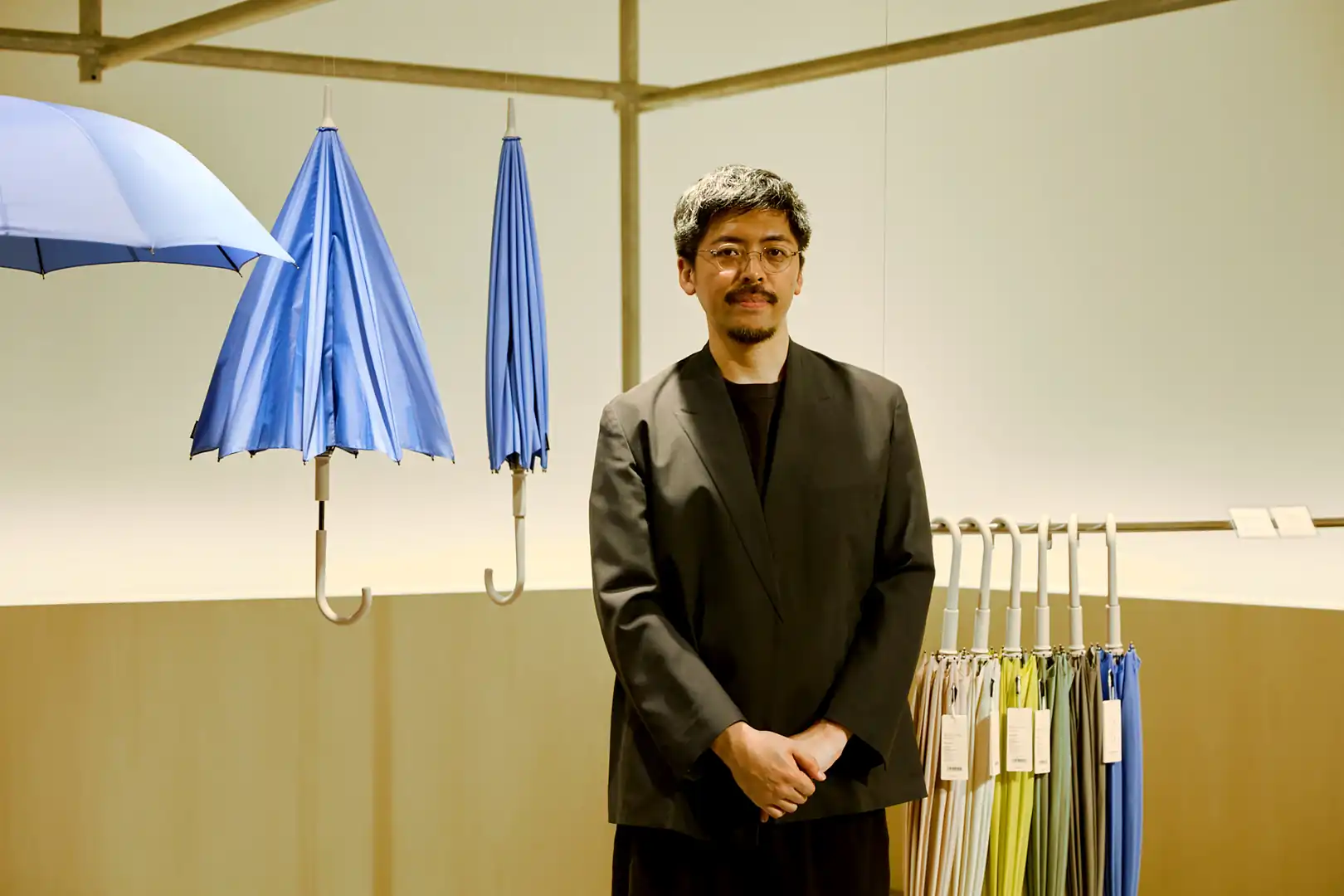
We should not overlook the “minor inconveniences” in our daily lives, but rather solve them through our own ideas... Starting from this stance, Marna Inc. has created many hit products. The Shupatto Umbrella, which was selected as one of the GOOD DESIGN BEST 100 in 2023, is an epoch-making product that revolutionized the very structure of umbrellas. In Part 1, we listened to the story behind the development of this umbrella, which was born from the idea of being able to fold it without getting your hands wet. In Part 2, we will unravel “Marna’s design thinking” which lies behind its product development.