To the place where "good design" was created
Good design, excellent design, design that opens up the future, ideas that move people's hearts, and actions that lead society always have small beginnings.
Interviews with designers at the birthplaces of good design to find hints for the next design.
Destination
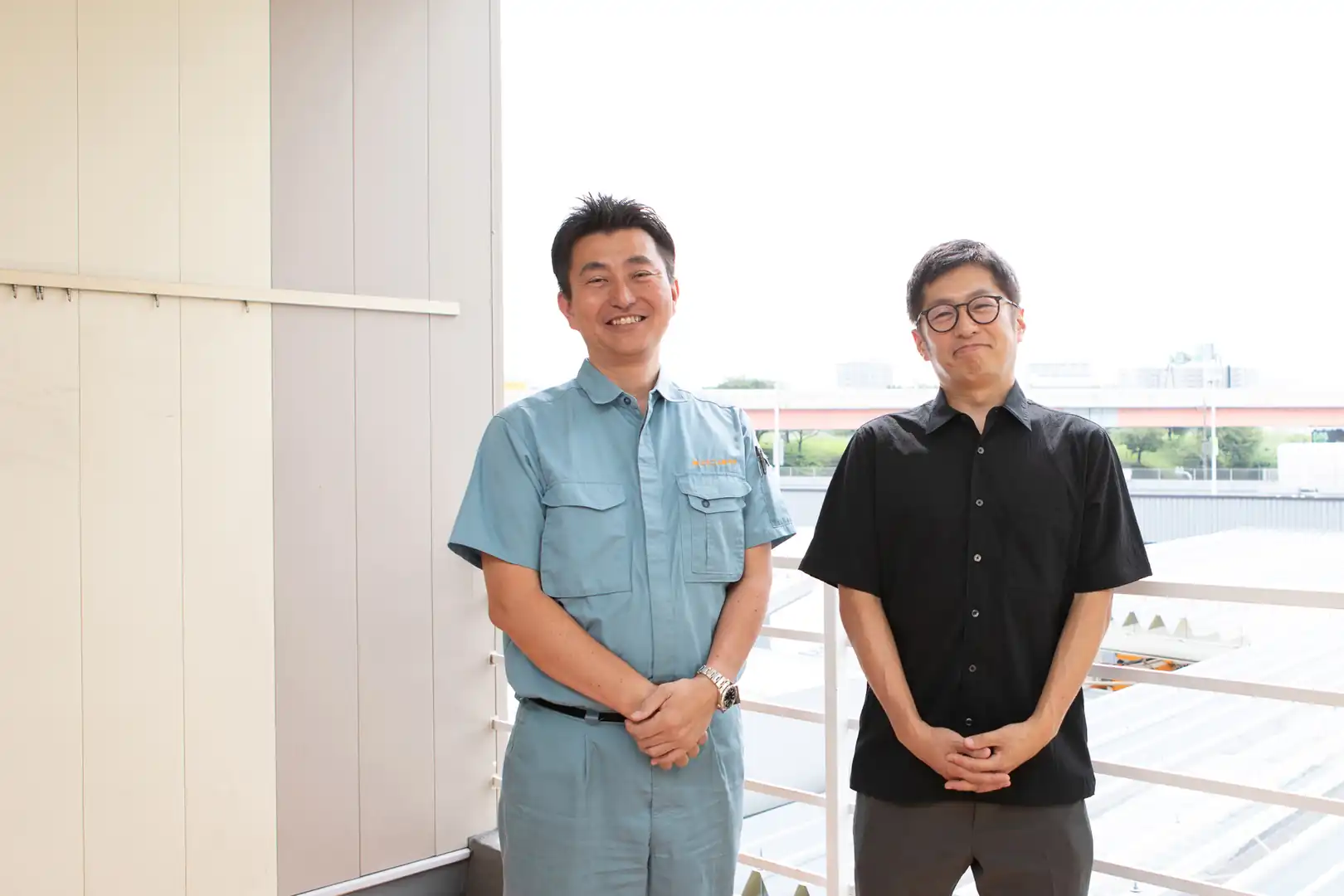
Kouhoku Rubber Co., Ltd.
Creating possibilities from “black rubber” (Part 1)
2026.10.2
What comes to mind when you hear the word “rubber”? Tires, rubber bands, gaskets...? In reality, rubber is used to support society even in places where we do not see it. Kouhoku Rubber Co., Ltd., which has been in business for more than 60 years, has continued to produce rubber products tailored to specific uses by blending raw materials according to the needs of its customers. Kenta Sugahara, the third-generation company president, began looking for new ways of using it, saying “Rubber has endless possibilities.” These experiments gave birth to Rebbur, which combines unused materials such as eggshells and tea with natural rubber. Do not make something because there is a large market. First of all, give it a try. Search for the possibilities for new work from there. We asked Sugahara and designer Tomoki Doi, who is developing it together with him, about the kind of manufacturing that a small company can do best.
What is rubber in the first place?
– First of all, could you tell us about the “rubber” that Kouhoku Rubber Co., Ltd. has been handling for many years? It’s a material found in our surroundings, but I don’t think many people know what it actually is.
Kenta Sugahara (President and Representative Director, Kouhoku Rubber Co., Ltd.) That’s right. When we say “rubber,” most people think only of rubber bands or tires. But in fact, it’s used in various places, including ones that we don’t see.
For example, rubber is used in water pipes to stop water, and seismic isolation rubber is used in buildings to absorb tremors. There are also usages that make the most of rubber’s insulating property: it does not conduct electricity. Rubber has various properties: it stretches, shrinks, bounces, is non-slip, stops water, and does not conduct electricity.
– How do you make this rubber at Kouhoku Rubber Co., Ltd.?
Sugahara One of our strengths is that we can make rubber right from the blending stage. Based on natural rubber or synthetic rubber derived mainly from petroleum, we combine about 20 to 30 different kinds of materials, such as carbon black or chemicals, to produce rubber with high capabilities for its intended use.
– So rubber includes both natural and synthetic rubber...
Sugahara Yes. Besides natural rubber, there are various other kinds of rubber such as silicone rubber and fluorine rubber. Each has different properties, and you can change the properties by blending them.
You can make the rubber hard, soft, or resistant to wear. We think up the recipe according to the required capabilities. There are companies which purchase rubber materials that have already been blended and mold these into shape; but we can do everything, from making the materials to turning them into products. That’s why we think that “rubber has endless possibilities.”
“Black rubber” is not interesting
– You are the third generation of your family to be company president, Mr. Sugahara; have you been aware of these possibilities for rubber ever since you joined the company?
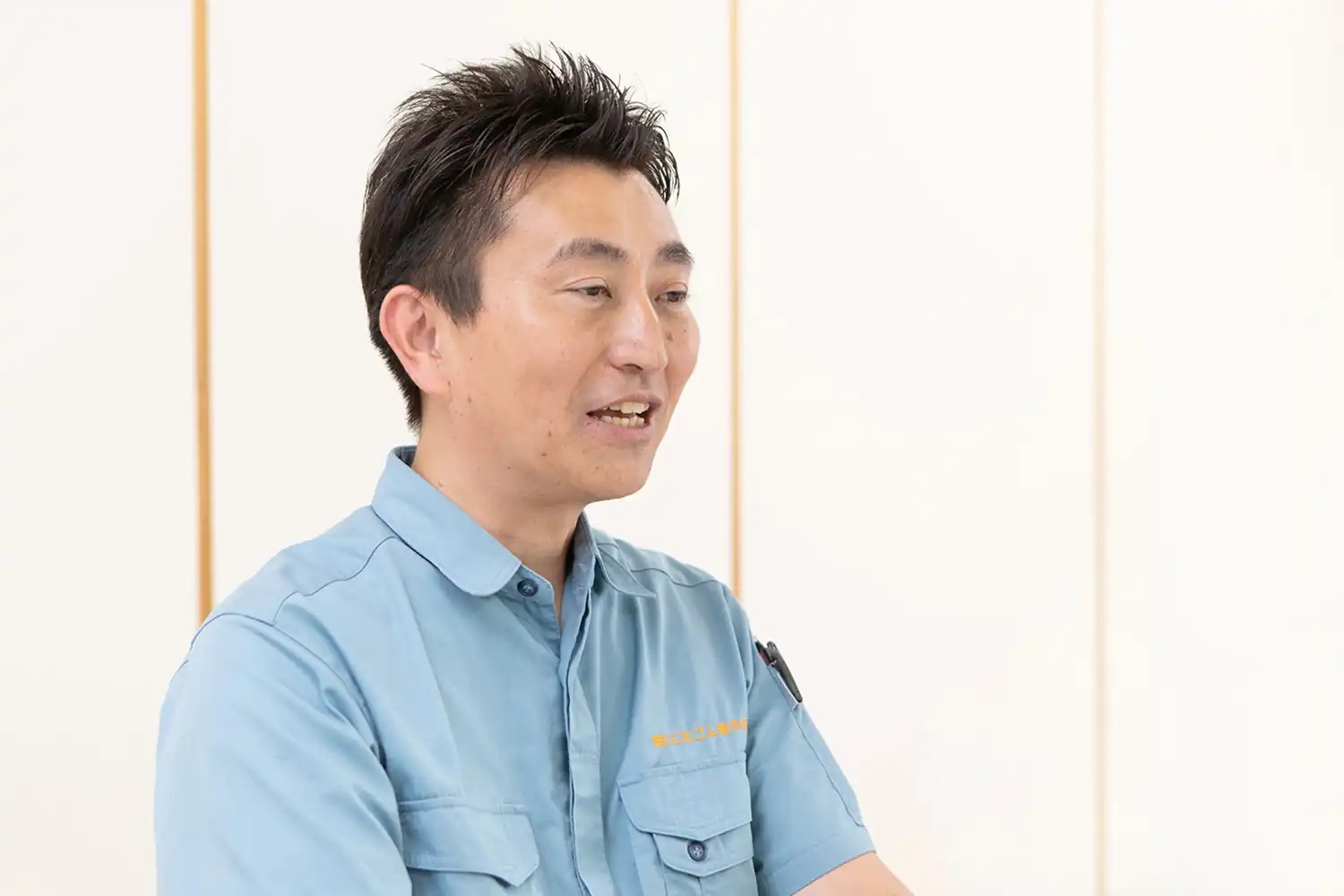
Sugahara No, it wasn’t like that from the beginning. When I first joined the company, I saw employees sweating away in the factory and asked them, “What is this product used to make?” They replied, “I dunno. It’s black rubber.”
When I heard this, I thought, “That’s not very interesting, then, is it?” The employees don’t know where the products they’ve made will be used, or for what. If they’re making it, they at least want to be able to tell their family and friends, “This is what we make.” I’ve had the idea that “We might as well have fun if we’re going to do it” ever since then.
– In what kind of work has Kouhoku Rubber Co., Ltd. always been stron?
Sugahara Basically, business-to-business jobs, where the customers tell us “I’d like you to make this kind of thing,” and we respond to these requests. We are very good at making what we are told to make.
But we don’t just make things the way they tell us to. When I talk to customers, I sometimes realize, “That isn’t the real problem, is it?” Our customers are not rubber professionals, so even if they tell us that they want a particular kind of rubber, we sometimes find when we listen to them that a different material or method would be better. With all that in mind, what we offer is “solving problems related to rubber.”
– So you’ve been doing this commissioned work for years.
Sugahara That’s right. This is still a big area of work for us. However, as the population falls, the volume of manufacturing will also decrease. People from trading companies who knew a lot about rubber used to act as intermediaries and bring us work, but the number of such people is also falling.
This being the case, if we as manufacturers just sit and wait, the amount of work will continue to decrease, won’t it? We are good at making what we are told to make, but I have come to think that rather than just doing this, we will have to create things ourselves from now on.
– Is that what led you to start working so that your company could offer new things?
Sugahara That’s right. One of the big triggers was COVID-19. Partly because work stopped and we had some time, we thought, “Couldn’t we do something by ourselves?”
What we developed as a result was rubber with anti-viral properties. Since we already had the technology to make rubber from blending onwards, we tried to make a new material for ourselves using this technology, and it was actually used for things like playground equipment in parks.
However, I realized something then. If we are simply making materials, they are very unlikely to spread.
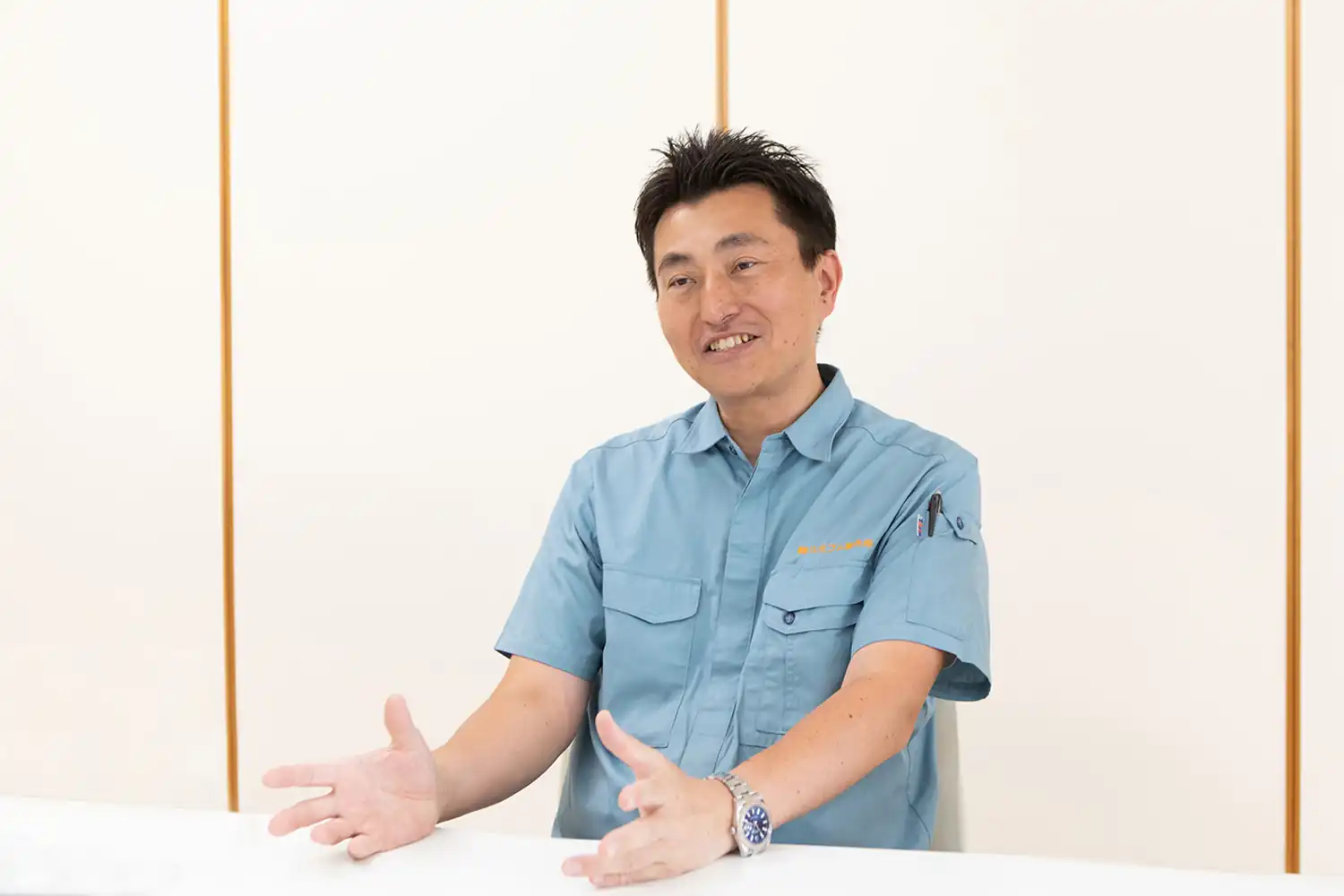
Sugahara Until then, we had been consulted by customers who wanted something particular, and we worked to respond to these requests. In other words, we were starting from a point where they had some idea of what they were going to make and what it would be used for. But it’s different when we make new materials ourselves. Even if you say, “We’ve made rubber with these functions,” this won’t lead to any work unless we think about what it will be used for and what kind of products it will be turned into.
From our experience in making anti-viral rubber, we have the ability to make materials. But I felt that the aspect of how we would go on to give this shape and tell people about it was still lacking.
– So that’s when you thought that design was needed?
Sugahara Yes, that’s right. I came to think that I needed the help of design in order to communicate what can be done using our technology in a format that is more readily understandable.
Loosening the “function first” screws
– So it was against this background that you took part in the Tokyo Business Design Award, right?
Sugahara Yes. This is an initiative which solicits proposals from designers regarding technologies and materials possessed by small and medium enterprises in Tokyo that will lead to new business. We wanted to use our technology to do something new, but we didn’t yet have a clear idea of what we wanted to do or how to do it.
It was right around this time that we were experimenting with mixing eggshells with rubber. This was prompted by hearing from a business partner who processed boiled eggs that a large volume of eggshells were thrown away. I wondered what would happen if we mixed these with rubber. I thought that if we were going to make the effort, doing something ordinary would be boring – I wanted to try being a bit radical.
– And that’s when Mr. Doi made a proposal as a designer. The way that the Tokyo Business Design Award works is a little different from regular design awards, isn’t it?
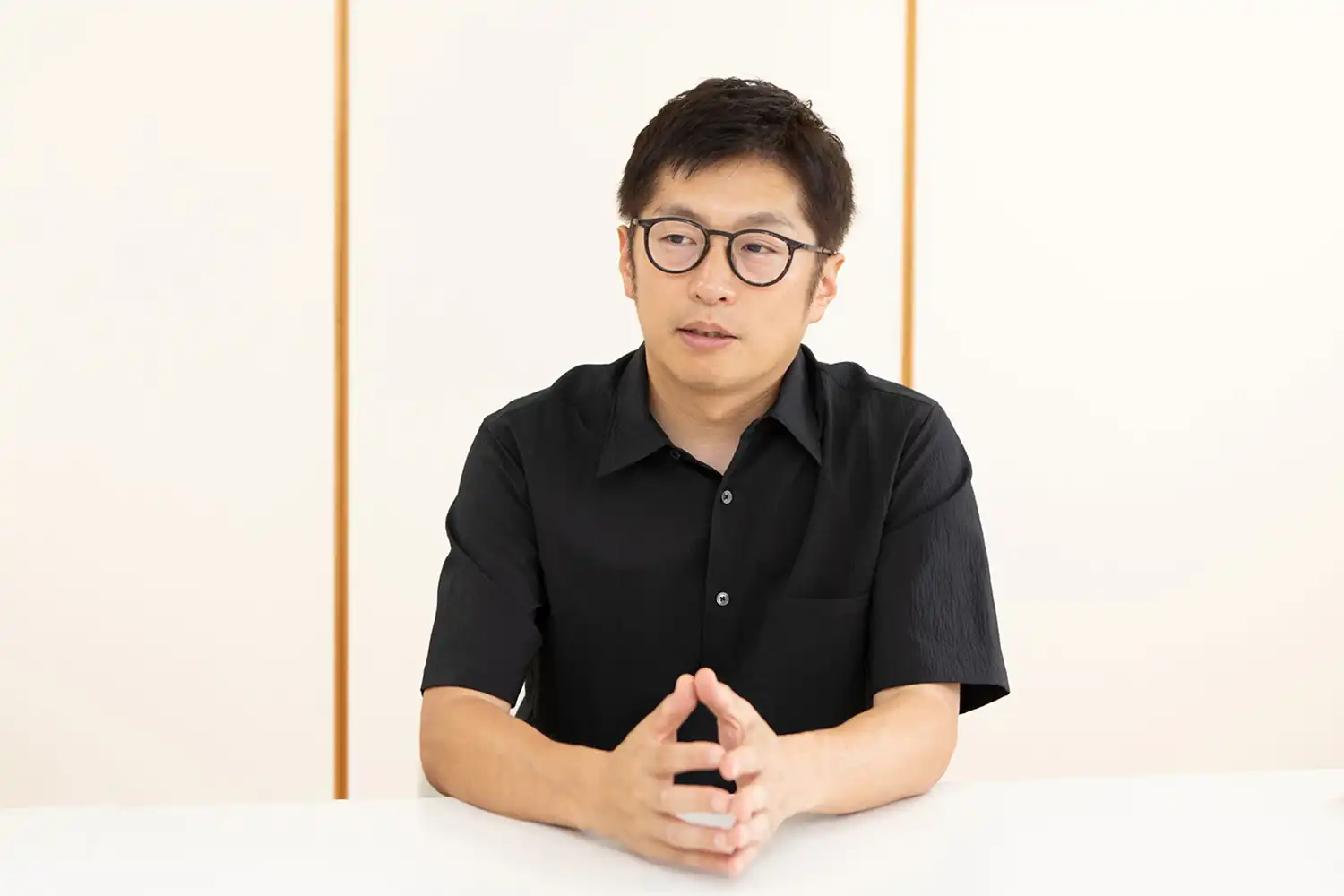
Tomoki Doi (Representative and Designer, Soell inc.) Yes, that’s right. It’s called an “award,” but it is closer to a competition to create new projects by linking up companies and designers, rather than to a design award which recognizes finished products.
First, companies present their proprietary technologies and materials as “themes,” and then designers propose business ideas in response to these. The proposals selected as candidates through a screening process are matched with companies, and from there, we aim to commercialize them together.
– Mr. Doi, where did you see potential in Kouhoku Rubber?
Doi Kouhoku Rubber is not just able to mold rubber; it can make rubber from the mixing stage. I thought that was very interesting. They had already tried mixing eggshells with rubber, but instead of making a single product with eggshells, I thought that they could further develop the line by mixing various unused materials with rubber.
Rubber is a material that can incorporate various different things. If we combine it with raw materials coming out of local communities or companies, we will get materials with different expressions and stories. Rather than designing a single product, I wanted to showcase Kouhoku Rubber’s mixing technologies themselves as a new business project.
– What did you think when you heard this proposal, Mr. Sugahara?
Sugahara It was a really good match with what I was wanting to do. Our B2B work until then had been based on the idea that the more functional and long-lasting rubber was, the better. Of course, this is still important. However, I thought that if we came up with something new ourselves, we could loosen that screw a little.
For example, instead of aiming for an extremely long life alone, we could try mixing in different raw materials. We could try putting things in that we wouldn’t previously have thought to put into rubber. By doing this, a new and different value for rubber might become apparent.
There was something in Mr. Doi’s proposal that gave shape to our unformed ideas.
“Rebbur,” born from thinking backwards
– And that’s how you and Mr. Doi developed Rebbur, isn’t it?
Sugahara Yes. “Rebbur” is “rubber” read backwards. It encapsulates the idea of thinking about new possibilities for rubber by thinking about it backwards. The industrial rubber that we usually make is blended with a variety of chemicals to achieve the desired functions, but with Rebbur, we committed to using natural materials.
– Yes, you can put so many different materials into rubber, can’t you?
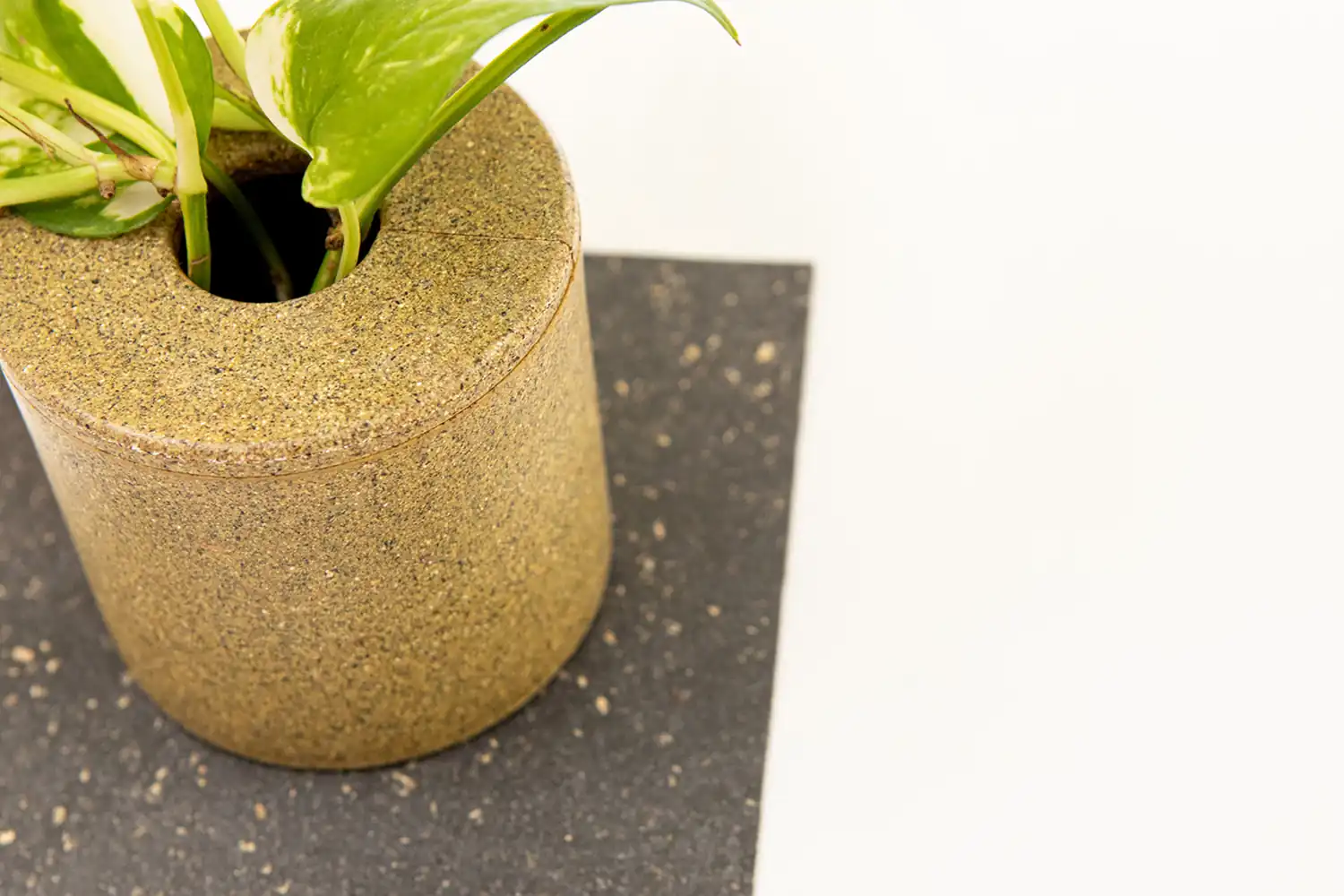
Sugahara I think that this is something we can do because we make it from the blending stage. For example, Rebbur is a blend of about 70% unused materials and 30% natural rubber. Rubber plays the supporting role. Even so, it bends properly and retains the softness of rubber.
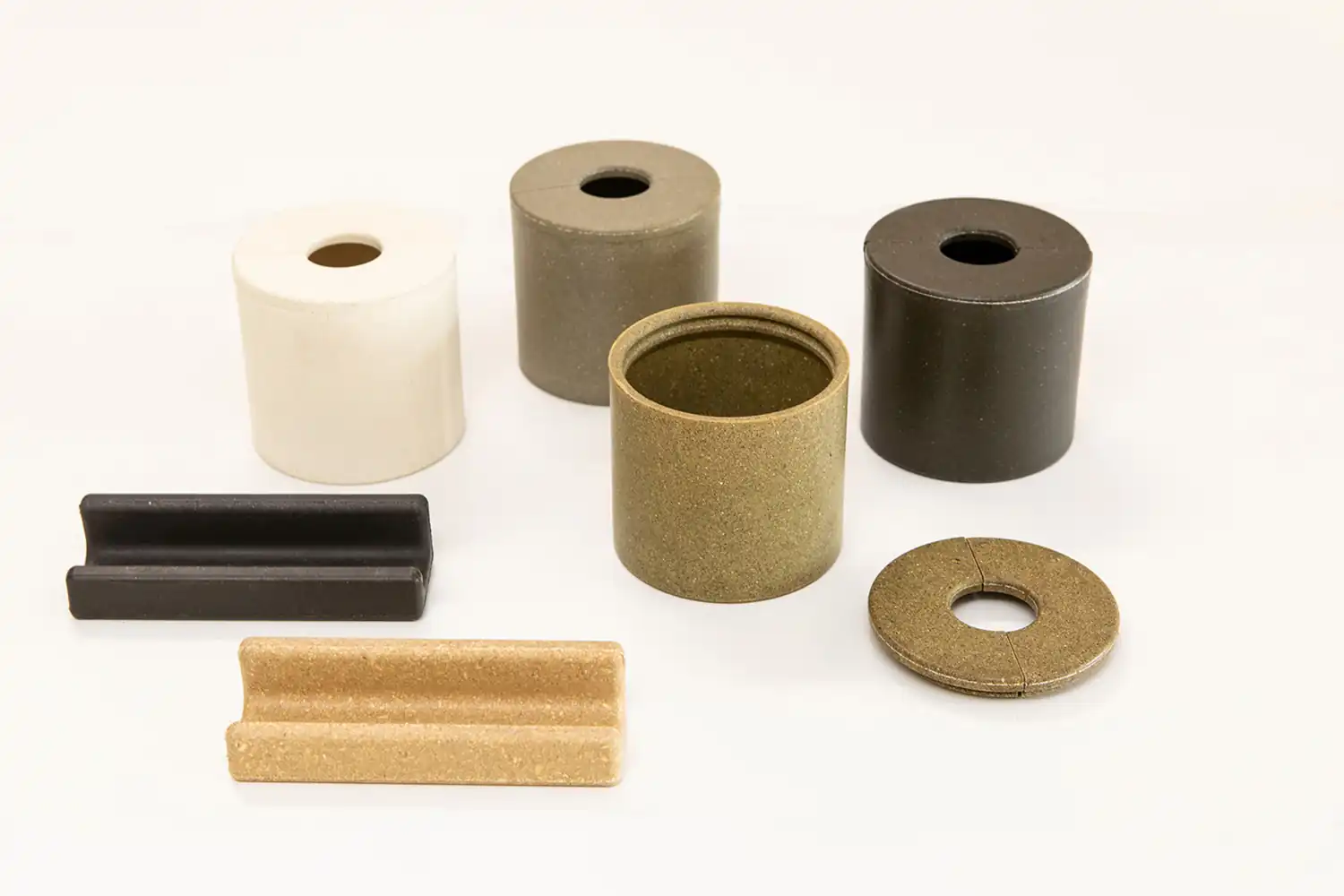
Usually, when we say rubber, we mean something uniform and black, a material that’s there to fulfill a function. However, if you add eggshells, you can see the specks, and if you add wood, you get the appearance of wood. The color and texture change depending on what you mix in. Rather than the rubber asserting itself, it incorporates various different materials, and these create expressions different from any previous ones.
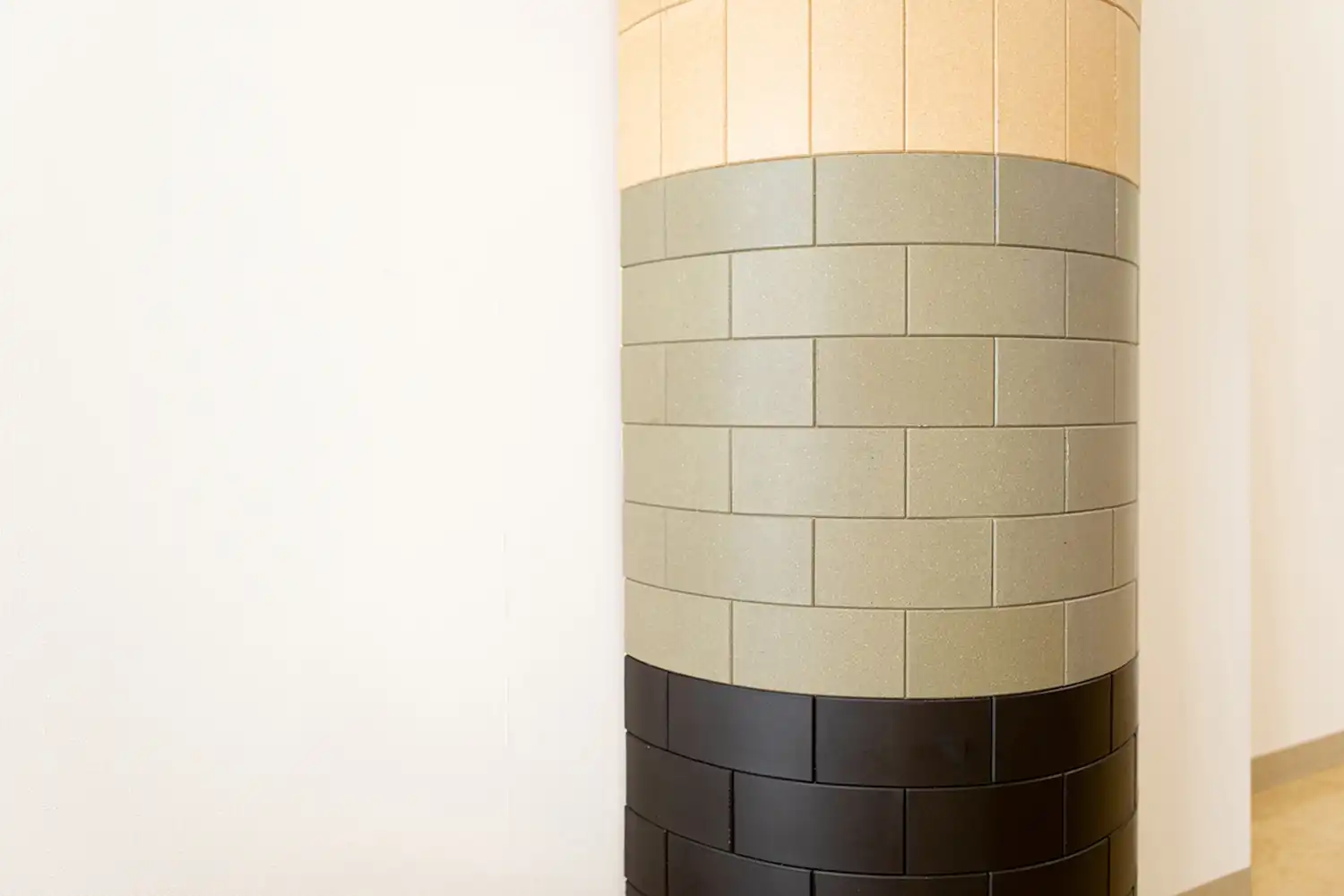
Doi What’s interesting is that it can bend because it’s rubber. For example, something that looks like a tile can be made to line up with a curved surface, unlike a hard material. Even if the material which has been mixed in doesn’t bend, by using rubber to connect the pieces, the whole can be made flexible.
– Did you plan to make the current six types from the beginning?
Doi No, we’re trying various things. I have been thinking with Kouhoku Rubber about what would be interesting to mix in. The size of the pieces differs depending on the material, and the color changes between when it is mixed and when it is actually molded into shape. Rubber is heated to cause a chemical reaction, so sometimes the color does not turn out the way we expected. I had Mr. Sugahara and his team try out mixtures, and we adjusted the amounts and the appearance as we went along.
– Mr. Doi, you’re involved from the choice of materials onwards, aren’t you?
Doi Yes, I am. However, this isn’t a relationship in which I decide “Mix this in,” and have Kouhoku Rubber make it for me. We work together to create the product, going back and forth with questions such as, “Could we mix this in?,” “Where could we source this material from?,” and “What would happen if we increased the amount a little?”
Kouhoku Rubber already have the will to make such materials. I feel that we are working together in response to this, to figure out how to convey that potential to others.
Rebbur is also a tool for telling people about Kouhoku Rubber
– For what end products is Rebbur used as a raw material?
Sugahara We make products such as planters and coasters using Rebbur. However, we don’t want to become a company that sells planters. What we want to do is to let people know that they can do this kind of thing with rubber, with Kouhoku Rubber.
But if we only show them the materials and explain “We can make rubber from the blending stage,” it’s very hard to get the message across. By actually having something, people become interested in it and ask, “Is this rubber, too?” and “Could you mix this in, too?” In this sense, our own products made with Rebbur also serve as our flagship models.
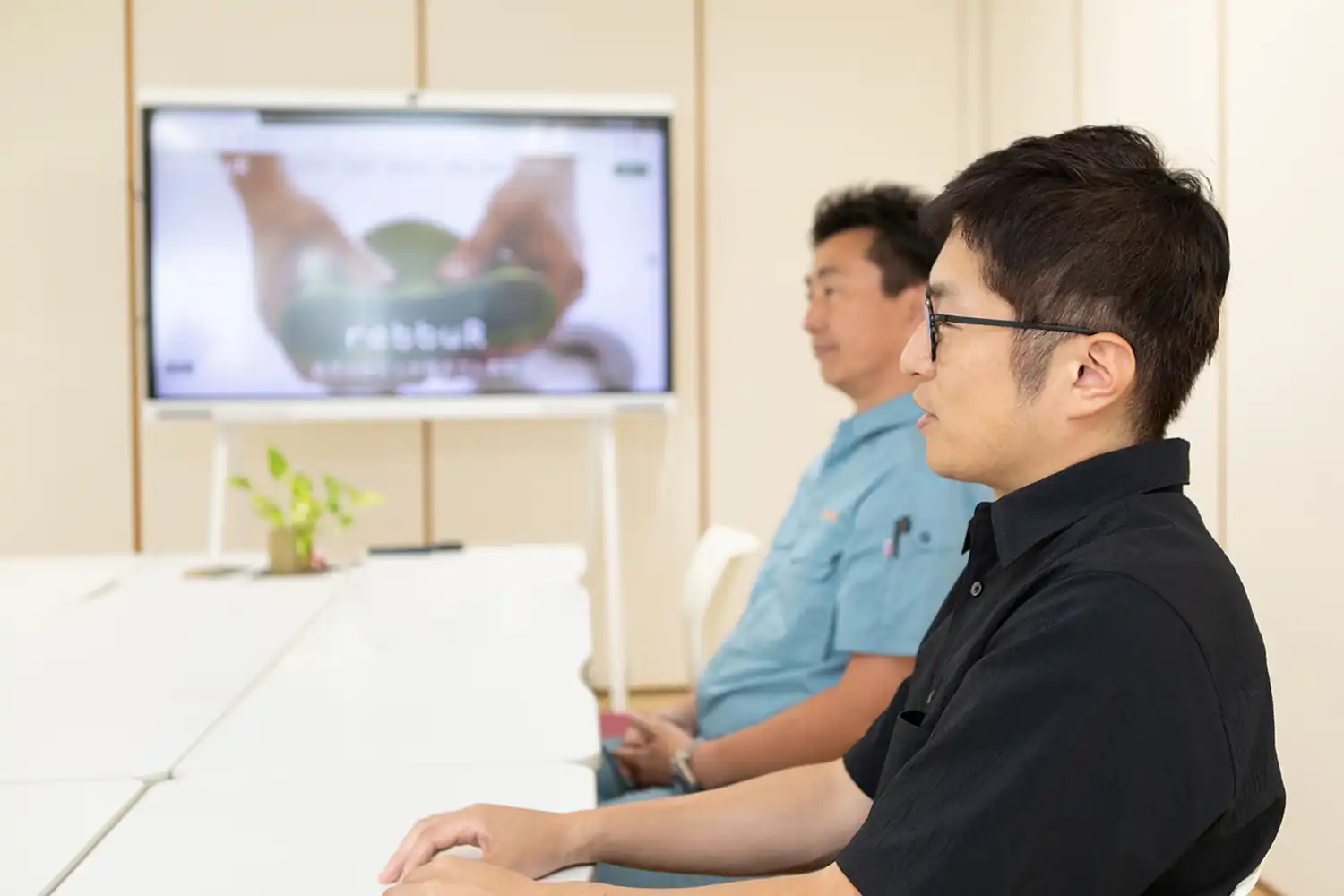
Doi I think that Rebbur also functions as a tool to meet new customers. If you just have ordinary black rubber, the conversation tends not to go anywhere. But with Rebbur, “What’s this?” is a conversation starter.
When we go on to ask them what they want to do, sometimes ordinary rubber turns out to be more suitable than Rebbur. And that’s fine, too. I hope that Rebbur will prompt people to learn about Kouhoku Rubber’s technology and lead to new work.
– In other words, the aim is not just to sell Rebbur itself...
Sugahara That’s right. I want to meet people that I’ve never met before through Rebbur. Our work so far has centered on being asked for advice by people who have problems related to rubber, and solving these. This will continue to be important. But if that’s all we do, we won’t be able to meet people who don’t know about Kouhoku Rubber in the first place, or who don’t think that they could do anything with rubber.
We want people to approach us, seeing Rebbur and asking, “If you can do that kind of thing, could you make something like this?” I’d like to make more of these ways in.
– This initiative, which started with the Tokyo Business Design Award, led to a GOOD DESIGN AWARD, too. Has anything changed as the result of receiving this award?
Sugahara Of course, we are happy to have been recognized. But I’m a business owner, so getting an award is not my goal in itself. I think it’s meaningless if it doesn’t lead to actual work or sales.
On the other hand, there was something bigger than I had imagined, and this was the impact on our employees. They even tell their families, “Our company won a GOOD DESIGN AWARD.” The way that it made our employees proud of the company was really great.
Also, people began to think, “Kouhoku Rubber is doing something unusual.” And when that happens, people bring even things that are hard to discuss with an ordinary rubber firm to us, thinking “Maybe Kouhoku Rubber will listen to this.” This is also very meaningful for us.
– How were you able to take the leap into initiatives like Rebbur when you didn’t know whether or not they had a market yet?
Sugahara I think that’s something we can do because we’re a small and medium business. It seems to me that if you’re a large company, when you start something new, you start by thinking about how much demand there is and how much you can sell.
But we can start from a position of “This looks interesting: let’s try it.” I myself think that doing something by halves isn’t very interesting, so I start by giving it a go. Of course, that doesn’t mean that we can go on ignoring profitability forever. But if we had just made our decisions based on market size right from the outset, I don’t think that we would have come up with something like Rebbur.
– You can be one step ahead precisely because you’re small.
Sugahara That’s right. We’re not a company with tens of thousands of employees, so if I say “Let’s try it,” we can move. I think that this speed is a strength of small and medium enterprises. If we ask whether rubber plays the main role in Rebbur, it actually makes up only about 30%. It plays a supporting role instead. But that supporting role joins together various materials to create something that has never been seen before. I think that this is also a possibility for rubber.
Rebbur raw material
Kouhoku Rubber Co., Ltd.
Rebbur is a new rubber material developed by industrial rubber manufacturer Kouhoku Rubber Co., Ltd., in collaboration with designer Tomoki Doi and others. Combining unused materials such as eggshells, tea, or dried seaweed with natural rubber makes the most of the color, fragrance, or texture of the materials themselves. The blend of approximately 70% unused materials and 30% natural rubber maintains the flexibility of rubber while producing different expressions and characteristics depending on the materials mixed with the rubber. The company is also looking for ways to expand applications through combinations of materials, such as by blending in iron powder to make the result magnetic. Not only does it reduce waste, it also points to unprecedented value and potential for rubber.
- Award details
- 2025 GOOD DESIGN AWARD https://www.g-mark.org/en/gallery/winners/33752?years=2025
- Designer
- Tomoki Doi
Tomoko Ishiguro
Editor/writer
After working in the editorial department of “AXIS,” she became a freelancer. She writes, edits, and plans, with a focus on design and life culture. Her major editorial works include the LIXIL BOOKLET series (books, LIXIL Publishing) and “Oishisa no Kagaku” (magazines, NTS Publishing).
Chieko Shiraishi
Photographer
She started photography after taking a black and white enlarger course organized by her town. After working as an assistant photographer, she is now mainly active in taking photos for magazines and other media, while also creating works in her darkroom.


Related Articles
Beyond the company’s activities is society(Part 2)
“Infrastructure Stand” in Tokorozawa City, Saitama Prefecture, is a public toilet as an extension of the showroom. Mr. Daigo Ozawa, CEO, Ishiwa Plumbing Ltd., says that he started with “a business strategy with an eye to the company’s future.” In the first part, we introduced the Infrastructure Stand as a gathering place for people, and the process in which the activities of the Infrastructure Stand spread to the community by involving companies and the government. What Mr. Ozawa is looking at next is disaster preparedness and toilet issues. The Infrastructure Stand is now not just a public toilet, but is about to become a testing ground for a closed-loop toilet that can function even in times of disaster.
Beyond the company’s activities is society (Part 1)
A plumbing company that built public toilets – you may imagine that this is one aspect of contribution to the local community, or a corporate social responsibility project. However, the “Infrastructure Stand” developed by Ishiwa Plumbing Ltd. of Tokorozawa City, Saitama Prefecture, is a bit of a different story. This project, which began with an extremely unique attempt to build a public toilet as an extension of their showroom, was also a business strategy with an eye to the company’s future: in the words of CEO Daigo Ozawa, “This is both a publicity tool and a recruitment tool.” After taking the company’s activities to their utmost limit, a place in which people come together is born, and the scope eventually broadens to encompass community and disaster preparedness, all while drawing in private enterprise and government. Rather than trumpeting their social contribution in a loud voice, the next step beyond the company’s activities is society. We asked about how this was put into practice.
Designing agricultural heroes (Part 2)
“Saga Agri Heroes”: introducing design to agriculture, supporting the producers to build their own brands. This original initiative won a GOOD DESIGN BEST 100 award in 2022. In Part 1, we introduced Saga Prefecture’s mechanism for incorporating design into local government and supporting the brand development of farmers by accompanying them over a long-term period of four years. In Part 2, we explore the challenges faced in the second phase, which is currently underway (2023-2026), the differences from the first phase, and the ways in which design is changing people and local communities.
Designing agricultural heroes (Part 1)
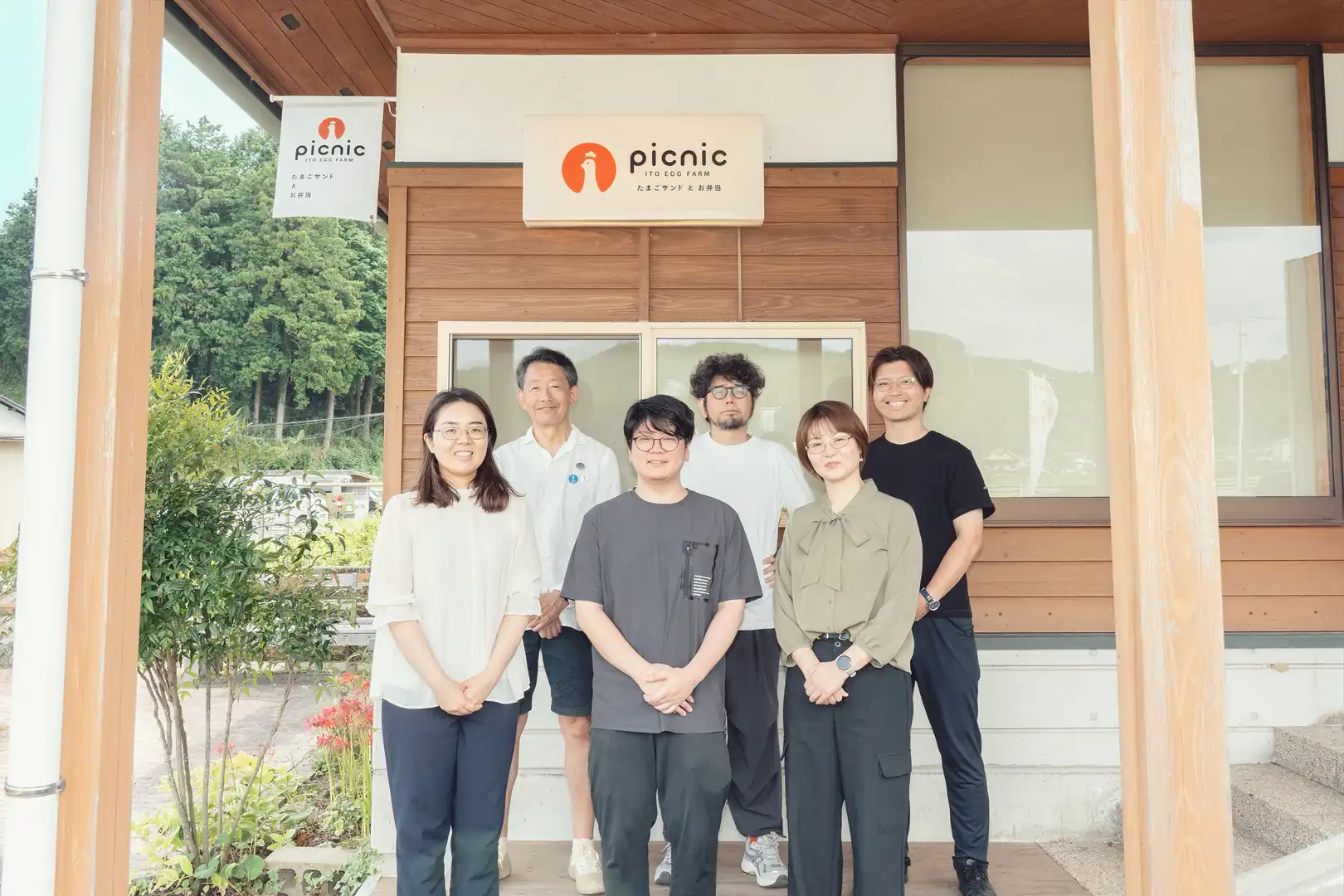
Introducing design to agriculture, supporting the producers to build their own brands... Saga Prefecture’s “Saga Agri Heroes” is generating new value in the local area through such highly original initiatives. In a context in which single-year subsidy programs are the norm, this initiative has instead adopted a four-year long-term support system in which farmers and designers work together to come up with ideas and develop products. A number of the brands created through collaboration between primary industries and design have attracted attention, and the project received a GOOD DESIGN BEST 100 award in 2022. In this article, we hear about it from its launch to the results of its first phase. We talked to Hiromi Ushijima of Saga Prefectural Government’s Agricultural Management Division and Issei Koga and Chika Sasaki of the prefecture’s Saga Design, producer Naoki Ezoe, Junichi Hayama of DEJIMAGRAPH, and Daiki Ito of Ito Egg Farm “picnic.”